
Anthropology
Bachelor of Arts (BA) or Science (BSc)
Why choose Anthropology at UVic?
Turn curiosity about human life into a meaningful career. Anthropology at UVic explores human diversity across cultures, environments and time—from ancient societies to today’s global challenges. You’ll learn through hands-on fieldwork, lab research and community-based projects, applying what you study directly to real-world issues.
Specializations
- Human history and material culture (archaeology)
- Human evolution and primates (biological anthropology)
- Culture, society and global issues (cultural anthropology)
Skills
- Conduct fieldwork and excavations
- Use lab tools and digital research methods
- Work with communities on real projects
- Analyze human behaviour, culture and environments
Careers
- Archaeologist
- Cultural anthropologist
- Museum curator or educator
- Immigration or international development specialist
Community engagement
Build experience working directly with communities by adding the Community Engagement option to your degree.
- Take courses focused on community-based research
- Work alongside real organizations and partners
- Learn ethical, respectful approaches to collaboration
- Gain practical skills for careers in policy, non-profits, research and beyond
Field schools
Anthropology has a long and rich tradition of conducting research in "the field." You'll find our students digging at archaeological sites, observing primates in the rainforest, studying social processes in international settings or conducting cross-cultural health research in downtown Victoria.
Learn more about anthropology field schools.
Research spaces
- Archaeology Lab: Work with collections, microscopes and digital tools
- Biological Lab: Use 3D scanners and analytical tools on skeletal material
- Counter Currency Lab: Analyze archival records and historical materials
- Ethnographic Mapping Lab: Map cultures, communities and environments
- Visual Anthropology & Sound Labs: Produce films, audio and multimedia projects
- Zooarchaeology Lab: Study animal remains to understand past environments and diets
Co-operative study
- Through UVic’s co-op program, you’ll apply what you learn in paid, career-related positions that count toward your degree—and give you a head start after graduation.
- Co-op is available to everyone, including international students with co-op work permits.
- On average, 70 percent of UVic co-op students graduate with a job offer already in hand.
Student spotlight
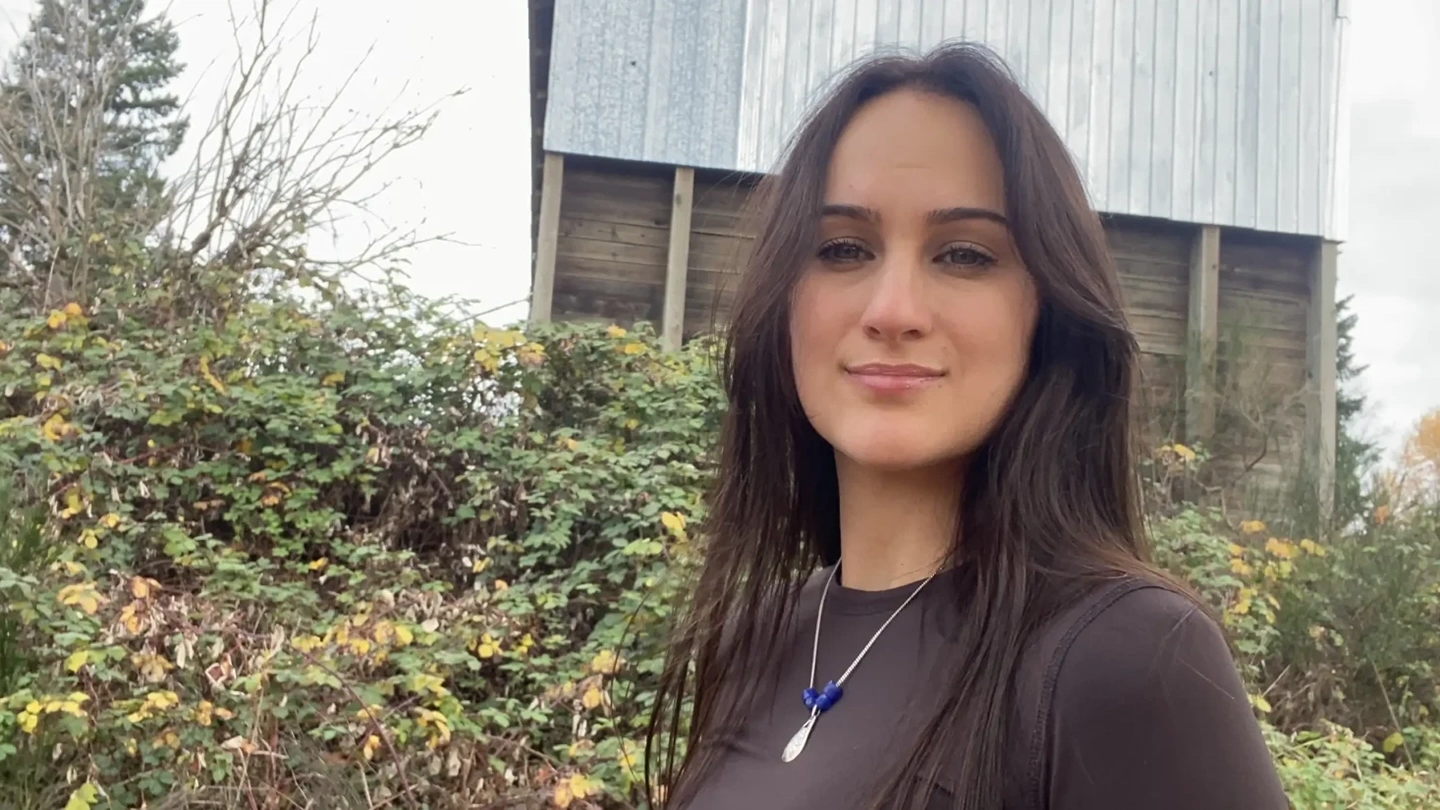
“I never saw myself doing this.”
Jennifer Preece stepped out of her comfort zone to present her research—and discovered a passion that led to real work in her community.
Admission requirements
- Apply directly to this program as a high school student or a transfer student from another post-secondary institution.
- Alternatively, you can apply to another major and then add this program as a minor after one year of full-time study.
Select your education system
Choose your current or most recent high school, college or university to see your admission requirements.
British Columbia & Yukon
Meeting the minimum requirements does not guarantee admission.
Required courses
Grade 11 courses
- Approved English 11
- Foundations of Mathematics 11 or Pre‑calculus 11
- Approved science 11
- Approved social studies 11/12
Grade 12 courses
- English Studies 12 or English First Peoples 12 (minimum 73%)
- Three approved academic 12 courses
See all approved high school courses for BC and Yukon.
Recommended admission average
The recommended admission average is an estimate based on data from recent admission cycles. The actual admission average required for entry may be higher in the future due to increased competition and limited capacity.
Estimated admission average: Minimum 82% (based on the required grade 12 courses)
Expanded qualifications
Academic performance is the main criterion for an offer of admission, but a limited number of students graduating from Canadian high schools may also be considered based on non-academic qualifications.
Learn more about expanded qualifications.
Meeting the minimum requirements does not guarantee admission.
Required courses
Grade 11 courses
- English Language Arts 20‑1
- Mathematics 20‑1 or 20‑2
- Approved science 20
- Approved social studies 20
Grade 12 courses
- English Language Arts 30‑1 (minimum 73%)
- Three approved academic 30/31 courses
See all approved high school courses for Alberta and Nunavut.
Recommended admission average
The recommended admission average is an estimate based on data from recent admission cycles. The actual admission average required for entry may be higher in the future due to increased competition and limited capacity.
Estimated admission average: Minimum 82% (based on the required grade 12 courses)
Expanded qualifications
Academic performance is the main criterion for an offer of admission, but a limited number of students graduating from Canadian high schools may also be considered based on non-academic qualifications.
Learn more about expanded qualifications.
Meeting the minimum requirements does not guarantee admission.
Required courses
- Full IB diploma with at least three subjects at the Higher Level
- English HL or SL (minimum score of 3)
Estimated IB score
Estimated scores are based on data from recent admission cycles. The actual score required for entry may be higher in the future due to increased competition and limited capacity.
Estimated IB score: 28 points (excluding additional points)
Expanded qualifications
Academic performance is the main criterion for an offer of admission, but a limited number of students graduating from Canadian high schools may also be considered based on non-academic qualifications.
Learn more about expanded qualifications.
Meeting the minimum requirements does not guarantee admission.
Required courses
Grade 11 courses
- English Language Arts 30S
- Applied Math 30S or Pre‑calculus 30S
- Approved science 30S
- Approved social studies 30S
Grade 12 courses
- English Language Arts 40S (minimum 73%)
- Three approved academic 40S courses
See all approved high school courses for Manitoba.
All versions of English Language Arts 30S and English Language Arts 40S are acceptable as the required English courses, except for ELA: English Language & Technical Communication.
Recommended admission average
The recommended admission average is an estimate based on data from recent admission cycles. The actual admission average required for entry may be higher in the future due to increased competition and limited capacity.
Estimated admission average: Minimum 82% (based on the required grade 12 courses)
Expanded qualifications
Academic performance is the main criterion for an offer of admission, but a limited number of students graduating from Canadian high schools may also be considered based on non-academic qualifications.
Learn more about expanded qualifications.
Meeting the minimum requirements does not guarantee admission.
Required courses
Grade 11 courses
- English 111 or 112
- Foundations of Mathematics 110 or Pre‑calculus 110
- Approved science 111/112
- Approved social studies 110/111/112
Grade 12 courses
- English 121 or 122 (minimum 73%)
- Three approved academic 120/121/122 courses
See all approved high school courses for New Brunswick.
Recommended admission average
The recommended admission average is an estimate based on data from recent admission cycles. The actual admission average required for entry may be higher in the future due to increased competition and limited capacity.
Estimated admission average: Minimum 82% (based on the required grade 12 courses)
Expanded qualifications
Academic performance is the main criterion for an offer of admission, but a limited number of students graduating from Canadian high schools may also be considered based on non-academic qualifications.
Learn more about expanded qualifications.
Meeting the minimum requirements does not guarantee admission.
Required courses
Grade 11 courses
- English Language Arts 2201
- Math 2200 (advanced) or 2201 (academic)
- Approved science 2200
- Approved social studies 2200
Grade 12 courses
- English Language Arts 3201 (minimum 73%)
- Three approved academic 3200/4200 courses
See all approved high school courses for Newfoundland and Labrador.
Recommended admission average
The recommended admission average is an estimate based on data from recent admission cycles. The actual admission average required for entry may be higher in the future due to increased competition and limited capacity.
Estimated admission average: Minimum 82% (based on the required grade 12 courses)
Expanded qualifications
Academic performance is the main criterion for an offer of admission, but a limited number of students graduating from Canadian high schools may also be considered based on non-academic qualifications.
Learn more about expanded qualifications.
Curriculum change
High schools in the Northwest Territories are changing from the Alberta curriculum to the BC curriculum.
- If you graduate in 2027 (or after), your admission requirements are based on the BC curriculum.
- If you graduated in 2026 (or before), your admission requirements are based on the Alberta curriculum.
Learn more about the JK-12 Curriculum Renewal.
Meeting the minimum requirements does not guarantee admission.
Required courses
Grade 11 courses
- English 11 (academic)
- Math 11 (academic) or Advanced Math 11
- Approved science 11
- Approved social studies 11
Grade 12 courses
- English 12 (academic) (minimum 73%)
- Three approved academic or advanced grade 12 courses
See all approved high school courses for Nova Scotia.
Recommended admission average
The recommended admission average is an estimate based on data from recent admission cycles. The actual admission average required for entry may be higher in the future due to increased competition and limited capacity.
Estimated admission average: Minimum 82% (based on the required grade 12 courses)
Expanded qualifications
Academic performance is the main criterion for an offer of admission, but a limited number of students graduating from Canadian high schools may also be considered based on non-academic qualifications.
Learn more about expanded qualifications.
Meeting the minimum requirements does not guarantee admission.
Required courses
- English 4U (minimum 73%)
- Five additional 4U/4M courses
See all approved high school courses for Ontario.
Recommended admission average
The recommended admission average is an estimate based on data from recent admission cycles. The actual admission average required for entry may be higher in the future due to increased competition and limited capacity.
Estimated admission average: Minimum 82% (based on the required grade 12 courses)
Expanded qualifications
Academic performance is the main criterion for an offer of admission, but a limited number of students graduating from Canadian high schools may also be considered based on non-academic qualifications.
Learn more about expanded qualifications.
Meeting the minimum requirements does not guarantee admission.
Required courses
Grade 11 courses
- English 521A (academic)
- Math 521A or 521B
- Approved science 521A
- Approved social studies 521A
Grade 12 courses
- English 621A (academic) (minimum 73%)
- Three approved academic or advanced 621 courses
See all approved high school courses for Prince Edward Island.
Recommended admission average
The recommended admission average is an estimate based on data from recent admission cycles. The actual admission average required for entry may be higher in the future due to increased competition and limited capacity.
Estimated admission average: Minimum 82% (based on the required grade 12 courses)
Expanded qualifications
Academic performance is the main criterion for an offer of admission, but a limited number of students graduating from Canadian high schools may also be considered based on non-academic qualifications.
Learn more about expanded qualifications.
The following admission requirements are for private high schools in Québec that follow the Ontario curriculum. If you're attending a CÉGEP, refer to the transfer requirements for CÉGEP students.
Meeting the minimum requirements does not guarantee admission.
Required courses (Ontario curriculum)
- English 4U (minimum 73%)
- Five additional 4U/4M courses
See all approved high school courses for Ontario.
Recommended admission average
The recommended admission average is an estimate based on data from recent admission cycles. The actual admission average required for entry may be higher in the future due to increased competition and limited capacity.
Estimated admission average: Minimum 82% (based on the required grade 12 courses)
Expanded qualifications
Academic performance is the main criterion for an offer of admission, but a limited number of students graduating from Canadian high schools may also be considered based on non-academic qualifications.
Learn more about expanded qualifications.
Meeting the minimum requirements does not guarantee admission.
Required courses
Grade 11 courses
- English Language Arts 20
- Foundations of Math 20 or Pre‑calculus 20
- Approved science 20
- Approved social studies 20/30
Grade 12 courses
-
English as required by your graduation program (minimum 73% for all courses):
- Regular English: both of English Language Arts A30 and B30
- New SK Regular or SK French Immersion: one English Language Arts course at level 30
- Three approved academic 30 courses
See all approved high school courses for Saskatchewan.
The marks from English Language Arts A30 and B30 will be averaged to provide a single English mark that will be used in your admission average calculation.
Recommended admission average
The recommended admission average is an estimate based on data from recent admission cycles. The actual admission average required for entry may be higher in the future due to increased competition and limited capacity.
Estimated admission average: Minimum 82% (based on the required grade 12 courses)
Expanded qualifications
Academic performance is the main criterion for an offer of admission, but a limited number of students graduating from Canadian high schools may also be considered based on non-academic qualifications.
Learn more about expanded qualifications.
Meeting the minimum requirements does not guarantee admission.
Required courses
- Graduation from a recognized high school with 14 or more college preparatory courses
- 4 English (minimum C+ in senior-level English)
- 3 math
- 2 science
- 3 social studies
- 1 language
- 1 additional language or 1 fine arts
Recommended admission average
The recommended admission average is an estimate based on data from recent admission cycles. The actual admission average required for entry may be higher in the future due to increased competition and limited capacity.
Estimated admission average: Minimum 3.30 (cumulative unweighted GPA)
Standardized tests
Standardized tests are not required, but will be considered if submitted.
- SAT score: minimum 1250 (UVic code 0989)
- Composite ACT score: minimum 26 (UVic code 5327)
Meeting the minimum requirements does not guarantee admission.
Required courses
- General Certificate of Secondary Education (GCSE) and Advanced Level Examinations
- One of the following combinations (minimum grade of "C" in each exam):
- 3 A-level exams
- 2 A-level exams and 2 AS-level exams in distinct subjects
- 4 AS-level exams in distinct subjects
- English at the ordinary or advanced level
Recommended admission average
The recommended admission average is an estimate based on data from recent admission cycles. The actual admission average required for entry may be higher in the future due to increased competition and limited capacity.
A-level grades: BBC (based on 3 exams)
If you haven't written three A-level exams, your application will be evaluated using a combination of 2 A-level and 2 AS-level exams, or on 4 AS-level exams.
Meeting the minimum requirements does not guarantee admission.
Required courses
- Senior secondary school graduation showing grade results for Senior Years 1, 2 and 3 with a minimum overall average of 80%
- Huikao or Xuekao
Recommended admission average
The recommended admission average is an estimate based on data from recent admission cycles. The actual admission average required for entry may be higher in the future due to increased competition and limited capacity.
Estimated admission average: 83% (based on the average from years 10 to 12)
Meeting the minimum requirements does not guarantee admission.
Required courses
Twelve years of academic preparation and one of the following:
- Indian Senior School Certificate (CISCE) or All India Senior School Certificate (CBSE) with at least 75%.
- Year 12 State Board Exams: Higher Secondary School Certificate (HSSC); applicants with excellent academic results will be considered on a case-by-case basis
Recommended admission average
The recommended admission average is an estimate based on data from recent admission cycles. The actual admission average required for entry may be higher in the future due to increased competition and limited capacity.
- Estimated admission average for Class X board exam results: 78%
- Estimated admission average for Class XII board exam results: 75%
Meeting the minimum requirements does not guarantee admission.
Required courses
- Full IB diploma with at least three subjects at the Higher Level
- English HL or SL (minimum score of 3)
Estimated IB score
Estimated scores are based on data from recent admission cycles. The actual score required for entry may be higher in the future due to increased competition and limited capacity.
Estimated IB score: 28 points (excluding additional points)
Meeting the minimum requirements does not guarantee admission.
Required courses
- Successful completion of Bachillerato
Recommended admission average
The recommended admission average is an estimate based on data from recent admission cycles. The actual admission average required for entry may be higher in the future due to increased competition and limited capacity.
Estimated admission average: 8.2 (based on the overall average of grades 10-12)
Meeting the minimum requirements does not guarantee admission.
Required courses
- Completion of Senior Secondary School Graduation Certificate and National High School Graduation Examination
Recommended admission average
The recommended admission average is an estimate based on data from recent admission cycles. The actual admission average required for entry may be higher in the future due to increased competition and limited capacity.
Estimated admission average: 7.6 (based on years 10-12 with good scores required on the Certificate of Examination Results)
Meeting the minimum requirements does not guarantee admission.
Required courses
Twelve years of academic preparation and graduation from a recognized senior secondary school or completion of a recognized diploma program.
- Applicants must satisfy the minimum admission requirements for international students.
- High school graduation examinations or university entrance examinations offered in the home country may also be required.
The following admission requirements are the minimums as stated in the UVic academic calendar. The actual admission average required for entry may be higher in the future due to increased competition and limited capacity.
Meeting the minimum requirements does not guarantee admission.
Minimum required average
| Amount of study completed | Minimum average |
|---|---|
| Eight or more university-transfer courses (equivalent to 12 UVic units or 24 credits) | "C" (2.00 on the UVic 9‑point scale) on the most recent 12 UVic units/24 credits |
| One full year of a diploma program | "A-" (7.00 on the UVic 9‑point scale) on all courses attempted |
| Completed diploma program | "B" (5.00 on the UVic 9‑point scale) on all courses attempted |
| Certificate program | Not eligible for admission |
Admission averages include all repeated and failed courses.
If you have not completed the equivalent of 12 UVic units or at least one year of a diploma program, you are also required to meet the high school requirements for Year 1 entry.
The following admission requirements are the minimums as stated in the UVic academic calendar. The actual admission average required for entry may be higher in the future due to increased competition and limited capacity.
Meeting the minimum requirements does not guarantee admission.
Minimum required average
| Amount of study completed | Minimum average |
|---|---|
| One full year of a diploma program | "A-" (7.00 on the UVic 9‑point scale) |
| Two or more years of a diploma program | "B" (5.00 on the UVic 9‑point scale) |
| Three-year diploma program | "B" (5.00 on the UVic 9‑point scale) |
| Certificate | Not eligible for admission |
Admission averages include all repeated and failed courses.
If you have not completed the equivalent of 12 UVic units or at least one year of a diploma program, you are also required to meet the high school requirements for Year 1 entry.
The following admission requirements are the minimums as stated in the UVic academic calendar. The actual admission average required for entry may be higher in the future due to increased competition and limited capacity.
Meeting the minimum requirements does not guarantee admission.
Minimum required average
| Amount of study completed | Minimum average |
|---|---|
| Eight or more university-level courses within a degree program (equivalent to 12 UVic units or 24 credits) | "C" (2.00 on the UVic 9‑point scale) on the most recent 12 UVic units/24 credits |
| One full year of a diploma program | "A-" (7.00 on the UVic 9‑point scale) on all courses attempted |
| More than one full year of a diploma program | "B" (5.00 on the UVic 9‑point scale) on all courses attempted |
| Certificate program | Not eligible for admission |
Admission averages include all repeated and failed courses.
If you have not completed the equivalent of 12 UVic units or at least one year of a diploma program, you are also required to meet the high school requirements for Year 1 entry.
The following admission requirements are the minimums as stated in the UVic academic calendar. The actual admission average required for entry may be higher in the future due to increased competition and limited capacity.
Meeting the minimum requirements does not guarantee admission.
Minimum required average
| Amount of study completed | Minimum average |
|---|---|
| Eight or more university-level courses (equivalent to 12 UVic units or 24 credits) | "C" (2.00 on the UVic 9‑point scale) on the most recent 12 UVic units/24 credits |
Admission averages include all repeated and failed courses.
If you have not completed the equivalent of 12 UVic units or at least one year of a diploma program, you are also required to meet the high school requirements for Year 1 entry.
Meeting the minimum requirements does not guarantee admission.
Minimum requirements
- One or more years of an approved diploma program with a minimum average of 70% or "B" (5.00 on the UVic 9-point scale) on all courses attempted
- Two semesters of English
The following admission requirements are the minimums as stated in the UVic academic calendar. The actual admission average required for entry may be higher in the future due to increased competition and limited capacity.
Meeting the minimum requirements does not guarantee admission.
Minimum required average
| Amount of study completed | Minimum average |
|---|---|
| Eight or more university-transfer courses (equivalent to 12 UVic units or 24 credits) | "C" (2.00 on the UVic 9‑point scale) on the most recent 12 UVic units/24 credits |
| One full year of a diploma program | "A-" (7.00 on the UVic 9‑point scale) on all courses attempted |
| Completed diploma program | "B" (5.00 on the UVic 9‑point scale) on all courses attempted |
| Certificate program | Not eligible for admission |
Admission averages include all repeated and failed courses.
If you have not completed the equivalent of 12 UVic units or at least one year of a diploma program, you are also required to meet the high school requirements for Year 1 entry.
The following admission requirements are the minimums as stated in the UVic academic calendar. The actual admission average required for entry may be higher in the future due to increased competition and limited capacity.
Meeting the minimum requirements does not guarantee admission.
Minimum required average
| Amount of study completed | Minimum average |
|---|---|
| One full year of study in a bachelor degree program at a recognized university | "B" (5.00 on the UVic 9‑point scale) on the most recent 12 UVic units (24 credits) |
Admission averages include all repeated and failed courses.
If you have not completed the equivalent of 12 UVic units or at least one year of a diploma program, you are also required to meet the high school requirements for Year 1 entry.
English language proficiency
If English is not your primary language at home and school, you must demonstrate language proficiency to attend UVic.
Tuition & Fees
Tuition rates effective May 1, 2026 (please note some ancillary fees are subject to change for Fall 2026).
This is an estimate only and should be used to give students, parents, and/or sponsors an approximation of the tuition and ancillary fees. This estimate does not include housing, food, cost of books and supplies or other expenses that students can expect in a term.
Ready to apply?
We'll walk you through all of the steps in the process, from submitting your online application to accepting your offer of admission.