
Émile Fromet de Rosnay
Associate Professor
French and Francophone Studies, SLLC
- Contact:
- Office: CLE C252 derosnay@uvic.ca 250-721-7366
- Credentials:
- PhD (Queen's)
- Area(s) of expertise:
- 19th to 20th Century French and comparative literature, Romanticism, modernist poetics; post-Enlightenment and posthumanist philosophy; research-creation; anarchism
Emile Fromet de Rosnay is an Associate Professor in the French and Francophone Studies section of the School of Languages, Linguistics and Cultures.
Bio
Emile Fromet de Rosnay teaches literature, film and culture.
He has published works on the poet Stéphane Mallarmé (Mallarmésis, 2011), postcolonial Mauritian fiction, critical digital humanities, the theory of the useless, the philosopher Giorgio Agamben and the linguist Émile Benveniste. His book, Taunting the Useful (Punctum, 2024), develops a theory of the ‘virtual useless’. He is currently developing another research-creation project on ‘The Discourse of Algae’, which seeks to understand language and discourse in the context of posthumanism. His research-creation name is Loumille Métros, which is his passport name with missing syllables.
Emile Fromet de Rosnay enseigne la littérature, le cinéma et la culture. Il a publié des ouvrages sur le poète Stéphane Mallarmé (Mallarmésis, 2011), la fiction postcoloniale mauricienne, les humanités numériques critiques, la théorie de l'inutile, le philosophe Giorgio Agamben et le linguiste Émile Benveniste. Son livre, Taunting the Useful (Punctum, 2024), développe une théorie de « l'inutile virtuel ». Il développe actuellement un autre projet de recherche-création sur « Le discours des algues » qui cherche à comprendre le langage et le discours dans le contexte du posthumanisme. Son nom de recherche-création est Loumille Métros, qui est son nom de passeport avec des syllabes manquantes.
URL du livre: https://punctumbooks.com/titles/taunting-the-useful/
Read Emile Fromet de Rosnay's expertise profile to find out more.
Courses
- FRAN 100 : Intensive French I
- FRAN 170: Intensive French III
- FRAN 180 : Intensive French III
- FRAN 275 : Writing in French I
- FRAN 310 : Literary Texts II
- FRAN 325 : Studies in the Cultures of the French-speaking World (in English)
- FRAN 325A : The Tour de France (in English)
- FRAN 335 : Cinema and the relationship of cinema with literature and culture in the French-speaking world
- FRAN 375 : Writing in French II
- FRAN 450 : Studies in French Literature and Culture after 1800
- FRAN 470: Studies in Cultures of the French-Speaking World
- FRAN 504: Studies in Culture and Society
- FRAN 506: Studies in French Literature and Culture
- FRAN 580 : Special Topics
- CSPT 501 : Contemporary Cultural Social and Political Thought I
- CSPT 601 : Contemporary Cultural Social and Political Thought II
Selected publications

Books
Under the pen name Loumille Métros. Taunting the Useful. New York: Punctum Books (2024): https://punctumbooks.com/titles/taunting-the-useful/
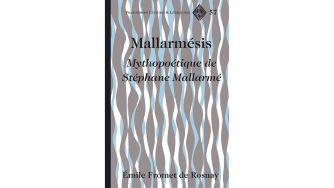
Mallarmésis: Mythopoétique de Stéphane Mallarmé. New York: Peter Lang, 2011.
Articles
Fromet de Rosnay, Emile. “Agamben’s Posthuman Mediality: Ethics, History and Language” in Symposium. Canadian Journal of Continental Philosophy, Vol. 23, No. 2 (Fall 2019).
Fromet de Rosnay, Emile. “Benveniste inconnu ? Petite histoire d’une non-réception américaine” in Émile Benveniste 50 ans après les Problèmes de linguistique générale. Irène Fenoglio and Giuseppe d’Ottavi (eds.), Paris: Éditions rue d’Ulm. 2019.
Fromet de Rosnay, Emile. “Taunting the Useful: Wondrous Gestural Potential (with Agamben)” in David Cecchetto (ed.). Phono-Fictions and Other Felt Thoughts. Victoria, Seattle: Noxious Sector Press, 2016: 37-68.
Fromet de Rosnay, Emile. “Mallarmé’s ‘Salut’ and the Tragic ‘Acte’”, in Joseph Acquisto (ed.), Thinking Poetry: Philosophical Approaches to Nineteenth-Century French Poetry. London: Palgrave MacMillan, 2013: 131–148.
Fromet de Rosnay, Emile. “The Circuits of Reading the Digital: Some Models,” in Scholarly and Research Communication 3:4, 2012. https://src-online.ca/index.php/src/article/view/64
Fromet de Rosnay, Emile. “Le Coup de dés numérisé : modèles, défis, perspectives” in Synergies Canada 3. 2012. https://www.erudit.org/en/journals/synergies/1900-v1-n1-synergies07025/1089323ar.pdf
Fromet de Rosnay, Emile. “Science and Symptom from Mallarmé to the Digital Poet”, Text and Image Relations in Modern European Culture, Grigorian, Natasha, Thomas Baldwin and Margaret Rigaud-Drayton (eds.). West Lafayette, IN: Purdue University Press, 2012.
Fromet de Rosnay, Emile. “Allégorie et lectricide: l’hétérogène dans Moi, l’interdite d’Ananda Devi” in Écritures mauriciennes au féminin : penser l'altérité. Paris: L’Harmattan, 2011.
With Greg Lessard, Stéfan Sinclair, Max Vernet, François Rouget, Élisabeth Zawisza, Élise Blumet, Anne Graham. “TopoSCan à la recherche de la topique Romanesque”, in Daniel Maher (ed.), Tempus in fabula. Topoï de la temporalité narrative dans la fiction d’Ancien Régime (Québec: Presses Universitaires de Laval, 2006): 21-32.
Lessard, Greg (principal author), S. Sinclair, M. Vernet, F. Rouget, E. Zawisza, E. Fromet de Rosnay, E. Blumet. “Pour une recherche semi automatisée des topoï narratifs” in Enjalbert, Patrice et Mauro Gaio (eds.), Approches sémantiques du document électronique. Actes du septième colloque international sur le document électronique : CIDE 7 (Paris: Europia, 2004): 113-130.
Selected presentations / talks / workshops
Invited talk on "Research-Creation: anarchy, improvisation, gesture", Roundtable on Method at UNICAMP, Campinas, Brazil, March 20, 2025.
Invited presentation of my book, Mallarmésis, at DEPLA/UNIFAP, Macapá, Brazil, March 18, 2025.
Invited presentation of The Tour de France at UEAP, Macapá, Brazil, March 17, 2025.
Invited presentation of "La Lecture d’un poème modern", at PPGLET/UNIFAP, Macapá, Brazil, March 17, 2025.
Book launch of Taunting the Useful, Ministry of Casual Living, Dec 10, 2024.
Invited presentation of Taunting the Useful at SFU, School for the Contemporary Arts, November 21, 2024.
Panel discussion on Research-Creation, UVic/CSPT, October 2, 2024.
“Derrida’s Anarchism, Malabou and Another World,” at 8th Derrida Today conference, National and Kapodistrian University of Athens, Athens, Greece, June 10-14, 2024.
INVITED KEYNOTE LECTURE: “Derrida's Anarchism: Malabou, Another World and the F(r)iction of Governmentality,” Birkbeck College Law School one-day symposium on “Derrida and His Legacy within Critical-Legal Studies: Twenty Years Since His Death,” June 6, 2024.
Night of Sonnets, reading of two sonnets (Baudelaire and Mallarmé), April, 2025.
Roundtable and Conversation: “Art in Times of Crisis” with Prof. Cecilia Enjuto Rangel Associate Professor, Department of Romance Languages, University of Oregon. 37th Colloquium of the Department of Hispanic and Italian Studies at UVic. Friday, October 13, 2023.
“Le Discours des algues.” Conference presentation at ACFAS 2023 at the Université de Montréal, May 11-12, 2023.
“When the Derridean Demonic Retrotranscribes Agamben’s Daimon: Towards a Response-able (Im)Potentiality?” Paper presented ONLINE at annual Derrida Today conference, 7th Derrida Today Conference, Arizona State University (Washington Center), June 12th – 15th, 2022.
“Dialogues with Nature: Biophilial Poetic Encounters with Mauritius”. Humanities for the Anthropocene international conference, University of Victoria, July 2021