
Co-op Student of the Year
Each year, we recognize three co-op students who have made outstanding achievements in their academic achievement, workplace performance and community involvement. Winners are announced in November.
One student is selected from each of our three major program areas:
- Business
- Engineering and Computer Science
- Optional and Professional Programs (all other programs)
One recipient each year is also nominated for the provincial and national awards:
Nominations
Each UVic Co-op program area will nominate a Student of the Year each fall. To be eligible, students must have completed at least ONE co-op work term during the current calendar year. Co-op staff will contact students about nominations in the fall.
Nomination packages include:
- A copy of the student's transcript.
- A copy of the student's résumé.
- A testimonial from an employer stating how the student demonstrated initiative and/or contributed to the workplace's organizational goals.
- A testimonial from the student outlining how co-op enhanced their career development, personal development and academic experience.
- A testimonial from the student's co-op coordinator supporting the student's nomination.
2025 winners

Jack Taylor (Business - commerce)
Community connection is extremely important to third-year Gustavson School of Business commerce student Jack Taylor (he/him)—it has shaped the direction of his education and work experiences at UVic. As a member of the Red River Métis, finding meaningful work supporting Indigenous communities is a major focus.
For his first co-op work term, Jack joined the team at mechanical engineering firm AME Group, where he worked as a marketing and communications co-op student. He supported outreach for the ḴEL, ḴELOŦEN ȻE S, ISTEW̱ Education Fund (which translates to “a dream for what becomes of you”). This program provides funding, mentorship and co-op opportunities to Indigenous students pursuing careers in engineering and architecture.
Currently, less than 1% of engineers and even fewer architects in Canada are Indigenous. This program was created to encourage more Indigenous participation in these industries.
“I developed branding guidelines, created outreach materials, and built a national contact database to share the opportunity with communities, universities, and scholarship aggregators,” says Jack. “I also met directly with schools and tribal councils to walk them through the program, answer questions and tailor our services to best fit program needs.”
Since completing the work term in August, Jack has been immersed in his foundational year of his commerce program. His goal for future work terms is to build on the growth he experienced at AME, ideally further developing his business skills while helping to improve or support Indigenous culture or initiatives.
Currently, Jack works with VIDEA, where he facilitates art programming that connect youth (including Indigenous youth) experiencing homelessness and housing insecurity to culturally safe spaces, community and creative expression.
“I have continued to find work that feels purposeful,” he says. “I have learned to focus on what I can control and stay optimistic; I’ve also learned that building real connections with people matters. These relationships are genuine and valuable.”
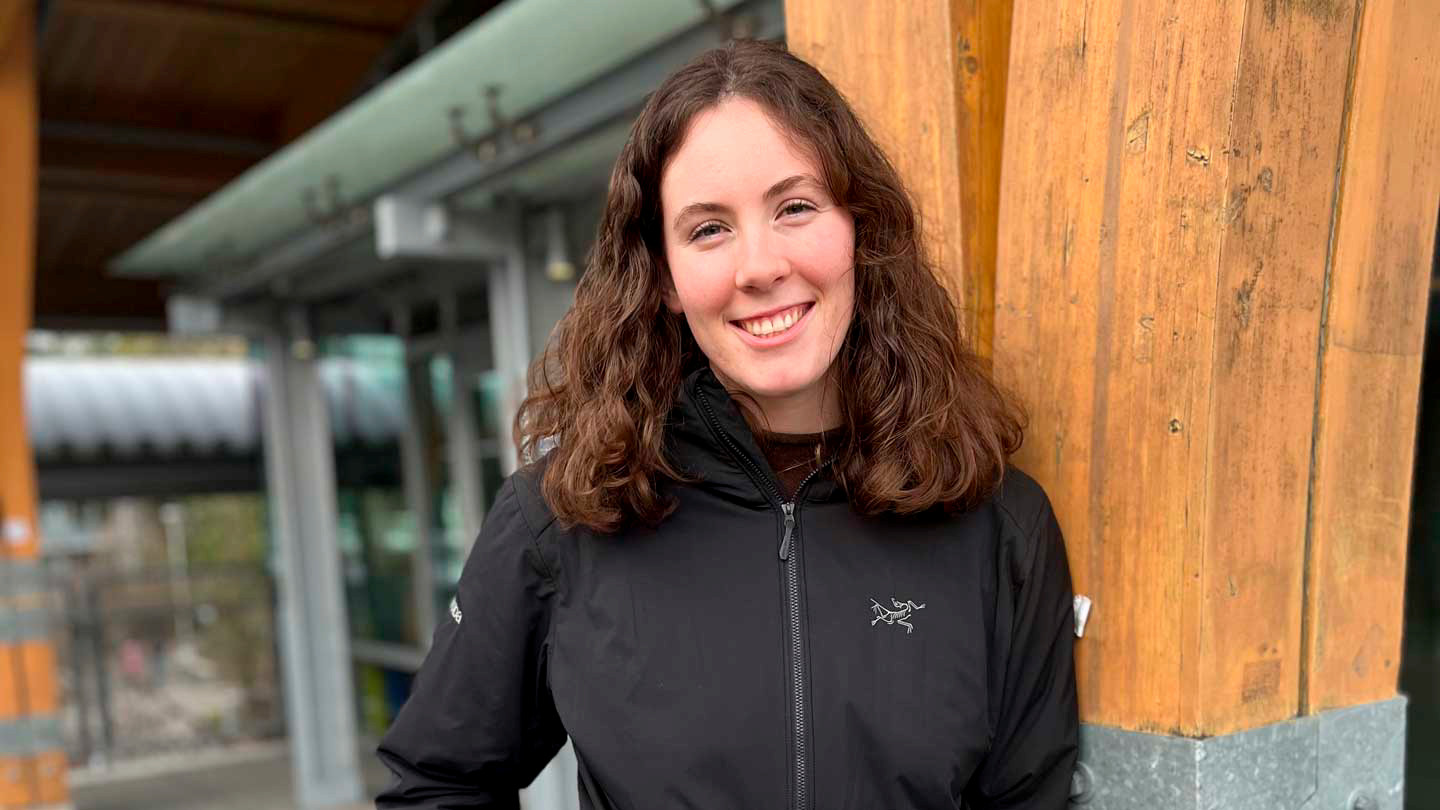
Meghan Whyte (Engineering - mechanical engineering)
Meghan Whyte (she/her) loves a challenge. Whether that’s training for an Ironman, working on projects with various engineering student clubs, or diving into new responsibilities at work, the third-year mechanical engineering student carries this drive into every co-op term. It’s no surprise that she’s lauded by her employers for staying curious, asking questions, and cultivating positivity.
During her co-op work terms with Platinum Engineering and Introba, Meghan contributed to more than 30 projects with engineers across Canada, gaining hands-on experience in HVAC and plumbing design, LEED accreditation, site reviews, system simulations, and traction power systems. At Platinum Engineering, one of Meghan’s biggest challenges was mastering the Revit software program, used for modeling HVAC and piping systems.
“I was asked to create a functional Revit model of the traction power and electrical systems for the Maintenance and Storage Facility for Calgary’s largest infrastructure investment project in the city’s history - the Calgary Greenline LRT,” says Meghan. “It was a challenging but incredibly rewarding project.”
Co-op has also helped Meghan grow into a leader. She has chaired workload meetings, helped build office culture by planning team events, and represented Introba at the Passive House Canada Pulse Event, where she spoke about the value of industry mentorship in shaping early-career engineers.
“My invitation to present at the Passive House Canada Pulse was a defining moment in my career so far,” says Meghan. “Presenting about the WEST (Women in Engineering, Science and Technology) and Introba Passive Building Prototype Project in front of sustainable design experts and having meaningful discussions afterwards made the field of sustainable building design feel accessible and enriching. It was exciting to have my perspective heard and to know that I have a voice in this community.”
Her colleagues at Introba agree. “She consistently showed up at the office with an amazing attitude—ready and willing to learn, taking on any tasks and challenges thrown at her with enthusiasm,” says her supervisor. “Meghan's contribution helped our team complete many projects on time and on budget, improving relationships with clients & increasing reputational capital for the firm as a whole.”
These co-op experiences have helped Meghan confirm the type of career she wants to pursue after graduation: energy-efficient engineering that values both people and place are key priorities. Her experiences also helped her draw connections between the theory she learned in the classroom and its applicability in the workplace.
“Work-integrated learning has been pivotal in shaping me as a future engineer,” she says. “While the classroom has taught me the theory and principles of engineering, the co-op program has allowed me to apply engineering in a way that is collaborative, hands-on and in the best interest of the community.”
“During her time at Introba, Meghan consistently brought her best to the team, and we look forward to witnessing her successes in the future.”
K'sana Wood Lynes-Ford (Optional and Professional Programs - biology)
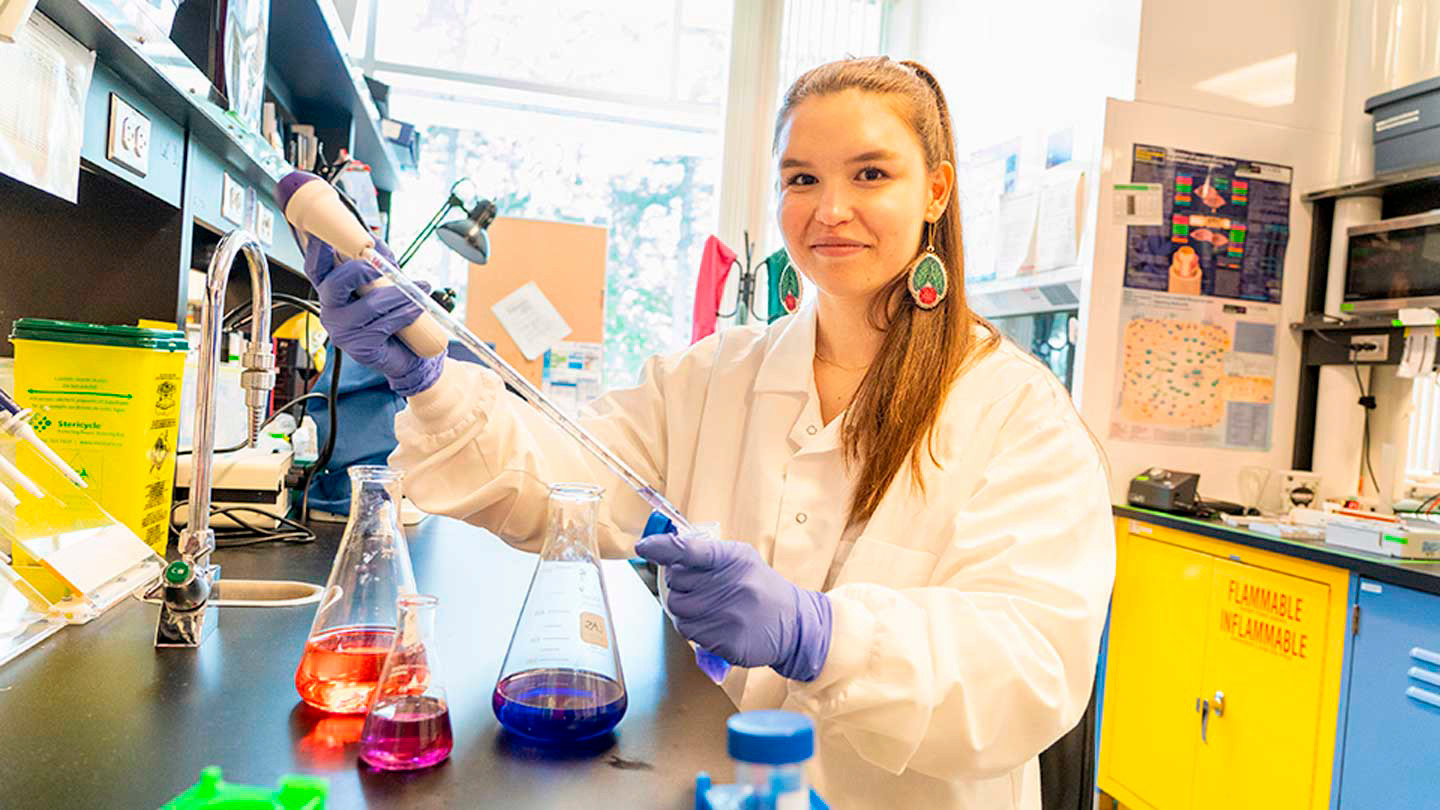
Chemistry student K’sana Wood Lynes-Ford (she/her) is passionate about engaging in work that advances medicine and research for Indigenous communities. As a member of the Kwakwakaʼwakw (‘Namgis), Gitxsan (Gitanyow), and Tsimshian (Gitxaala) First Nations, she found co-op experiences that aligned with this goal, completing three work terms with the Swayne Lab and Community Genetics Research Program (CGRP) at the University of Victoria.
After receiving a research internship award from the International Brain Research Organization and Centre for Brain Health (IBRO-CBH), K’sana worked with supervisors Dr. Laura Arbour and Dr. Leigh Anne Swayne to study the impacts of genetic variants on the health of the Gitxsan People.
Some genetic variants found in the Gitxsan First Nation have been associated with health conditions such as heart arrhythmias, fainting, seizures, and brain aneurysms. This research is an example of community-based participatory research, where the research is driven by the community interests and needs.
“This project’s subject matter has personally affected me and my loved ones and because of this research I can personally aid in the effort to understand health issues affecting my community,” says K’sana. “Throughout my time with the CGRP and Swayne Lab, I have visited the Gitxsan First Nation on two separate occasions to share my research contributions to my community.”
These WIL experiences have contributed to K’sana’s increased confidence in the lab and as a scientist – even leading to two publications. “When I started this WIL opportunity, I had very little lab experience. I was required to complete many certifications ranging from ethics to sterile technique and laboratory safety.”
K’sana is named after the Skeena River, known as the ’Ksan River, which runs through the heart of Gitxsan traditional territory. Her name loosely translates to “Woman of the River”.
Outside of co-op, K’sana is an active member of the UVic Indigenous student community. She currently serves on the Native Students Union Council as Firekeeper and has previously worked in the First People’s House as a campus cousin.
Looking towards the future, K’sana plans to become a medical doctor and continue to support Indigenous communities through ethical medical practice and research.
“This WIL experience has allowed me to support my peers to pursue similar opportunities, which is essential as many Indigenous students do not have familial supports to navigate academia or know how to network in search of WIL opportunities,” says K’sana. “This experience has given me the fundamental knowledge to continue in this field.”
K'sana is also the recipient of the 2025 Co-op Student of the Year award from the Association for Co-operative Education and Work-Integrated Learning BC/Yukon.
Past winners

Henry King (Business - commerce)
Henry King doesn’t shy away from a challenge. After being hired as a co-op student for Sure Grip Controls (soon to be rebranded to Bailey Electronics), the entrepreneurship student stepped into a project manager role when his supervisor unexpectedly left the company. Soon, he was overseeing 9 projects for the manufacturer of engineering joysticks, armrests, sensors and throttles for the off-highway industry.
“While initially overwhelming, I reviewed all project documentation, met with each team and made sure that each project was brought up to an operational standard,” says Henry. “This experience greatly improved my ability to prioritize, organize and lead under pressure.” Henry made such a difference that he was asked to stay for a second co-op term at Sure Grip Controls, where he salvaged a contract with a client that kept a $400K deal on the books.
Henry is also active in his community; he’s a varsity rower, serves team’s fundraising chairperson, and is an Impact Investment Fellow with Propel Impact.

Aislinn Dressler (Engineering - civil engineering)
As a civil engineering student, Aislinn Dressler is incredibly driven. The fourth-year student has leveraged each of her co-op experiences to learn about herself and develop the perfect career path, starting with a co-op in software engineering at Teck Resources, then as a building science and restoration student with RJC Engineering, and most recently as a Rising Star Research Fellow with the University of Waterloo’s civil and environmental engineering team, the first time a UVic student has received this honour.
At Waterloo, Aislinn designed a new Virtual Mobility Lab, conducted a sensitivity analysis of a micro simulation model for pedestrians, and wrote a research paper on the methodology of a virtual reality cycling research.
“During my work term, I attended the Institute of Transportation Engineers Canada Conference in Hamilton. This conference exposed me to how different professionals interact with transportation design and to the cool new things happening across Canada. My work-integrated learning experiences have not only deepened my understanding of the field but also reinforced my commitment to making a difference in sustainable transportation.”
Izzy Morrissey (Optional and Professional Programs - biology)

Izzy Morrissey (biology) has always known that she wants to be a doctor specializing in pediatrics. Her love for science and drive to make a meaningful impact on the lives of children and their families has made this an obvious choice. A fifth-year student, Izzy completed her second co-op at Victoria General Hospital, where she received the BioTalent wage subsidy award, enabling her to pursue hands-on learning.
At Rehab Medicine, Izzy worked everyday with Spasticity patients; measuring range of motion, assisting and hand holding during procedures. The research Izzy was apart of is known as Cryoneurolysis for Spasticity, pioneered by Dr. Daniel Vincent and Dr. Paul Winston. “This experience solidified my passion for healthcare and my desire to pursue a career that integrates scientific knowledge with compassionate care,” says Izzy.
“Throughout my placement, I became acutely aware of systemic gaps in the healthcare system. I was inspired by the team and clinic’s commitment to inclusivity and their efforts in trauma-informed care, addressing systemic inequities, and prioritizing culturally safe practices.”
Over the course of her co-op, Izzy connected with another spasticity expert from Children’s Healthcare of Atlanta and ended up traveling to Atlanta to shadow him. Recognizing the lack of representation for children with cerebral palsy and the challenges of explaining medical procedures, she wrote a children’s book to help young patients understand their treatments.
Determined to support future research, Izzy dedicated countless hours securing provincial and federal grants to establish a long-term research assistant position at VGH. Her passion led her to develop a non-profit organization focused on spasticity research and awareness. Beyond her research, Izzy serves as the UVic Senate’s student representative for the Faculty of Science and actively mentors students pursuing careers in healthcare.
Izzy is also the recipient of the 2024 Co-op Student of the Year award from the Association for Co-operative Education and Work-Integrated Learning BC/Yukon.
Isabel de Verteuil (Business - MBA)
Isabel de Verteuil spent last summer working as a strategic planning analyst co-op student with the British Columbia Environmental Assessment Office, where she designed methods to assess the organization’s progress towards its strategic goals and created an organization-wide management data plan. Isabel was also nominated for the BC Public Service Student Employee of the Year Award.
Ethan Barillo (Engineering - civil engineering)
Ethan Barillo was hired by Bird Construction to work on LEED-certified plans for a new HandyDart Bus Station here in Victoria. Barillaro helped procure and set up agreements with trades and vendors and was a stand-out employee recognized for his initiative and positivity. He has also become a mentor for his cohort, offering support to students who apply to work at Bird, which has led to two more students being hired over the past year.
Toby Murray (Engineering - software engineering - entrepreneurial)
A software engineering student who launched his own video game studio during an entrepreneurial work term, Toby Murray worked with a mentor to develop a marketing plan and fine-tune a playable demo of his game called Random Access Mayhem, which made its debut at an in-person event the week after his co-op ended. Toby has been an incredible advocate of entrepreneurial co-op, presenting to students about his experiences in classes, forums and to student clubs.
Nina Kanapi (Optional and Professional Programs - MEd in educational psychology)
A mother of two with thirteen years of teaching experience who moved to Canada from the Philippines to pursue her Master of Education in Educational Psychology, Nina Kanapi completed her first co-op at Broadmead Care Society, a non-profit long-term care home for seniors, veterans, and adults with disabilities. Although Nina was hired as an activity worker, she became the first co-op student at Broadmead Care to lead a quality improvement project where she created a Participant Audit Tool to assess resident program engagement.
Read longer stories about our 2023 Co-op Student of the Year recipients.
Lauryn Orme (Business - commerce)
Lauryn Orme brings her passion for continuous learning to everything she does, and her co-op placement at Workday Inc. was no exception. By providing strategic guidance for internal initiatives, Lauryn tackled challenges like supply chain impacts and changing client needs. Her ability to leverage her communications skills, reflectiveness and strategic thinking to adapt to a changing climate made an impact on her organization, where she went above and beyond to plan events like a lunch and learn and a Movember campaign.
Muskan Hans (Engineering and Computer Science - computer science)
When international student Muskan Hans began her studies in Canada in 2016, she struggled with physical and mental health issues while far from her home in India. While Muskan had doubts about whether she would succeed in co-op, her first work term with BC Pension Corporation built her confidence and communication skills as she brought her adaptability and technical expertise to the team. Initially hired in quality assurance, Muskan’s diligence and eagerness to learn led to her taking on more responsibility across a number of job roles, from quality assurance to business analyst.
Camas Ussery (Optional and Professional Programs - law)
During her three years in UVic’s law program, Camas Ussery spent countless hours studying the Canadian common law system. So, when she began a co-op work term with the South Island Indigenous Authority (SIIA), she committed to learning about Coast Salish/Nuu-chah-nulth law and culture through community engagement at craft nights, youth dinners and a ‘Gathering of Aunties.’“I’ve witnessed the human impact of the law with SIIA,” she says. “It can seem very abstract in law school. I’m motivated to understand why legal decisions are made and who they impact.”
Read longer stories about our 2022 Co-op Student of the Year recipients.