
Dr. Tao Wang
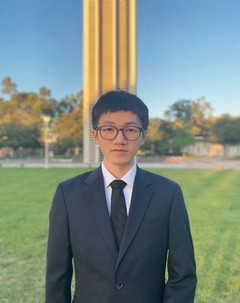
Assistant Professor
Economics
- Status:
- On leave: Sept 5, 2026 - Dec 5, 2026
- Contact:
- Office: BEC 392 taow@uvic.ca 250-721-6482
- Credentials:
- PhD (UC Riverside)
- Area(s) of expertise:
- Econometrics, Nonparametric Statistics, Machine Learning
- Related links:
Bio
Tao Wang is an Econometrician who studies issues in Nonparametric Estimation and Machine Learning. His current research concentrates on building and developing a broad variety of modal and mode-based regression models and investigating their statistical inference with possible applications.
He also works on applying Econometrics and Machine Learning in an integral manner to improve the performance of Econometrics Models. He received his PhD from the University of California, Riverside in June 2022.
Interests
- Econometrics
- Nonparametric Statistics
- Machine Learning
Selected Publications
- Wang, Tao, and Weng Kee Wong. Forthcoming. "PSO-FDR: Particle Swarm Optimization for Functional Dimension Reduction." Journal of Computational and Graphical Statistics.
- Wang, Tao, and Xiaoting Zhong. Forthcoming. “Graph-Regularized Multimodal Latent Modeling in Educational Measurement.” Journal of Educational and Behavioral Statistics.
- Wang, Tao, and Xiaoting Zhong. Forthcoming. “Graph Neural Item Response Model for Networked Learning Environments.” Journal of Educational and Behavioral Statistics.
- Wang, Tao, and Weixin Yao. 2026 Preprint. “Nonparametric Spatial Modeling towards the Mode.” Statistica Sinica 37. https://doi.org/10.5705/ss.202024.0339.
- Wang, Tao. 2026. “Adaptive Mode Learning for Nonstationary Streaming Data.” Journal of Computational and Graphical Statistics 1–22. https://doi.org/10.1080/10618600.2026.2708056.
- Wang, Tao. 2026. “Testing Distributional Granger Causality with Entropic Optimal Transport.” Journal of Time Series Analysis 1-25. https://doi.org/10.1111/jtsa.70057.
- Wang, Tao. 2026. “Online Randomized Distributionally Robust Forecast Combination for Dependent Data.” Journal of Time Series Analysis 1–26. https://doi.org/10.1111/jtsa.70056.
- Wang, Tao. 2026. “I Think You Think I Think: Hierarchical Belief Learning and Endogenous Volatility Dynamics.” Journal of Economic Dynamics and Control 193: 105421. https://doi.org/10.1016/j.jedc.2026.105421.
- Wang, Tao. 2026. “Mode Meets Mean: A New Robust Volatility.” Journal of Time Series Analysis 47 (6): 1198–1205. https://doi.org/10.1111/jtsa.70022.
- Wang, Tao. 2026. “Robust Semi-Functional Censored Regression.” Journal of Multivariate Analysis 211: 105491. https://doi.org/10.1016/j.jmva.2025.105491.
- Wang, Tao, and Weng Kee Wong. 2026. “Doubly Debiased Robust Subsampling for Transfer Learning.” Journal of Machine Learning Research 27 (129): 1–53. https://www.jmlr.org/papers/v27/25-2221.html
- Wang, Tao, and Weixin Yao. 2026. “Kernel Mode-Based Regression under Random Truncation.” Statistica Sinica 36 (1): 1–23. https://doi.org/10.5705/SS.202023.0288
- Wang, Tao, and Weixin Yao. 2026. “Adaptive Robust Estimation for Varying Coefficient Models.” Computational Statistics & Data Analysis 222: 108400. https://doi.org/10.1016/j.csda.2026.108400.
- Wang, Tao, and Xiaoting Zhong. 2026. “Geometry-Misalignment in Distributional Learning.” In Proceedings of the International Conference on Machine Learning (ICML).
- Lee, Tae-Hwy, and Tao Wang. 2025. “Estimation and Testing of Forecast Rationality with Many Moments.” Macroeconomic Dynamics 29: e124. https://doi:10.1017/S1365100525100400.
- Ullah, Aman, and Tao Wang. 2025. “Modal Volatility Function.” Journal of Time Series Analysis 46 (4): 748–773. https://doi.org/10.1111/jtsa.12790.
- Wang, Tao. 2025. “Distributed Learning for Kernel Mode-Based Regression.” The Canadian Journal of Statistics 53 (2). https://doi.org/10.1002/cjs.11831.
- Wang, Tao. 2025. “Mode-Adaptive Factor Models.” Scandinavian Journal of Statistics 52 (3): 1206–1238. https://doi.org/10.1111/sjos.12785.
- Wang, Tao. 2025. “Optimal Subsampling for Functional Quasi-Mode Regression with Big Data.” Journal of Computational and Graphical Statistics 34 (2): 552–566. https://doi.org/10.1080/10618600.2024.2402279.
- Wang, Tao. 2025. “Semi-Functional Varying Coefficient Mode-Based Regression.” Journal of Multivariate Analysis 207: 105402. https://doi.org/10.1016/j.jmva.2024.105402.
- Wang, Tao. 2025. “Parametric Modal Regression with Autocorrelated Error Process.” Statistica Sinica 35 (1): 457–478. https://doi.org/10.5705/ss.202021.0405.
- Wang, Tao, and Weixin Yao. 2025. “Online Kernel-Based Mode Learning.” Journal of Computational and Graphical Statistics 34 (3): 1498–1512. https://doi.org/10.1080/10618600.2025.2459287.
- Wang, Tao, and Weixin Yao. 2025. “Nonparametric Spatial Mode-Oriented Regression.” Electronic Journal of Statistics 19 (2): 4256–4311. https://doi.org/10.1214/25-EJS2427.
- Wang, Tao. 2024. “Nonparametric Estimator for Conditional Mode with Parametric Features.” Oxford Bulletin of Economics and Statistics 86 (1): 44–73. https://doi.org/10.1111/obes.12577.
- Wang, Tao. 2024. “Nonlinear Kernel Mode-Based Regression for Dependent Data.” Journal of Time Series Analysis 45 (2): 189–213. https://doi.org/10.1111/jtsa.12700.
- Ullah, Aman, Tao Wang, and Weixin Yao. 2023. “Semiparametric Partially Linear Varying Coefficient Modal Regression.” Journal of Econometrics 235 (2): 1001–1026. https://doi.org/10.1016/j.jeconom.2022.09.002.
- Ullah, Aman, Tao Wang, and Weixin Yao. 2022. “Nonlinear Modal Regression for Dependent Data with Application for Predicting COVID-19.” Journal of the Royal Statistical Society: Series A (Statistics in Society) 185 (3): 1424–1453. https://doi.org/10.1111/rssa.12849.