
Dr. Brian Thom
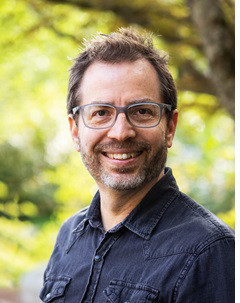
Professor, Chair, & Provost’s Engaged Scholar
Anthropology
Accepting graduate students
- Contact:
- Office: Cornett B246B bthom@uvic.ca
- ORCID:
- 0000-0003-0439-5153
- Credentials:
- PhD (McGill)
- Area(s) of expertise:
- Cultural anthropology, Indigenous legal orders and land rights, ethnographic mapping, space and place, Coast Salish
- Related links:
Bio
Dr. Brian Thom’s research investigates the critical intersections of Indigenous legal orders, governance, and land rights with colonial state power, focusing on the dynamics of knowledge, culture, and place. His award-winning, community-engaged scholarship, conducted in close collaboration with Indigenous communities in Coast Salish territories, integrates ethnographic, archaeological, and applied policy research approaches to support Indigenous self-determination, advance reconciliation, and foster transformative public understanding. His current initiatives expand into cross-cultural international partnerships, exploring comparative public archaeology models from Japan to inspire and inform heritage policy reform in British Columbia.
In 2025 he received the UVic Faculty of Social Sciences Above and Beyond Award for excellence in media relations. In 2023, Dr Thom was awarded Google’s Geo for Good Impact Award for his research and advocacy supporting Indigenous land rights. In 2022 Dr Thom was received the prestigious Leadership Victoria award for Extending Reconciliation. In 2021, Dr. Thom was named UVic’s Provost’s Engaged Scholar, an award recognizing excellence in Community-Engaged research and teaching, a title which was renewed in 2026 in recognition of his ongoing leadership in this area. In 2020 he received the UVic Faculty of Social Sciences Outstanding Community Outreach Award.

Brian Thom is profiled on Wikipedia, and maintains a website of his writing and other work.
Dr. Brian Thom answers the question " What is Anthropology?" for the People, Past and Place podcast.
Dr. Brian Thom is featured in the Borders in Globalization podcast on the question of “Borderities and Territorialities of Indigenous Peoples” https://biglobalization.org/outputs/big-podcast-brian-thom/
International Affiliations: Visiting Research Fellow at Ritsumeikan University's Center for Pacific Rim Civilizations (2025–present).
Interests
-
Indigenous Rights and Indigenous Legal Orders
-
Modern-day Treaty Negotiations and Implementation
-
Coast Salish peoples and territories (Land, Law, and Governance)
-
Place, place names, and political ontology
-
Ethnographic Mapping and Cultural Landscapes
-
Applied Anthropology (Land Use, Policy, Reconciliation)
-
Community-Engaged Research and Collaboration
- AI Governance and Indigenous Justice
- Public Archaeology and Indigenous Heritage Governance (Jōmon and Coast Salish)
Courses
-
ANTH 311 Introduction to Engaged and Practicing Anthropology
-
ANTH 318 Ethnographic Research Methods
- ANTH 433 Ethnographic Approaches to Coast Salish Land, Law and Culture
- ANTH 460/520A Ethnographic Mapping and Indigenous Cartographies
- ANTH 499 Honours Seminar
-
ANTH 585/685 Advanced Research Seminar in Space, Place, Knowledge, Power
-
ANTH 600 Professional Development in Anthropology
Current projects
Working with Indigenous legal scholar Dr. Sarah Morales in UVic's Faculty of Law, Dr. Thom has an ongoing project on Coast Salish legal orders, and their entanglements with Canadian law.
One of the central contributions of this work is to develop a framework for ethnographic methods -- which attend culturally and historically to a broad range of discourse, practice, and social and political structure -- to the emerging scholarship on Indigenous law in Canada.
The work is attuned to practical application of these entangled legal orders to further empower Indigenous communities. Students participating in field schools through UVic's new JD/JID program are an important part of this work.
Dr. Thom is a co-applicant on a SSHRC Insight Grant examining the enduring impacts of the 1884 Esquimalt and Nanaimo (E&N) Railway land grant. This project investigates the profound intersections between private property, Indigenous legal orders, and the aspiration for territorial justice. A central focus of this work is understanding how Indigenous property relations and ancestral connections to the land—such as those of the Island Hul'q'umi'num' peoples—have persisted despite massive colonial land alienation.
Through initiatives like the Hul'q'umi'num' Treaty Group's ongoing efforts and recent milestones like the 2025 Cowichan Tribes v. Canada BC Supreme Court decision—which affirmed that Aboriginal title survives the creation of private property and declared overlapping fee-simple titles defective—this research explores creative legal, political, and relational avenues for how Indigenous title and state property rights might coexist. The project investigates how Indigenous jurisdiction can unfold on private lands while highlighting the limitations of current state frameworks, such as the burden required to prove exclusive "spot title" over dynamic, relational Coast Salish land tenure.
To learn more about the public-facing outcomes of this work, visit The Great Land Grab project website, or watch Dr. Thom’s recent video interview produced for the project’s travelling exhibition.
Brian Thom founded and directs UVic’s Ethnographic Mapping Lab.
Dr. Thom’s ongoing work in mapping deploys ethnographic sensibilities to cartographic projects that are socially and politically powerful, particularly in support of Indigenous peoples title, rights and governance, and in promoting Indigenous place-based knowledge.
Dr. Thom primarily works with Google’s geo-tools (Google Earth, Google MyMaps, Google Earth Engine, Google Maps, etc). to leverage their powerful visualization framework with their highly accessible, low barriers workflows. Through these engagements, the research works to better reflect indigenous territoriality, land tenure, and senses of and attachments to place.
Working in a new partnership with Ritsumeikan Global Innovation Research Organization (R-GIRO) at Ritsumeikan University in Kyoto (Japan) and with Cowichan Tribes, this project examines the striking differences in how archaeological heritage is understood, presented, and protected in Japan compared to Coast Salish territories in BC.
Supported by a 3-year SSHRC Partnership Development Grant (2026-2029), we are exploring why these differences exist—looking at how societal values, laws, and public education shape the story of the past and its impact on the present. How do public narratives about archaeological sites influence community identity and politics? How do legal frameworks shape our understanding and stewardship of the past? Alongside these big questions, we are working to mobilize concrete solutions with the public archaeology work being led by Cowichan Tribes at Ye'yumnuts. This includes co-creating accessible 3D and AR digital tools and adapting international best practices to directly inform the development of new Indigenous and provincial heritage policy reforms.
Dr. Thom has several ongoing collaborations with Coast Salish communities to commemorate, celebrate and make visible cultural landscapes that have been threatened or impacted by urban development, which these communities have chosen to share with the larger public.
These projects have critical dimensions of engaging with publics – from school children to municipal planners – who can benefit from careful and sensitive anthropological lenses that at once challenge ongoing colonial legacies, and appreciate and foreground Indigenous ways of knowing and being.
The Commemorating Ye’yumnuts project with Cowichan Tribes is one of these projects. Their website provides resources for teachers working to incorporate Indigenous values and knowledge through BC’s new curriculum.
Ancient B.C. Indigenous settlement to become outdoor history classroom
Cowichan Valley ancestral site connects youth to their roots
Dr. Thom is the academic partner for project lead by Tla'amin Nation on looking at the nexus of Food, Climate, and Biodiversity in self-government under modern-day treaty. This work is part of the Canada case study for the UBC-bases SSHRC Partnership Grant project Solving-FCB https://solvingfcb.org/case-studies/canada/
This multi-year project examines the strategies and outcomes of First Nations communities’ work to incorporate food security into Indigenous rights and governance recognition agreements.
This work draws on the community-generated hypothesis that the implementation of Aboriginal and treaty rights, and establishment of successful self-governance frameworks are key to re-establishing food security, and seeks to highlight best practices in this critical but largely unstudied social determinate of community health and well-being.
Dr. Thom’s latest research explores the critical intersections of artificial intelligence, digital data governance, and Indigenous sovereignty. This work investigates how emerging technologies can be aligned with Indigenous legal orders and self-determination. Within his lab, this theoretical focus is paired with practical technological experimentation. By configuring secure, locally-hosted open-source large language models (LLMs) and retrieval-augmented generation (RAG) pipelines, this research aims to develop ethical, low-barrier workflows for complex text and document analysis that strictly uphold principles of Indigenous data sovereignty.
He is also actively experimenting with AI for handwriting recognition to analyze ethnographic fieldnotes and contributes to various AI initiatives across the university.
- Brian Thom is a member of the Montréal-based Centre for Indigenous Conservation and Development Alternatives where he works with Hul’q’umi’nun’ community partners and is co-lead of the community mapping axis.
-
Balance Co-Lab is a SSHRC Partnership Grant funded research team working to design and advance a sustainability framework for decision-making in Indigenous communities that ensures their values, knowledge and concerns are at the forefront as they assess development proposals on their lands. Dr. Thom is a co-investigator on this team, providing expertise on area of care for ancestral sites and place-based culture values. https://balancecolab.com/
Opportunities for prospective graduate students
Dr Thom has several new and ongoing research projects related to his work with and for Indigenous communities. Please contact him if you are interested in finding out more about opportunities with these projects in the Sep 2027 academic year and beyond.
For the September 2027 cohort, I am actively recruiting two MA students for positions funded in part through my SSHRC Partnership Development Grant. This project comparatively examines public archaeology and heritage stewardship in British Columbia and Japan. I am looking for students whose interests are inspired by the big questions of this grant to focus on:
Digital Heritage & Community Engagement: Exploring the role of accessible digital technologies (such as 3D/AR visualization) in the co-curating of heritage narratives, community-based research, and Indigenous data sovereignty.
Comparative Policy & Law – Japan & BC: Undertaking a comparative study of heritage legislative and policy frameworks to support Indigenous-led policy reform and governance.
Students with Japanese speaking and reading skills are strongly encouraged to apply to support the comparative aspects of this project, though applications from all qualified students will be considered.
【大学院生募集のお知らせ】
2027年9月入学の修士課程(MA)の大学院生を2名募集しています。カナダ・ブリティッシュコロンビア州の先住民社会と日本の縄文考古学における公共考古学、文化遺産政策の比較研究、およびデジタル・ヘリテージに関心のある学生を歓迎します。カナダの研究助成を受けた、京都の立命館大学との国際共同研究プロジェクトの一環です。日本語の読み書きができる学生からの応募を特に推奨します。
Selected publications
- 2026 - Thom, Brian and Kathleen Johnnie Mapping the Aspirations and Challenges of the Hul'q'umi'num' Peoples. pp. 179-228 in INSTEAD: Indigenous Stewardship of Environment and Alternative Development, edited by Colin Scott, Evodia Silva Rivera and Katie Sinclair. Toronto: University of Toronto Press.
- 2024 - Leaving Valdes, Staying Lyackson: Voices of the Indigenous Community of Valdes Island. Pp. 273-290 in Salish Archipelago: Environment and Society in the Islands Within and Adjacent to the Salish Sea, edited by Moshe Rapaport. Canberra: ANU Press.
- 2022 - Encountering Indigenous Legal Orders in Canada. Oxford Handbook of Law and Anthropology. Marie-Claire Foblets, et al, eds. London: Oxford University Press.
- 2020 - Addressing the Challenge of Overlapping Claims in Implementing the Vancouver Island (Douglas) Treaties. Anthropologica. 62(2):295-307 (31pgs).
-
2020 - Sarah Morales and Brian Thom. The Principle of Sharing and the Shadow of Canadian Property Law. Pp. 120-162 in Creating Indigenous Property: Power, Rights, and Relationships, edited by Angela Cameron, Sari Graben, and Val Napoleon. Toronto, University of Toronto Press.
-
2019 - Leveraging International Power: Private Property and the Human Rights of Indigenous Peoples in Canada. Pp. 184-203 in Scales of Governance and Indigenous Peoples' Rights, edited by Jennifer Hays and Irène Bellier. Law and the Postcolonial: Ethics, Politics, and Economy Series, Routledge, London. ISBN 9781138944480.
- 2019 - Tirer parti du droit international: la propriété privée et les droits des peuples autochtones au Canada. Pp 195-216 in Les échelles de la gouvernance et des droits des peuples autochtones, Sous la direction de Irène Bellier et Jennifer Hays. Paris, L'Harmattan. ISBN 978-2-343-17978-0.
- 2018 - Czaykowska-Higgins, Ewa, Deanna Daniels, Tim Kulchyski, Andy Paul, Brian Thom, S. Marlo Twance & Suzanne Urbanczyk. Consultation, Relationship and Results in Community-Based Language Research. Bischoff, S. & C. Jany (eds.) Pp. 66-93. Perspectives on Language and Linguistics: Community-Based Research. Mouton de Gruyter: Berlin/New York. Google Books.
-
2017 - Entanglements in Coast Salish Ancestral Territories. Pp. 140-162 in Entangled Territorialities: Negotiating Indigenous Lands in Australia and Canada, Edited by Françoise Dussart and Sylvie Poirier. Toronto: University of Toronto Press.
- 2016 - Thom, Brian, Benedict Colombi and Tatiana Degai – Bringing Indigenous Kamchatka to Google Earth: Collaborative Digital Mapping with Itelmen Peoples. Sibirica. 15(3):1-30.
- 2014 – Reframing Indigenous Territories: Private Property, Human Rights and Overlapping Claims. American Indian Culture and Research Journal. 38(4):3-28.
- 2014 - Confusion sur les territoires autochtones au Canada. In Terres, territoires, ressources : Politiques, pratiques et droits des peuples autochtones, edited by Irène Bellier. Paris, L'Harmattan, pp. 89-106.
- 2011 - Ecosystem Guide : a Hul'q'umi'num language guide to plants and animals of southern Vancouver Island, the Gulf Islands and the Salish Sea. Hul’qumi’num Treaty Group: Ladysmith and Parks Canada, Sidney (with BT contributions to HTG-authored work). UVic Library, PDF Version
- 2010 - The Anathema of Aggregation: Towards 21st Century Self-Government in the Coast Salish World. Anthropologica. 52(1):33-48.
- 2009 - The Paradox of Boundaries in Coast Salish Territories. Cultural Geographies . 16(2):179-205.
Recent graduate student theses
-
Tarling, Gemma (2025) Situating cultural heritage management: How the ȾEL¸IȽĆE / c̓əl̓íɫč Village in Cordova Bay informs the pasts, presents, and futures of BC Archaeology
- Doddridge, Shane (2025) Dimensions of Tŝilhqot’in toponymy: Language, heritage, and meaning
- Gislason, Aron (2024) ‘uw-wu tst lhu ‘ul melq’ ut (Lest We Forget): Revitalizing Memories of Early Quw’utsun Interactions with the Royal Navy.
- Argan, Jen (MA, 2022) - Legal Entanglements in Place: Hul'q'umi'num' law, provincial jurisdiction and the protection of Hw'teshutsun, a Hul'q'umi'num' cultural landscape.
- Martindale, Ella (MA, 2022) - Learning at Ye'yumnuts in Reflections.
- Hendrick, Jenna (MA, 2021) - Welcome back to caveman times: social consequences of (mis)representations of the Paleolithic.
- Fitzsimmons, Andrew (MA, 2020) – Indigenous and Parks Canada Agency Perspectives on the Management of Gulf Islands National Park Reserve.
- Baker, Jack (MA, 2020) - Caring for lhuq'us (pyropia spp.): mapping and remote sensing of Hul'qumi'num culturally important seaweeds in the Salish Sea.
- Letitia Pokiak (MA, 2020) - Meaningful consultation, meaningful participants and meaning making: Inuvialuit perspectives on the Mackenzie Valley Pipeline and the climate crisis.
- Amy Becker (MA, 2018) - Mapping the Unmappable in Indigenous Digital Cartographies.
- Justin Fritz (MA, 2017) - The SWELSWÁLET of the W̱SÁNEĆ Nation: narratives of a “nation (re)building process”.
- Ursula Abramczyk (MA, 2017) - Hul'qumi'num peoples in the Gulf Islands: re-storying the Coast Salish landscape.
- Kelda Helweg-Larsen (MA, 2017) - ČaɁak (Islands): how place-based Indigenous perspectives can inform national park ‘visitor experience’ programming in Nuu-chah-nulth traditional territory.
- Deidre Cullon (PhD, 2017) - Dancing salmon: human-fish relationships on the Northwest Coast.
- Tia Hiltz (MA, 2014) - Indigenous media relations: reconfiguring the mainstream
- Jane Welburn (MA, 2012) - First Nations, rednecks, and radicals: re-thinking the 'sides' of resource conflict in rural British Columbia
- Valine Crist (MA, 2012) - Protecting place through community alliances: Haida Gwaii responds to the proposed Enbridge Northern Gateway Project