
At the University of Victoria, we're combining research, technology and partnerships to strengthen Canada's capabilities from ocean to orbit. We're also training the talent needed to support national defence, Arctic sovereignty and critical infrastructure resilience.
A network of integrated talent and expertise
Dual-use and security challenges require more than a single technology. UVic brings together experts in advanced sensors, autonomous systems, secure computing, testing facilities, industry partners and highly qualified talent to develop civilian and defence solutions that work in real-world environments.
Aerospace, uncrewed and space systems
Researchers and students develop uncrewed aircraft, satellites and counter-drone technologies.
Maritime sensing and Arctic awareness
UVic integrates ocean observation, sensing and autonomous technologies to support maritime domain awareness.
AI, autonomy and control
Developing autonomous systems that can navigate and operate in complex environments across air, land and sea.
Quantum, cyber and secure computing
Canadian-owned research computing infrastructure that supports digital systems including quantum computing and cybersecurity research.
Protection, materials and the human body
UVic improves protective technologies through injury biomechanics, equipment testing and materials research.
Energy and infrastructure resilience
Expertise in microgrids, energy storage and marine energy systems that keep remote facilities running.
2012
CfAR is established and based at Victoria International Airport
$2.82M
Satellite contract under Defence Research and Development Canada SpaceLEO program
$4M
Related initiatives
PolarLink & SpaceLEO
Built under Defence Research and Development Canada's SpaceLEO program, the PolarLink satellite will test fast, low-delay communications through commercial satellite networks in low Earth orbit. The aim is better connectivity across Canada's North. View more
Satellite ground station & space test facilities
Shared infrastructure where small and medium-sized companies can develop and test space and dual-use technologies in Canada. It helps build local supply chains and reduces reliance on overseas technology. View more
Interceptor drones with AI-enhanced situational awareness
A $4.2 million, five-year project led by the ACIS Lab, with support from NSERC, Defence Research and Development Canada, Bombardier and Quaternion Aerospace, to design, build, test and fly drones capable of detecting and intercepting hostile uncrewed aircraft. View more
$700M
National and international infrastructure assets and expertise over 20+ years
4
Oceans observed: Pacific, Arctic, Atlantic and Antarctic
12,000+
Sensors collecting real-time ocean data
2,600 m
Depth reached by cabled observatories
Defence and dual-use technologies through interdisciplinary research
UVic brings together expertise from across engineering, science, social sciences and humanities to address complex defence and security challenges. Partners can access UVic’s network of labs, centres and research units to build knowledge and develop practical solutions with applications across defence, security and commercial sectors.
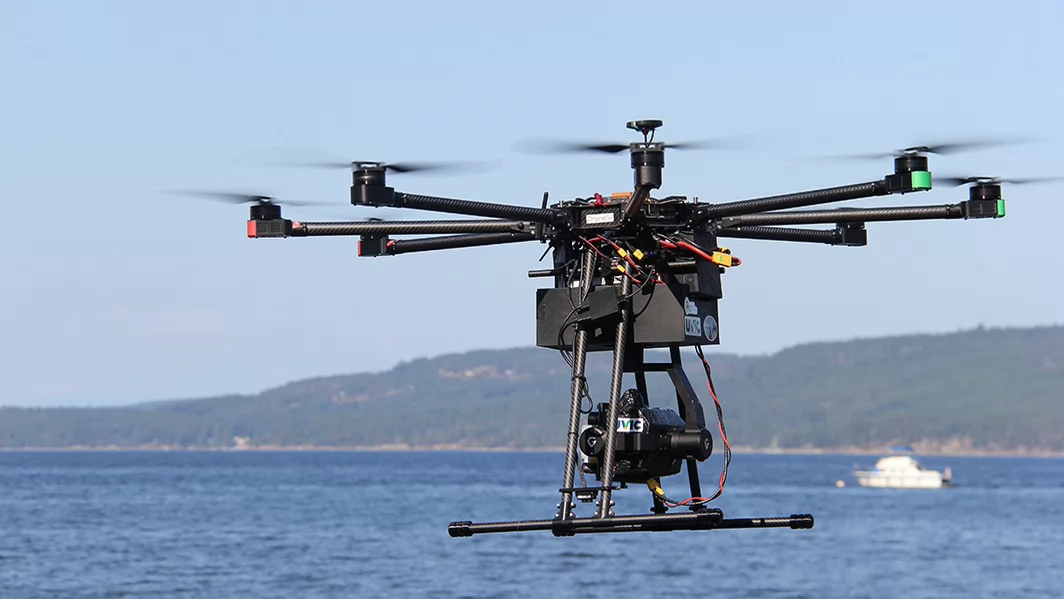
Advanced Control and Intelligent Systems (ACIS) Lab
Control, robotics and AI research supports autonomous aerial, ground and marine platforms, including counter-drone interceptors, AI-enabled drone mapping and remote border monitoring.

Expertise in borders, security, migration and human mobility informs evidence-based and critical responses to sovereignty and cross-border challenges from western and Indigenous perspectives.

Biomechanics and Instrumentation Lab
Research in injury biomechanics that helps assess injury risks and evaluate protective equipment, supporting the development of protective headgear, body armour and testing standards.

Canadian-owned and operated research cloud hosted at UVic for the Digital Research Alliance of Canada, supporting AI, simulation and data-intensive research.

Quantum Photonics Research Cluster
Expertise in quantum science and engineering advances quantum algorithms, scalable quantum processing and distributed quantum computing.

Information Security and Object Technology (ISOT) Lab
Research spans network security, intrusion and malware detection, and behavioural biometrics to strengthen digital security.
Build research security into your partnership
Defence and dual-use research partnerships need to address security requirements from the outset. UVic’s Research Security Unit helps researchers and partners navigate federal research security requirements.
News

Clean energy for the Coast Guard
UVic researchers are helping replace diesel in remote coastal operations.

$5.4M PacifiCan investment fuels aerospace and AI innovation at UVic
Funding for a space-enabled industries cluster at CfAR and an AI drone mapping system at the ACIS Lab.

CfAR selected for DRDC's SpaceLEO program
A CubeSat mission to test Arctic communications through commercial low Earth orbit constellations.

Bombardier names UVic its first academic partner
CfAR takes on scale-model design and flight testing for the EcoJet research aircraft.
Work with us
We work with defence and government organizations, Canadian industry, Indigenous partners and other post-secondary institutions. Tell us what you want to achieve and we can connect you with the right researchers and facilities.
Industry partnerships
Innovation and Partnerships, office of the Vice-President Research and Innovation.
Office of the Vice-President Research and Innovation
Briefing note
Supporting Canada's Defence Industrial Strategy: UVic's research, technology demonstration and workforce development.

Territory acknowledgement
We acknowledge and respect the Lək̓ʷəŋən (Songhees and Xʷsepsəm/Esquimalt) Peoples on whose territory the university stands, and the Lək̓ʷəŋən and W̱SÁNEĆ Peoples whose historical relationships with the land continue to this day.