
IntegritE-DNA: Fast, Reliable Environmental Sample Test
Assay that provides clear and precise analysis of nucleic acid molecules in environmental DNA samples
Background
Quantitative polymerase chain reaction (qPCR) for analysis of environmental DNA (eDNA) is a method that can assess and protect the biodiversity of land, waters, minerals, and resources. eDNA is genetic material released from organisms that can be found in their environment. Methods using eDNA have the potential to detect at‑risk or invasive species to inform environmental risk assessments while decreasing the cost when compared to traditional surveying of land. However, current eDNA methodologies have limited reliability and poor data quality resulting in false positives and negatives. This has prevented eDNA methodology from informing global policy and regulatory standards. There is a need for improved eDNA methods and the establishment of standards for eDNA processes before regulatory uptake.
Overview
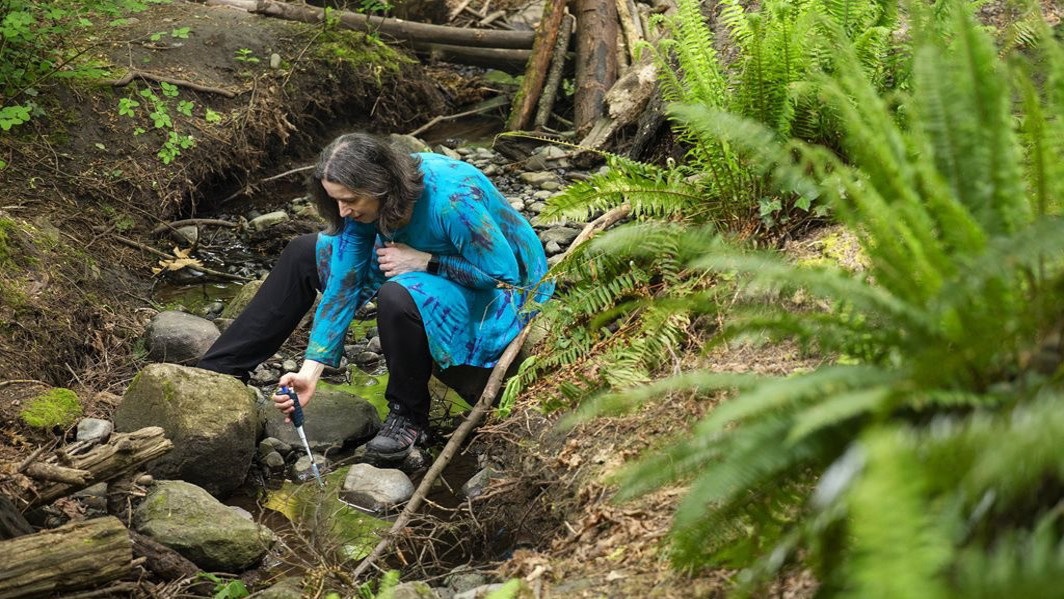
Dr. Caren Helbing, Professor of Biochemistry and Microbiology at the University of Victoria, has developed and patented a novel IntegritE-DNATM test that provides solutions to the issues found in common eDNA tests. The IntegritE-DNATM method only requires a scoop of water from the target area. The test uses plant DNA to determine if the sample has high enough integrity for animal DNA testing (Figure 1). Testing for sample integrity eliminates the inconsistency and lack of reliability found in eDNA tests currently on the market. If the sample passes the integrity test it can be used for a species‑specific test with confidence. The IntegritE-DNATM test can be used on water, soil, and sediment samples.

Traditional field testing can take weeks. Comparatively, the IntegritE-DNATM method in combination with species-specific tests have been shown to identify the existence of species in days. The utility and speed of this method will help guide project decisions for environmental risk and remediation assessments. It can also be used to protect endangered species and their habitats, particularly more elusive species. To date, the IntegritE-DNATM method has identified the distribution of two at‑risk species: Ascaphus truei (coastal tailed frog) and Ascaphus montanus (Rocky Mountain tailed frog). The impact this innovation has on human, animal, and environmental health is far‑reaching.
Benefits
- Increased accuracy in data interpretation.
- Reduces the number of false positives and false negatives.
- Enhanced clarity in the quality and performance of qPCR‑based eDNA tests.
- Superior interpretive power under varied field survey conditions.
Applications
- Bio-surveillance impact assessments.
- Species inventories.
- Environmental monitoring.
Opportunity
- Technology licensing.
- Collaborative research.
- Assay development.
- Fee for service.
Patent Status: