
Double-SIS: A Novel Methodology for Protein Quantitation
A precise and accurate method using two isotopologues to quantify target molecules even when the endogenous concentration is low

Background
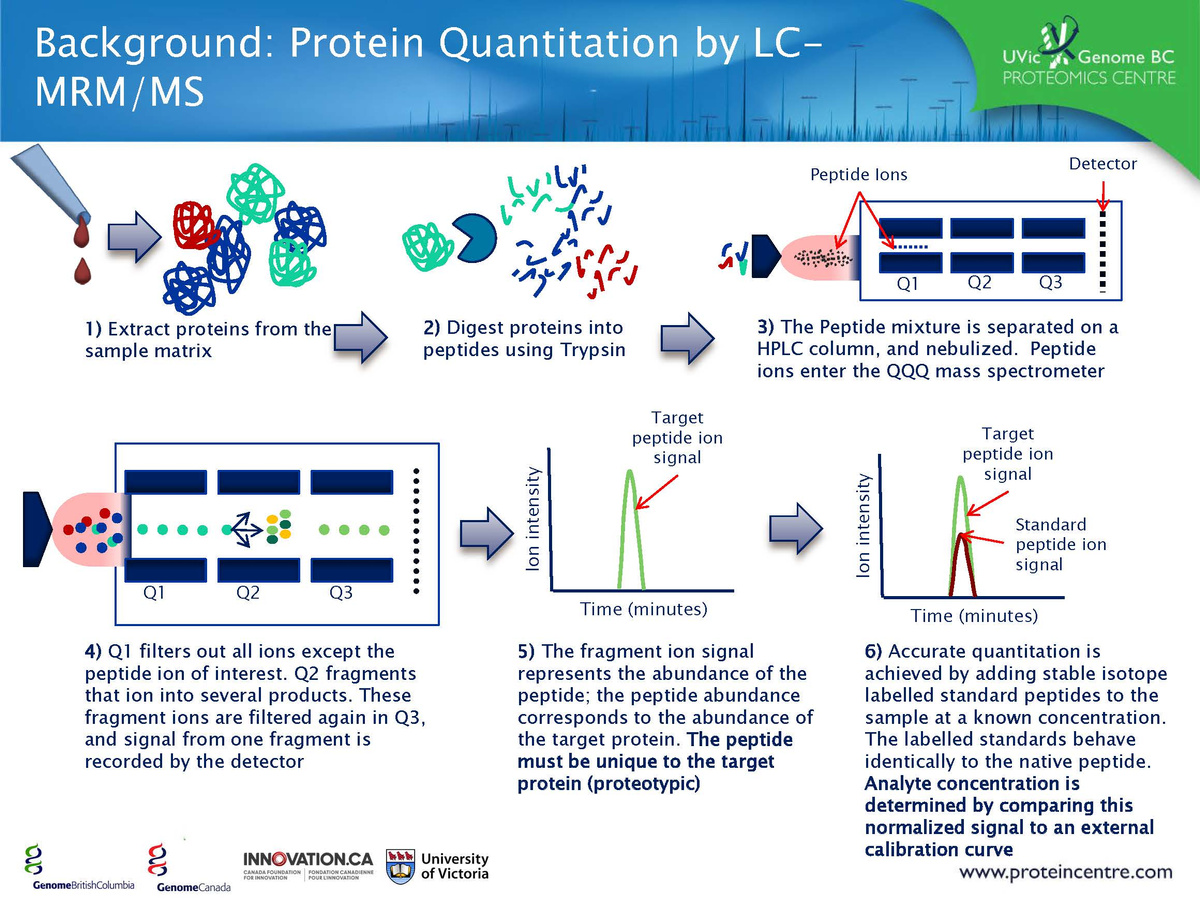
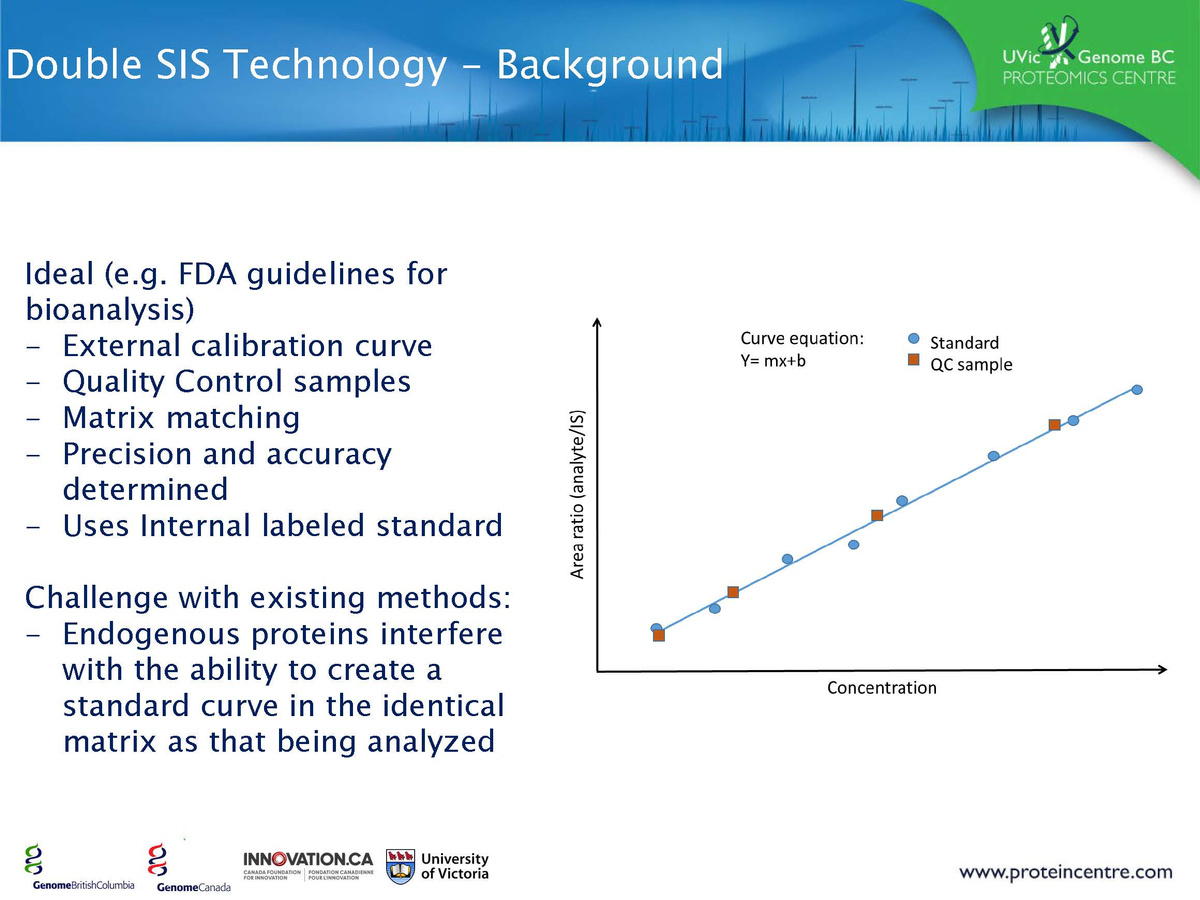
The gold standard calibration strategy for mass spectrometry quantitation requires an external calibration curve in a blank matrix. With this strategy, the standard compound is identical to the analyte and the stable isotope‑labeled standard (SIS) version of the analyte used in the internal standard. The internal standard is added to all samples (unknowns and standards) in order to normalize and correct for variations in analyte response. The internal standard is added early in the sample processing step and accounts for any loses prior to analysis (Figure 1). This method poses challenges for targeted protein quantitation, particularly for highly multiplexed assays consisting of endogenous protein panels. These challenges arise from interference of endogenous proteins and the inability to create a standard curve in the identical matrix that is being analyzed (Figure 2). In addition, it is not feasible to create a standard curve with levels of the standard below endogenous concentration. There is a need for improvement in the calibration strategies that are currently being used.
Overview
The gold standard calibration strategy for mass spectrometry quantitation requires an external calibration curve in a blank matrix. With this strategy, the standard compound is identical to the analyte and the stable isotope‑labeled standard (SIS) version of the analyte used in the internal standard. The internal standard is added to all samples (unknowns and standards) in order to normalize and correct for variations in analyte response. The internal standard is added early in the sample processing step and accounts for any loses prior to analysis (Figure 1). This method poses challenges for targeted protein quantitation, particularly for highly multiplexed assays consisting of endogenous protein panels. These challenges arise from interference of endogenous proteins and the inability to create a standard curve in the identical matrix that is being analyzed (Figure 2). In addition, it is not feasible to create a standard curve with levels of the standard below endogenous concentration. There is a need for improvement in the calibration strategies that are currently being used.
Benefits
- Provides accuracy and precision using the identical matrix (eg. aligns with FDA guidelines).
- Uses internal labeled standards to determine concentration.
- Standard curve in the identical matrix even if endogenous target is present.
- Assay validation possible when endogenous concentration is low.
Applications
- Assays can be generated for most proteins or small molecules in any matrix, for any species.
- Assays could be run as a service for research projects at the UVic-PC, licensed to CLIA or diagnostic labs for human clinical samples, or converted into kits to be used by other labs (reagents, peptide standards and instructions on use).
- These assays can be generated to become a platform technology to pair with any other target of interest.
- Ideal technology to form the basis of a companion diagnostic for drug or antibody therapeutics.
Additional Application:
A Double-SIS Human Apolipoprotein Assay Panel has been developed for precision mass spectrometry assay to accurately identify and quantify 18 apolipoproteins analytes in diverse matrices, including serum and plasma.
Opportunity
- Collaborative research
- Licensing
Patent Status:
- Canadian Patent...on No. 3,064,843
- US-11105814-B2