
Treaties in the Salish Sea
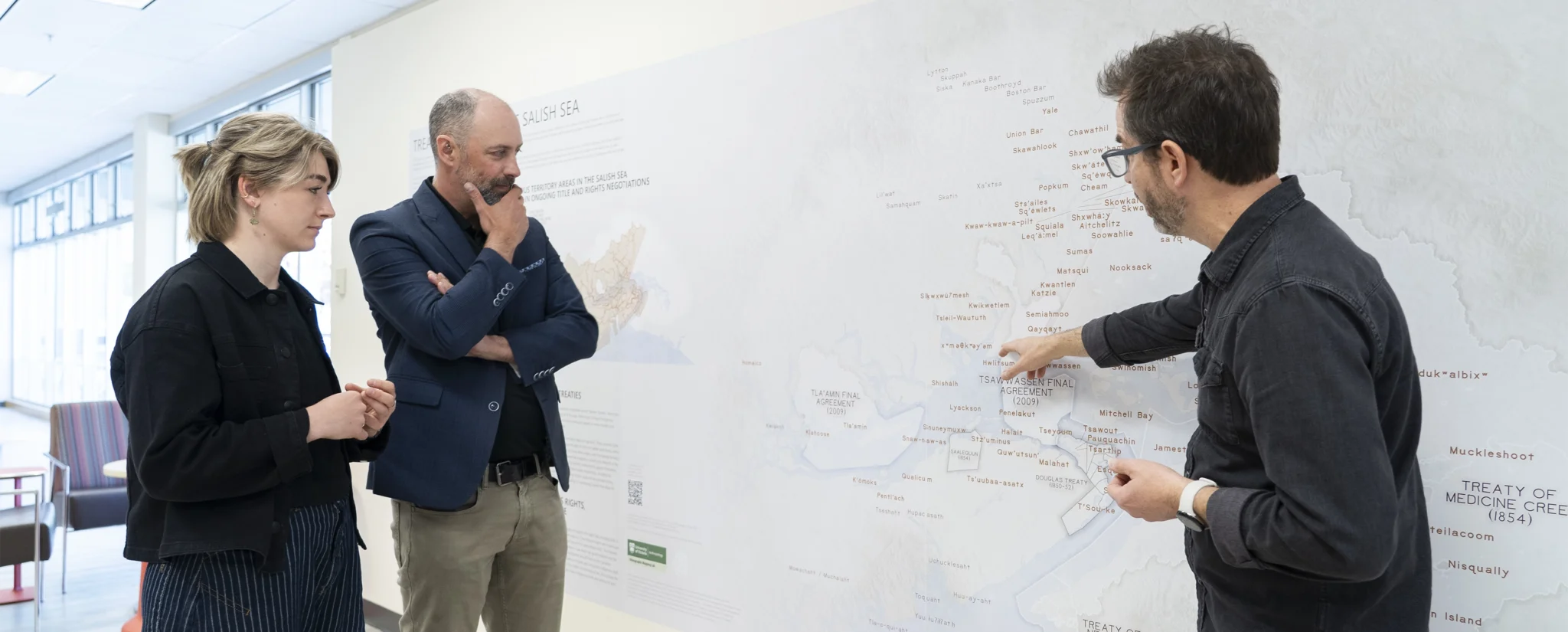
Installed in the Mearns Centre for Learning – McPherson Library, the Treaties in the Salish Sea map is a six-foot by 18-foot cartographic installation that invites the campus community to engage deeply with the legacy and ongoing reality of treaty relations in our region. Initiated in response to the Truth and Reconciliation Commission (TRC) Calls to Action, the project was developed by Geography PhD candidate Leah Fulton in collaboration with the Ethnographic Mapping Lab and Ry Moran, Associate University Librarian for Reconciliation. Developed by Anthropology professor Brian Thom, UVic Geography graduate student Leah Fulton, in collaboration with Ry Moran (Associate University Librarian for Reconciliation), the map is the result of a broader initiative led by the UVic Library’s Decolonizing Working Group.
Rethinking Our Relationship to the Land
The Salish Sea encompasses a complex and nuanced landscape of historic and modern agreements. The map visualizes this intricate picture, detailing 16 treaties from the 19th century (including the Douglas Treaties on Vancouver Island and the Stevens Treaties in Washington State) alongside modern-day agreements like those of the Tsawwassen and Tla'amin Nations. Crucially, the map also highlights the many communities and expansive areas where no treaties have been signed, and where Indigenous title, rights, and negotiations remain vibrant and ongoing.
The project works to shift traditional cartographic conventions and thicken the description of treaty relations. By removing provincial and international borders, as well as English place names, observers are able to see the territory through a framework of historical and ongoing relations. The cartographic design also shifts the orientation away from magnetic North. This angles the map so the waters of the Salish Sea flow and connect —reflecting the interconnectedness of the treaty relationships themselves.
The installation incorporates community-informed sources and historical scholarship, including translated texts for the Čeqʷəŋín (Cheko'nien) treaty that applies directly to the UVic campus lands. This serves as a reminder of the unfulfilled commitments made by the Crown, providing a space for students, faculty, and visitors to reflect on the responsibilities that come with being in these territories.
Explore the Project
-
Interactive StoryMap: Explore the Treaties in the Salish Sea Digital Map
-
Published Paper: Access our published research on this project
Media and Announcements
-
UVic News (June 19, 2025): Salish Sea re-centred: new map highlights Indigenous treaties and rights
-
Department of Geography (April 02, 2025): New Salish Sea Treaty Map Installation Highlights UVic Geography Student's Work