Hw'teshutsun: Protecting a Cultural Landscape
Project Overview
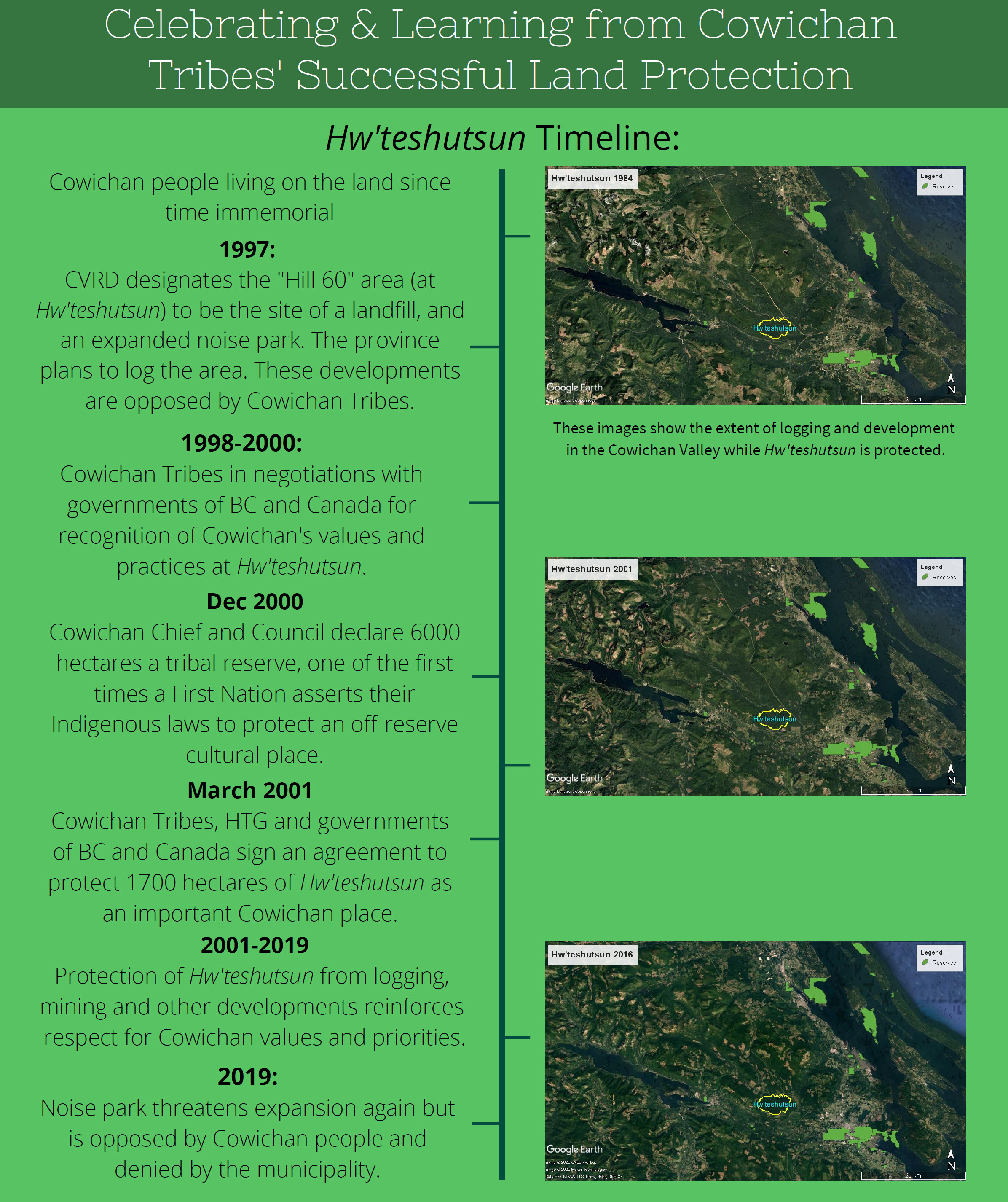
The Hw’teshutsun Project highlights the successful protection of a 1,700-hectare cultural landscape located in the Cowichan Valley on Vancouver Island. Known to municipal and provincial governments as Hill 60, this forested mountain ridge was threatened in the late 1990s by proposed clear-cut logging, a regional garbage dump, and an outdoor motorsport track. Through the leadership of Cowichan Tribes, working alongside the Hul’qumi’num Treaty Group and supported by community and academic researchers, Hw’teshutsun was protected in 2001 through an innovative Treaty-Related Measure (TRM).
Cultural and Ecological Significance
Hw’teshutsun is a sacred place where Elders and community members go for hunting, gathering food and medicines, and practicing kw'aythut (spiritual bathing). These practices require quiet and seclusion. Developing a landfill and a noise park would have polluted the area, disrupting the sonic and spiritual integrity of the landscape and infringing upon Aboriginal rights.
Throughout the negotiations, Cowichan cultural advisors emphasized the integration of places within the larger landscape. They rejected state mitigation strategies that typically aim to isolate Indigenous relationships with the land into tiny, "postage stamp-sized" sites. Instead, the protection of Hw’teshutsun was driven by snuw'uyulh (Hul'q'umi'num' law and teachings), including the oral histories of Stutsun, a First Ancestor who traveled through the area.
In a region where over 85 percent of the traditional territory was alienated through historical land grants and subjected to intensive industrial logging (see The Great Land Grab project), Hw’teshutsun remains a crucial intact second-growth forest. The protected area provides necessary habitat for local elk populations and serves as a thriving green refuge within the heavily developed Cowichan Valley.
Legal Innovations and Indigenous Law
The protection of Hw’teshutsun stands as a landmark achievement in Indigenous governance. The 2001 agreement was the first land protection TRM in British Columbia, demonstrating how Indigenous nations can shape provincial jurisdiction to reflect their own legal traditions. This work ensured that this cultural landscape remains intact for the use and benefit of present and future generations.
Research Outcomes and Significance
This research project, culminating in Jennifer Argan's 2022 MA thesis:
Argan, Jennifer. 2022. “Legal Entanglements in Place: Hul’q’umi’num’ Law, Provincial Jurisdiction and the Protection of Hw’teshutsun, a Hul’q’umi’num’ Cultural Landscape.”