
Offered This Year
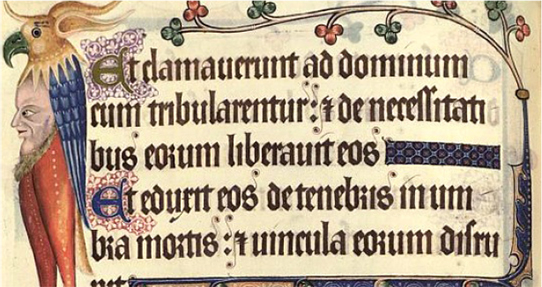
Explore the meaning of Medieval manuscripts in MEDI 451: Reading, Writing and the Book in The Medieval World.
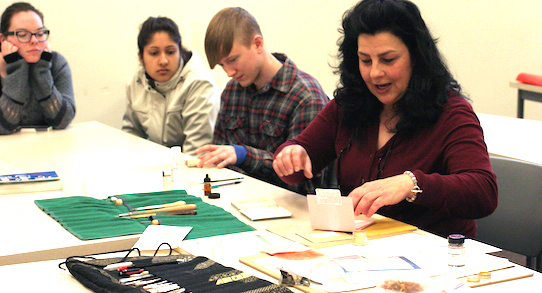
Georgia Angelopoulos, guest lecturer, demonstrates medieval ink making and drawing techniques to medieval students.
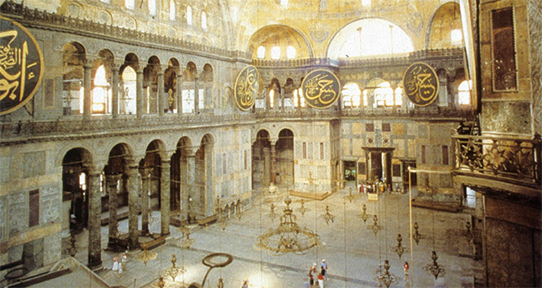
Understand today’s relationship between Islam and Christianity through the lens of the Medieval Era
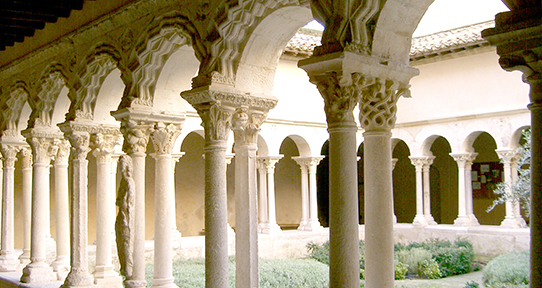
The cloisters at St. Sauveur Cathedral in Aix,
Please note that we have now added official cross listings to our offerings.
Courses you may have taken with another department under their course code (AHVS, ENSH, HSTR, ITAL etc.) will now have a MEDI course number as well. If you have any questions, please contact us for more information.
Fall 2026
MEDI 100: Entering the Middle Ages
See more information on this course.
Monday and Thursday 11:30 - 1:00
Instructor: Dr. Michael Reed
MEDI 303: The Medieval World
An interdisciplinary introduction to the Middle Ages through a comparative overview of medieval cultures and civilizations until about CE 1500, with a focus on the formation of medieval Christian Europe and its relations with Judaism, Byzantine Christianity, and Islam.
Tuesday, Wednesday and Friday 12:30 - 1:30
Instructor: Dr. Michael Reed
MEDI 320B: Petrarch's Poetry and Legacy
Considers the career of Francis Petrarch, his influential love poetry and letters, his literary friendships and his enduring obsession with Laura. Highlights the milieu of his work in fourteenth-century Europe. Emphasizes the lyrics of the Canzoniere but also includes Petrarch's correspondence, On Familiar Matters and Of Riper Years, reflections on his life and thought over four decades.
Monday and Thursday 1:00 - 2:30
Instructor: Dr. Joseph Grossi
MEDI 348: Themes in Medieval Literature
Topic: Children's Literature
Children were objects of affection and close attention in the later Middle Ages. We will consider a variety of evidence including school grammars, animal fables, and didactic manuals directed at the young, starting with elementary primers on the ABCs and ending with mature fictions devoted to class identity, sexual activity, and racial difference.
Monday and Thursday 11:30 - 1:00
Instructor: Dr. Allan Mitchell
MEDI360: Selected Topics in Medieval Culture
Topic: Medieval Warfare
How and why did people fight in the Middle Ages? Take a look at the medieval societies of Europe, Byzantium, the Islamic world and Asia to trace how cultures represented victory and defeat.
Monday and Thursday 1:00 - 2:30
Instructor: Dr. Evanthia Baboula
MEDI 398: Life and Death in the Viking World
A detailed look at the nature and impact of the Viking expansion in the North Atlantic (including the British Isles, the Faroes, Iceland, Greenland and North America) in the period defined rather broadly from c. 800-1300 AD. The social and ecological consequences of migration are explored, drawing on a variety of sources including archaeological data, saga literature and historical sources. Misrepresentation of the Vikings in the modern world will be addressed.
Tuesday 2:30 - 4:30 and Friday 2:30 - 3:30
Instructor: Dr. Erin McGuire
Please note, this course requires 3rd year standing.
Spring 2027
MEDI 200: Myths and Legends of the Middle Ages
Heroes, Beasts, and Other-worldly Beings
This thematic introduction to selected myths and legends of the medieval world will emphasize heroes, fantastic animals, other-worldly beings and syncretic myth-making practices. Topics will include contexts for the use(s) of heroic and fantastic stories in various cultural and faith traditions (including Scandinavian, Chinese and Islamic); the relationship(s) between textual and visual depictions of heroes and fantastic stories; and the resonance of medieval heroism and the fantastic in contemporary societies. This course will emphasize scholarly approaches to medieval and modern renderings of myth and legend. Upon completion of MEDI 200, students will be apprised of the variety and use of heroic and fantastic stories in the medieval world.
Tuesday, Wednesday and Friday 1:30 - 2:30
Instructor: Dr. Michael Reed
MEDI 304: Encountering the Middle Ages
Topic: Medieval Scotland in 24 objects
Did the Picts really paint their faces blue? Why did a group of Vikings leave a hoard of Christian silver buried in a field? Did William Wallace actually wear a kilt into battle? What led Scotland’s barons to write a letter to the pope on a piece of sheepskin? Why did Stewart kings prefer massive glass windows? In Encountering the Middle Ages: Medieval Scotland in 24 Objects, we will unpack the history of medieval Scotland, from the end of Roman rule to the start of the Renaissance. Moving beyond the textual record, we will explore Scotland’s past through a multidisciplinary, object-centred lens—from carvings, coins, and castles to charters, clarsachs, and crowns. Students are encouraged to critically examine the historical sources, both textual and artefactual, and to particularly consider gaps or biases in the record.
This course will be fully online, Monday and Thursday at 11:30
Instructor: Dr. Christina Cowart-Smith
MEDI 420: Topics in Medieval Objects
Topic: Experimental Archaeology and Medieval Textiles
Approaches to material culture in the premodern world. Draws together methods and topics from various disciplines, including art history, archeology and digital humanities.
Tuesday 3:30 - 6:30
Instructor: Dr. Erin McGuire
For full course information, please see the UVic Academic Calendar.
You can download our newsletter here.