
Development of High-Entropy Alloy Materials for Hydrogen Production and Storage
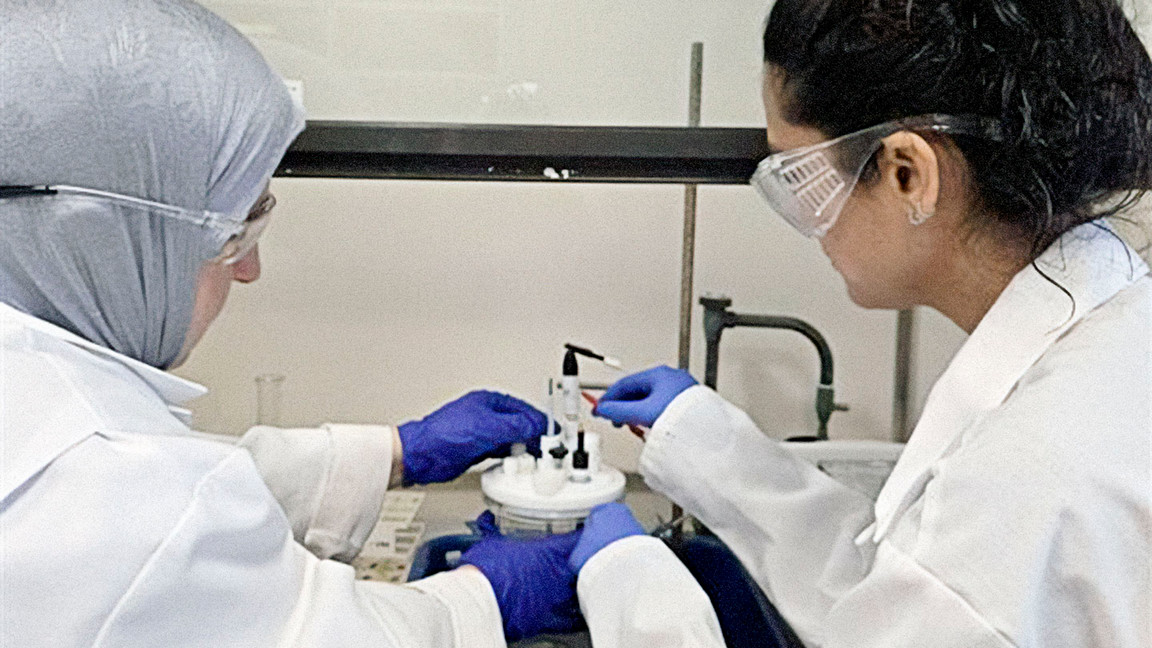
This project explores a new family of materials called high-entropy alloys to improve clean hydrogen technologies such as electrolyzers (which produce hydrogen from water) and fuel cells (which generate electricity from hydrogen).
These innovative materials combine several metals in a single structure, giving them exceptional properties: they are stronger, more stable, and better suited to harsh operating conditions than conventional materials. Because of this, they could help:
- Reduce the need for expensive metals like platinum or iridium.
- Increase system lifespan.
- Improve overall performance.
The project also examines their potential for solid hydrogen storage, a key challenge for making hydrogen easier and safer to transport and use. The alloys being studied may be able to absorb and release hydrogen more efficiently than current materials while maintaining durability over time.
Researchers will design and test different metal combinations to identify those with the best performance. The ultimate goal is to develop more durable and efficient materials that support the transition toward clean and renewable energy solutions.
Major Milestones
- Develop and improve novel high-entropy alloy compositions designed to perform well in the demanding conditions used for hydrogen production through water electrolysis. (Winter 2025)
- Development of support and coating to enhance how catalyst and porous transport layers work together. (Spring 2025)
- Apply and improve advanced coatings on key components to boost electrical performance, resist corrosion, and reduce the need for precious metals. (Summer 2025)
- Examine hydrogen adsorption and desorption under different pressure and temperature. (Summer-Fall 2025)
- Comprehensive materials and electrochemical analysis
- Test the coatings to understand their structure, composition, and performance, including how durable they are. (Winter/Spring 2026)
- Validate performance by testing the system in a single-cell electrolyzer
- Add the coated layers into a single cell electrolyzer and assess its performance, efficiency, and durability under realistic operating conditions. (Summer 2026)
- After use, analyze the components to understand how they degrade and what causes damage over time. (Fall 2026)
- Exploration of hydrogen storage functionality: Study how certain allows can store and release hydrogen. Helping us learn more about combining hydrogen production and storage. (Fall 2026)
People
Project Leads:- Jacques Huot, Université du Québec à Trois-Rivières, Project Lead
-
Samaneh Shahgaldi, Université du Québec à Trois-Rivières, Project Lead
Other key contributors:
- Salma Sleiman, Université du Québec à Trois-Rivières, Post-doctoral fellow
- Prriyanka Bhatt, Université du Québec à Trois-Rivières, Post-doctoral fellow
- Nicolas Giguère, Université du Québec à Trois-Rivières, Strategic Research Area Manager