UNICATA
Description:
The University for and with Waste Pickers (UNICATA) creates inclusive and accessible learning spaces fostering dialogue, critical thinking, and the co-creation of knowledge. The project strengthens waste pickers’ role in waste management and integrates research as a core component of its educational approach.
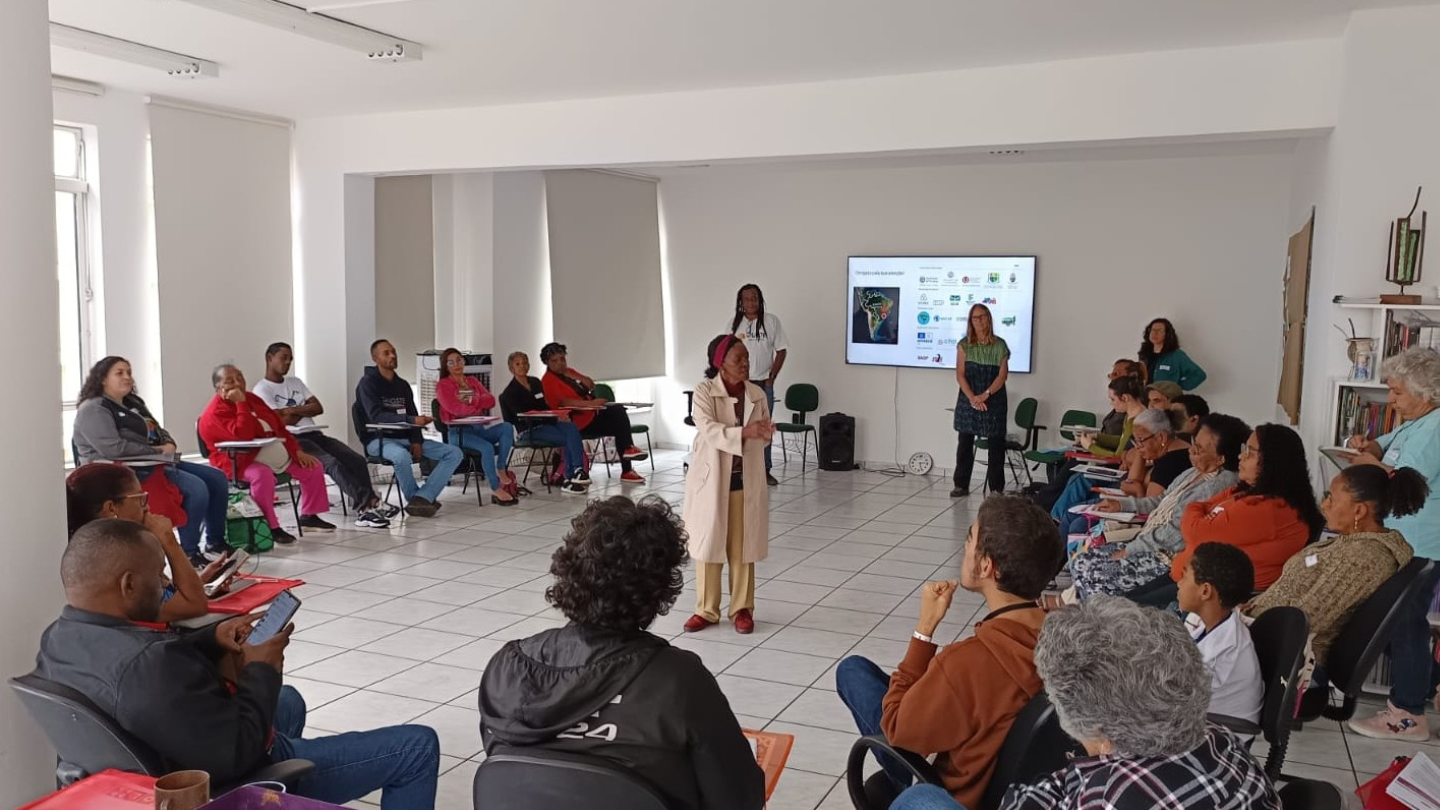
Started in Brazil in 2023, UNICATA offers a six-module course titled ‘Participatory Solid Waste Management and Governance with the Inclusion of Waste Pickers for a Sustainable and Just Society’. The course has been delivered in São Paulo and Brasília, awarding a total of 211 certificates across successive modules until 2025.
To expand UNICATA in Canada, the first step is to conduct research focusing on the needs and demands of waste pickers in Victoria and Vancouver (known as binners and diverters). This research project, UNICATA Canada – Building Circular Economies through Community-Based Education, aims to:
- Meet binners and identify their needs, perceptions, and demands regarding education and skill building;
- Identify themes and topics they would like to learn and/or teach;
- Co-develop a locally adapted version of the UNICATA classroom in Victoria with local partners, including binners.
This initiative aims to support binners’ protagonism and enhance their participation in local waste management and related activities. By involving participants in every step, UNICATA Canada ensures the course reflects the local context and priorities.
Partners and Collaborators:
In Brazil, partners include organizations such as Pimp My Carroça, National Waste Pickers Association, National Waste Pickers Movement, Federal University of ABC, Federal Institute of Brasilia, and University of São Paulo, and many individuals who are actively engaged in the field and connected to this cause.
In Canada, UNICATA is based at the Centre for Global Studies and connected to the Community-Based Research Laboratory, Department of Geography. Local partners include the Binners’ Project, a non-profit initiative supporting binners in Vancouver. The team includes Jutta Gutberlet (Professor), Ana Maria Castro (Post-Doctoral Fellow), and Julia Heins (Undergraduate student).
For more information about UNICATA and its current research, contact:
UNICATA Canada: unicatacanada@gmail.com
UNICATA Brazil: unicata.catadores@gmail.com
or follow us on social media: Instagram | LinkedIn | Facebook
You can also visit the project website at:
Funding:
In Brazil, UNICATA is funded by the Ministry of Racial Equality (MIR) to offer its course in São Paulo and Brasília, demonstrating the project’s established approach and impact.
In Canada, initial funding was secured from the Capital Regional District (CRD) through the Rethink Waste Community Grant. Additional funding and local partnerships are being sought to advance the research and implementation of a UNICATA classroom in Victoria. These resources will enable collaboration with binners, co-creation of course content, and the development of community-based education initiatives that strengthen circular economy practices in the region.