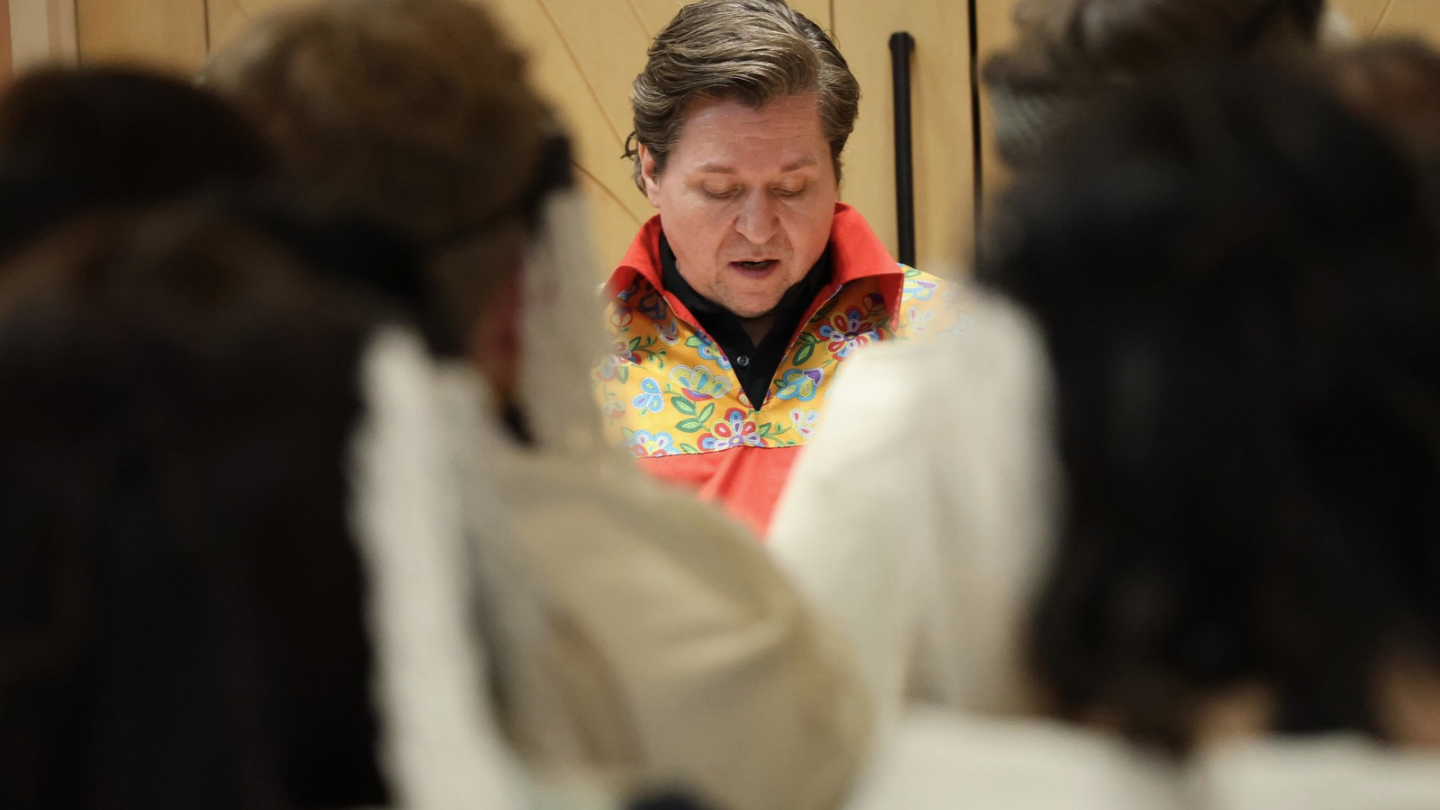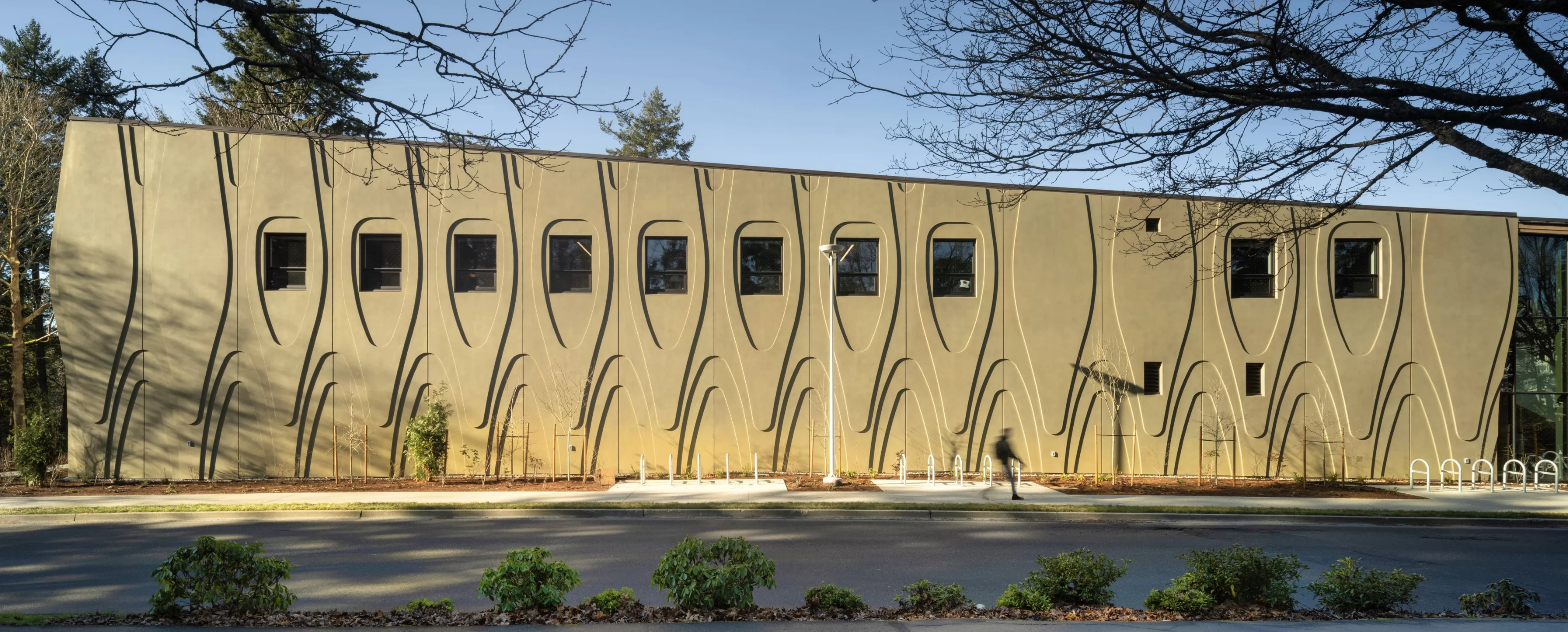
The Indigenous Law Wing is a place to share Indigenous legal traditions and is home to the Faculty of Law’s JD/JID program—the first law program in the world to combine the study of both Indigenous and non-Indigenous laws.
Architectural photography by © Nic Lehoux
Funded by UVic, Law Foundation of BC, Gov'ts of BC and Canada


"This building is more than architecture; it is a physical expression of reconciliation in action. It is a place where law is not abstract but relational — rooted in the lands, waters, and teachings of this territory. It is a place where our collective responsibilities to one another can be discussed, debated, and strengthened."
—Sarah Morales Associate Dean Indigenous Law

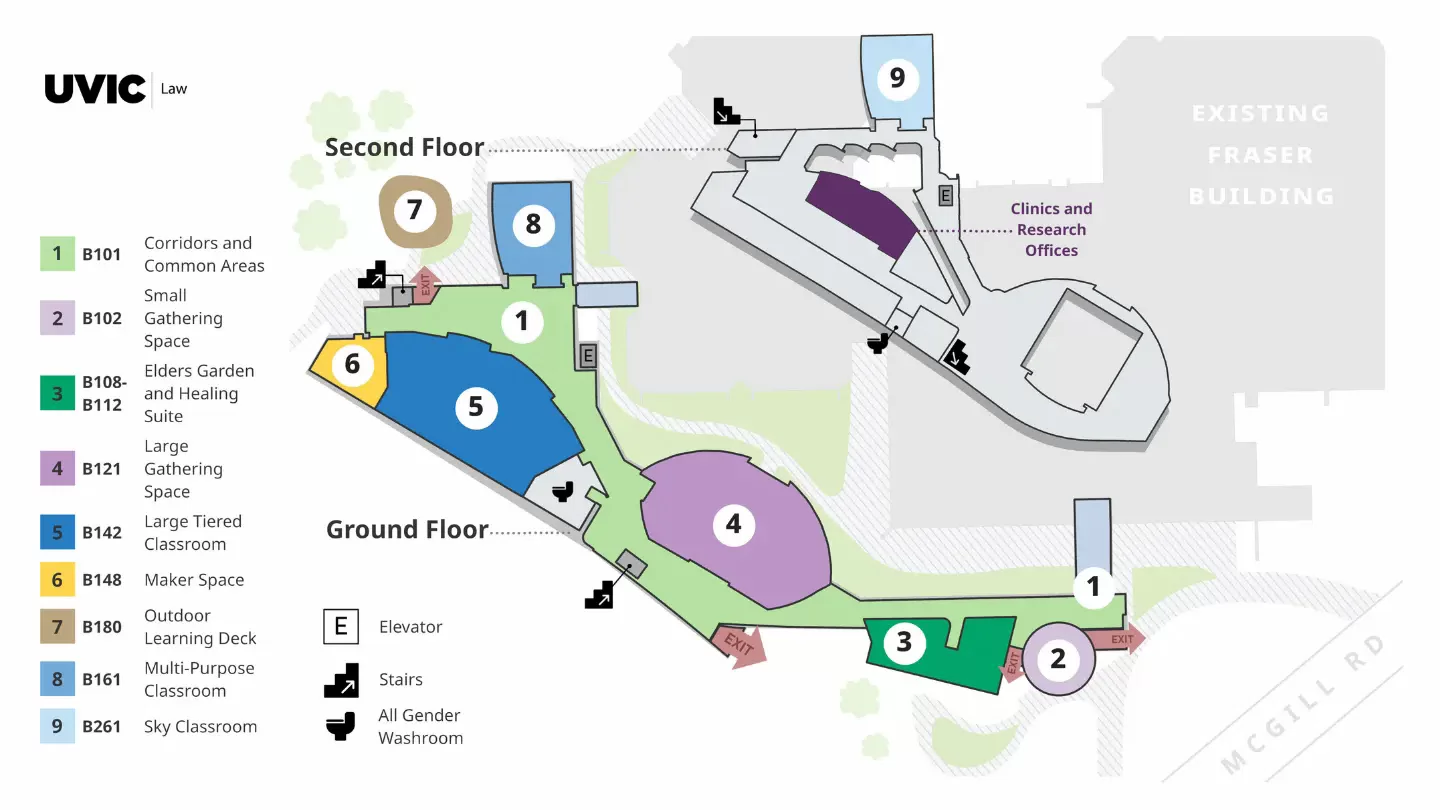
Map
Room Descriptions

Corridors & Common Areas

Small Gathering Space

Large Gathering Space
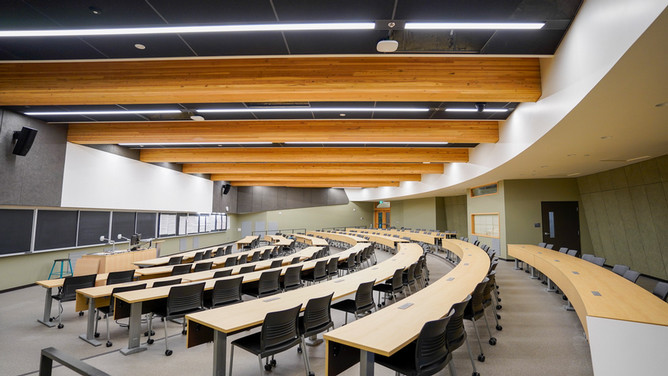
Large Tiered Classroom

Maker Space
This space supports teaching embodied and customary learning practices like spear-making, weaving, drum making and preparing medicines. Through these teachings passed down through generations, we understand that law is lived and brought to life in daily practice. It's a place for connection, conversation, and shared learning
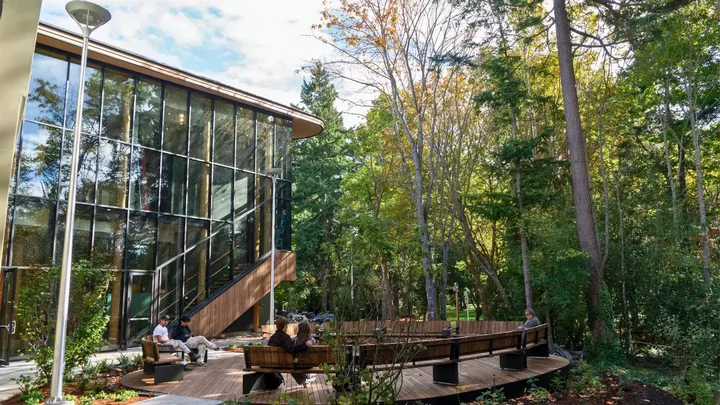
Outdoor Learning Deck
An accessible outdoor space for learning, gathering, and connecting with nature. Linked to the Maker Classroom and Atrium, it blurs the boundaries between indoors and out. The deck offers a natural connection to the forest and Bowker Creek, supporting land-based learning experiences.

Multi-Purpose Classroom
This adaptable classroom supports Indigenous, embodied, and innovative teaching practices. It encourages active, collaborative, and small-group learning, while its design blurs the line between indoors and outdoors.

Sky Classroom
See and feel the connections between law and the natural world in this space. Views of the sky and treetops highlight how interactions with our more-than-human relations shape our understanding of legal obligations. These interactions form a model for “living a good life” within the complexity and reciprocity of our own relationships.
Awards
Media

The architect team was led by Two Row Architect with Teeple Architects and Low Hammond Rowe. The architects presented their partnership as a three-legged stool: including an Indigenous lead, a nationally recognized studio, and a local firm.

"From moisture management plans for mass timber to designing ventilation systems for smudging ceremonies, every technical decision was made with care to honour the building's purpose and the community it serves," Thomas Oster, Chandos Construction.

Clad in iridescent precast concrete panels with low-relief motifs inspired by the movement of water, traditional paddle forms, and the interlapping of land, sea, and life, the new wing is now the primary public face of the Faculty of Law.

Carved-out sections on the atrium balcony are a nod to the sustainable Coast Salish practice of peeling cedar bark. The school’s mono-sloped roof directs rainwater to new gardens and woodland, including an interior courtyard.

"The space will support our students and community by integrating Indigenous knowledge and legal traditions, helping enrich our programming and create a more inclusive learning experience, serving as a centre for conversation, research, education and training about Indigenous Law,” says Freya Kodar, Dean of Law.

"Built in consultation with Songhees, Xwsepsum (Esquimalt), and W̱SÁNEĆ Nations, with support from the federal and provincial governments, this project reflects that Indigenous knowledge and legal systems form a critical part of Canada’s legal and constitutional system,” said Will Greaves, MP for Victoria.

“This is where Indigenous law meets Canadian common law, not in competition but in conversation, working together to heal, renew, and revitalize,” said Robina Thomas (Qwul’sih’yah’maht). “It's a space where Indigenous laws, living in adaptive systems of justice, can be learned, researched, practised, and passed on to those to come.”

“This physical structure is a space where our laws, which enable us to be peoples, may be explored, taught and argued by Indigenous and non-Indigenous learners,” says Law Professor Val Napoleon, Law Foundation Chair in Indigenous Justice and Governance and Academic Lead for Next Steps: Rebuilding Indigenous Law.
Learn more about Indigenous Laws

The Indigenous Law Research Unit (ILRU) is a research institute focused on revitalizing Indigenous law and governance and is now located in the new Indigenous Law wing! The ILRU works toward a future where Indigenous laws are actively used, studied and taught like other major legal traditions.
Learn more:

Next Steps is an Indigenous-led initiative to renew and rebuild Indigenous legal orders across Canada. Drawing on the University of Victoria’s renowned legal research and education programs, Next Steps supports Indigenous societies to holistically revitalize their legal traditions.
Learn more:

Territory acknowledgement
We acknowledge and respect the Lək̓ʷəŋən (Songhees and Xʷsepsəm/Esquimalt) Peoples on whose territory the university stands, and the Lək̓ʷəŋən and W̱SÁNEĆ Peoples whose historical relationships with the land continue to this day.
News
Job Posting: 2027-28 Articled Student Position, The Law Centre
November 2, 2026
The Law Centre operates a legal clinic located in the Justice Access Centre adjacent to the Victoria Courthouse. The program provides clinical legal education for law students enrolled in the...
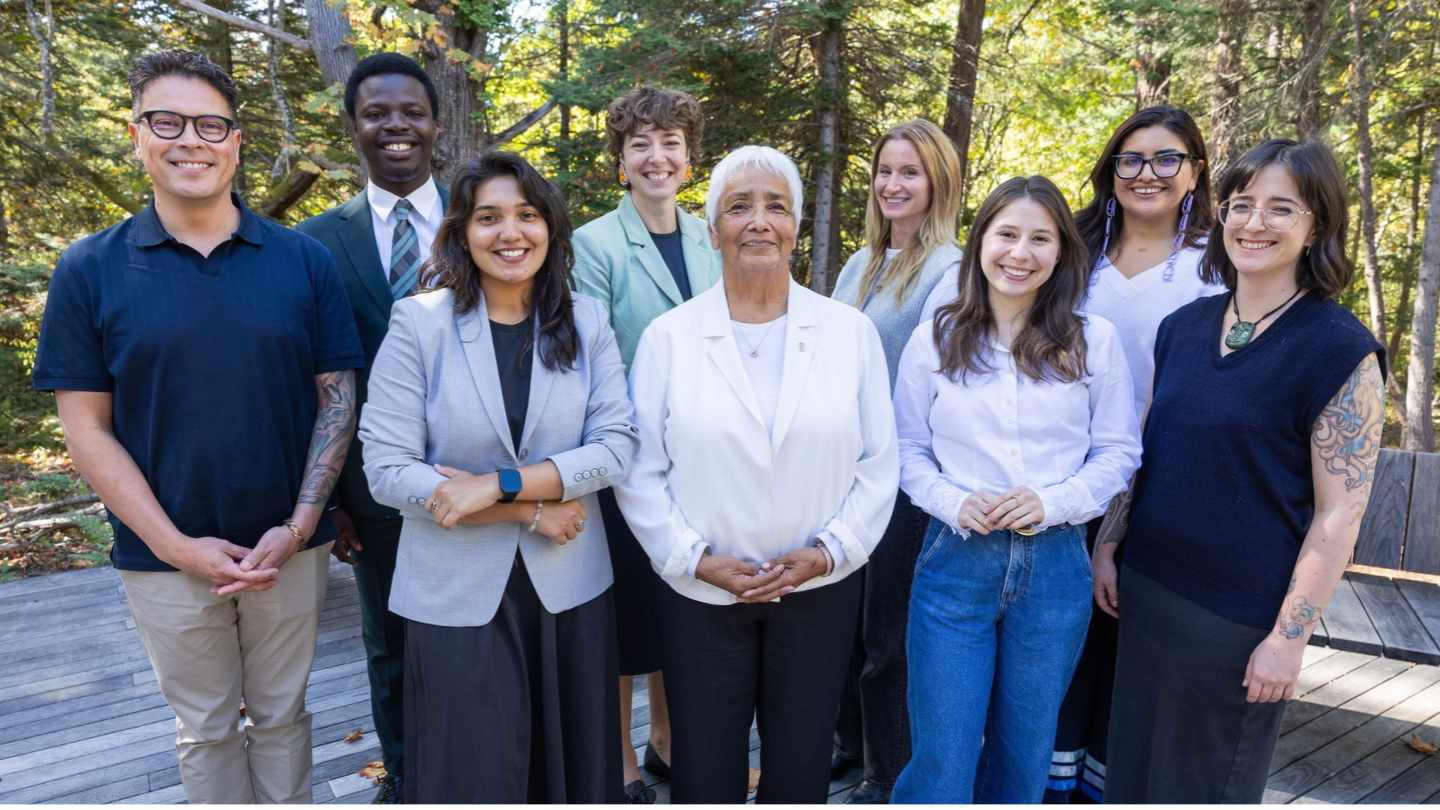
2026 UVic Law graduate research students
September 28, 2026
A new cohort of graduate researchers have arrived at UVic Law. This year’s 10 PhD and LLM students are contributing to conversations on law, justice and social change through research on...