
Dr. Laura Arbour
Professor
Academic Clinician, Professor, UBC Department of Medical Genetics, Faculty of Medicine
- Contact:
- Office: MSB 230 larbour@uvic.ca 250-472-5544
- Credentials:
- MSc, MD, MSc, FRCPC, FCCMG
- Area(s) of expertise:
- Medical genetics, genetic disorders, and conditions specific to Indigenous populations, Long QT Syndrome, Primary Biliary Cholangitis (PBC), and birth defects
- Related links:
Introduction
Dr. Laura Arbour is a Professor in the Department of Medical Genetics at the UBC Island Medical Program and an Affiliate Professor in the School of Medical Sciences at the University of Victoria. Her clinical practice and research focus on the role of genetics in northern and Indigenous health. Trained as both pediatrician and clinical geneticist (McGill University), her research integrates maternal-child health with the study of rare conditions affecting Indigenous peoples across the life course. Her work has been funded through the Canadian Institutes for Health Research since 2003.
She leads the Community Genetics Research Program at the University of Victoria and collaborates with First Nations and Inuit partners on several projects. Current research projects include: 1) Silent Genomes: Building a Sustainable Path to Genetic/Genomic Care for Indigenous People of Canada and Beyond, 2) Long QT Syndrome in Northern British Columbia, 3) Infant and Child Health in Nunavut: The role of the CPT1A P479L variant and other Arctic-specific genetic variants, 4) First Nations cohort of the Canadian Alliance for Healthy Heart and Minds, and 5) Primary Biliary Cholangitis among coastal First Nations of British Columbia .
Additional research interests include the genetics of inherited arrhythmias, the prevention and understanding of congenital anomalies and other adverse birth outcomes, and the etiology of rare diseases.
Her work on Long QT syndrome in Northern BC led to the development of a multidisciplinary, province-wide program to address inherited arrhythmias across the province. She currently serves as the Medical Genetics Lead for the British Columbia Inherited Arrhythmia Program (BCIAP).
Research
Silent Genomes is a national project, funded by Genome Canada, Genome BC, and CIHR with the purpose of reducing health care disparities by making genetic diagnosis and genomic medicine more accessible to Indigenous populations. The project emphasizes and promotes Indigenous led governance, community engagement, community education, and student capacity building. The project has completed their initials goals and is currently focus on the following activities:
Activity 2: Advancing care for rare genetic diseases affecting Indigenous families.
Activity 3: The expansion and sustainability of the Indigenous Background Variant Library (IVBL)
Activity 4: Studying the equity, social and Economic implications of genomic diagnosis and an IVBL.

Genetic variants differ across populations, with many variants being unique to specific groups or occurring at different frequencies worldwide. However, Indigenous populations remain underrepresented in existing genetic reference libraries. This gap limits the accuracy and effectiveness of genetic diagnosis. The Indigenous Background Variant Library (IBVL), launched in January 2025, aims to address this inequity by providing population-specific genomic data. The IBVL is a database that captures the frequency of DNA variants found in Indigenous individuals who have not been diagnosed with severe genetic conditions. It serves as a clinical tool to support and improve the diagnosis of genetic conditions among Indigenous Peoples, ultimately enhancing health outcomes for Indigenous patients.
For more information on the Silent Genomes Project, visit the official website: https://www.bcchr.ca/silent-genomes-project
The ‘Long QT study’ is an ongoing project that began more than two decades ago. Inherited long QT Syndrome (LQTS) is a genetic condition in which the QT interval in the electrocardiogram, corrected for heart rate (QTc), is prolonged. A prolonged QTc increases the risk of serious cardiac arrhythmias, which may result in cardiac arrest and, in some cases, sudden death.
Although LQTS is considered rare worldwide (approximately 1 in 2,000 individuals), it is much more common (1 in 125) among First Nations communities in Northern British Columbia. This higher prevalence is largely linked to a specific genetic variant identified through our research: p.V205M in the KCNQ1 gene. Classified as pathogenic, this variant has been present in these populations for multiple generations and accounts for the majority of LQTS cases among First Nations communities in Northern BC. [PMID: 18580685].


To date, more than 850 First Nations participants have been enrolled in this study, with approximately 150 individuals testing positive for the variant. Some affected individuals have experienced serious outcomes, including fatalities, while others have lived long lives without cardiac events. This highlights the wide variability of the condition and the challenges of predicting individual risk. Some of this variability may be explained by non-genetic factors and additional genetic changes, known as modifier variants. We have identified two such variants that likely influence disease severity [PMID: 28264985], as well as another variant (ANK2 p.S646S) that may contribute to heart disease and predisposition to LQTS [PMID: 28196901]. We found that children (1-18 years of age) carrying the KCNQ1 p.V205M variant have an increased QTc, particularly girls. Reassuringly, this age group appears to have a mild phenotype with no increased risk of syncope or seizures [PMID: 38884101].
Current research focuses on understanding the relationship between LQTS and hypoglycemia (low blood sugar), the impact of LQTS in women and girls, and how cardiac risk varies across the life course. As part of this work, the impact of chronic disease on the QTc has been assessed in women with and without the p.V205M variant [PMID: 37852605]. We now aim to identify periods of higher and lower risk across the life course to enable more individualized treatment, minimizing interventions during low-risk periods while ensuring closer monitoring during high-risk periods.
Since its identification in the early 2000s, the p.P479L variant of carnitine palmitoyltransferase 1A (CPT1A) has raised important questions about its clinical significance. CPT1A is an enzyme needed to use long-chain fatty acids to produce energy during fasting or prolonged exercise. Classical CPT1A deficiency is a rare autosomal recessive disorder characterized by hypoketotic hypoglycaemia, hepatic encephalopathy, seizures, and risk of sudden infant death.
The p.P479L variant of CPT1A is highly prevalent among Inuit in Nunavut and coastal British Columbia First Nations populations, with homozygosity rates of 60-70% in Nunavut and up to 25% in coastal BC First Nations. Through our research, we determined that the p.P479L variant is prevalent among Inuit in Nunavut and Inuvialuit in the Northwest Territories [PMID: 20696606]. In a separate study focused on Nunavut, we found that homozygosity for the variant was associated with unexpected infant death, including sudden infant death syndrome (SIDS), sudden unexpected infant death (SUID) and deaths related to infection [PMID: 23231747]. Furthermore, we demonstrated that, in Nunavut, homozygous children were more likely to be admitted for lower respiratory tract infections and to experience otitis media and gastroenteritis [PMID: 34295859]. We also observed an increased incidence of neonatal hypoglycemia (NH) among homozygous infants, comparable to that seen in newborns with established risk factors for NH [PMID: 34131458].
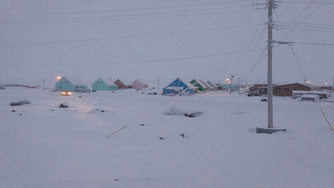
Nunavut has the largest Inuit population in Canada and one of the highest rates of adverse child health outcomes in the country. These include infant hospitalizations for respiratory tract infections (~134 per 1,000 infants), which are among the highest reported worldwide, and infant mortality rates (14.3-18.5 per 1,000 live births), which are three to four times the national average (4.5-5.0 per 1,000 live births).
Given the elevated rates of infant mortality and morbidity, including hospital admissions for respiratory and other infections, this ongoing study has shifted its focus to understanding the health impact of six additional autosomal recessive variants on Inuit infant and child health in Nunavut. These variants have been identified in other Inuit populations but have not previously been characterized in Nunavut. They include IFNAR2 c.157T>C p.(Ser53Pro), ADA c.424C>T p.(Arg142*)/c.956_960del p.(Glu319Glyfs*3), CYBB c.54_79del p.(Trp18Cysfs*8), DNAH11 c.4095+2C>A p.(?), and SI c.273_274delAG p.(Gly92Leufs*8).
For more information on this project, please contact Jimena Gonzalez (jgonzalezl@uvic.ca).
The Gitxsan First Nation is one of eight First Nations communities across Canada participating in the First Nations Cohort of the Canadian Alliance for Healthy Hearts and Minds. Approximately 10,000 Canadians are enrolled in the Alliance study, including a sub-cohort from Northern BC.
This study aims to identify the early risk factors for cardiovascular disease, cognitive disorders, cancer, and other chronic conditions, with the goal of improving early detection and prevention (http://cahhm.mcmaster.ca).
The research is ongoing and utilizes data collected from 2013 to 2018. Recent areas of focus include dietary analysis (examining the relationship between diet and health outcomes), air pollution (comparing outcomes between communities with differing levels of exposure) and MRI based studies (assessing whether analyzing cardiac MRI findings can predict neurological events).
Four communities from the Canadian Alliance for Healthy Hearts and Minds participated in the Silent Genomes Project IBVL.
For information on the Gitxsan cohort, please contact Rita Ma (rita@uvic.ca).
Primary Biliary Cholangitis (PBC) is a rare chronic autoimmune liver disease that causes progressive damage to the bile ducts within the liver. It is the most common indication for liver transplant referral among First Nations peoples in British Columbia. Women are affected up to ten times more often than men, and the disease is typically diagnosed between 40 and 60 years of age. Clinical presentation varies widely. In the early stages, individuals may be asymptomatic and diagnosed through abnormal laboratory findings. As the disease progresses, symptoms include chronic fatigue, itching, darkening of the skin, and dry eyes and mouth, and may lead to liver failure requiring transplantation.

We have studied PBC in Coastal First Nations people in British Columbia, who have an approximately eight-fold higher rate of referral for liver transplantation due to PBC compared with non-First Nations individuals, despite representing only 4% of the overall BC population. Within this group, we also investigated associations between PBC and inflammatory arthritis, as well as other autoimmune conditions.
We conducted genetic linkage studies in affected families and individuals with the goal of identifying specific genetic variants. Our findings suggest that a single gene is very unlikely to be responsible for PBC; rather, susceptibility is influenced by multiple genes, each contributing a small effect. Some of these genes have been identified in other PBC populations. Overall, these results support a multifactorial basis for PBC [PMID: 29297981].

Our research began more than two decades ago and now we aim to expand it using newer genetic technologies and Indigenous-specific genomic reference datasets, such as the Silent Genomes Project Indigenous Background Library. By applying these tools to our earlier work with BC First Nations families, we aim to refine and strengthen our understanding of PBC.
If you, or one of your family members, have a diagnosis of PBC and would like more information regarding this research, please contact Rita Ma (ritama1@uvic.ca).
Nutaqqavut "Our Children" Health Information System

Nunavut has experienced elevated rates of infant mortality, low birth weight, prematurity, and birth defects compared to the rest of Canada. In response to these challenges, and as part of efforts to develop a territorial maternal and child health system, the Nunavut Department of Health in collaboration with Dr. Laura Arbour, established the Nutaqqavut Health Information System (NHIS).
Initially funded through a CIHR team grant in Circumpolar Health, NHIS was developed to provide comprehensive public health data to support health service planning, guide prevention, and treatment, and to facilitate the investigation of trends, causes of adverse pregnancy outcomes, and risk factors affecting mothers and children. Following extensive consultations, the initiative led to the introduction of a revised Prenatal Record, new Nunavut Well-Baby Records (adapted from the Rourke Well-Baby Record) and a territorial Birth Defect Report form [PMID: 21910957].
Although the project has not been active since 2014, the tools and the forms developed remain relevant and can be accessed through the links below.
Please contact Jimena Gonzalez (jgonzalezl@uvic.ca) if you have any questions.
Links
Forms
- Revised Nunavut Prenatal Record Part 1, 2 and 3 (Version 2.0)
- Nunavut Prenatal Record Supplementary Form
- Labour and Delivery Records, Parts 1, and 2
- Birth Defect Reporting Form
- Well-Baby Record – 1 week to 1 month
- Well-Baby Record – 2 months (collected for NHIS)
- Well-Baby Record – 4 months
- Well-Baby Record – 6 months (collected for NHIS)
- Well-Baby Record – 9months
- Well-Baby Record – 12 months (collected for NHIS)
- Well-Baby Record – 2-3 years (collected for NHIS)
- Well-Baby Record – 4-5 years (collected for NHIS)
Guidelines