
Stuart MacDonald
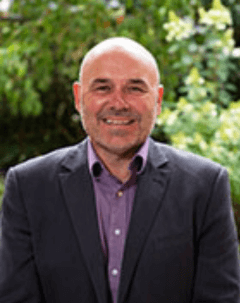
Professor & Harald Mohr MD and Wilhelma Mohr MD Research Chair in Adult Development and Aging
Psychology (Faculty of Social Sciences)
Accepting graduate students
- Contact:
- Office: COR A271 / A273 smacd@uvic.ca 250-472-5297
- Credentials:
- PhD (Uvic)
- Area(s) of expertise:
- Lifespan health and development, Cognitive aging, Cognitive neuroscience of aging, Dementia, Alzheimer’s Disease, Brain health, Aging in place, Frailty, Longitudinal data analysis, Within-person research design, Dementia-Friendly Communities, Plasticity, Intraindividual variability
Interests
- cognitive aging and the cognitive neuroscience of aging
- dementia and Alzheimer’s disease
- intra-individual variability and gait as functional biomarkers of brain health
- quantitative modeling (multilevel modeling, structural equation modeling)
- longitudinal research design
- brain health
- aging well at home
Faculty bio
My research is conducted primarily within 2 research traditions (individual differences in cognitive aging and the cognitive neuroscience of aging) and combines expertise from various fields including gerontology, cognition, longitudinal methodology/statistics, and neuroscience.
I have almost 30 years of experience with longitudinal research design and advanced quantitative analysis, including long-standing contributions to the Victoria Longitudinal Study and Project MIND as well as serving as a member of the Psychology Working Group for the Canadian Longitudinal Study of Aging. In addition to panel and cohort-sequential longitudinal designs, I have experience with designs for interventions and clinical trials, as well as mixed-methods and qualitative evaluations including as the National Program Evaluator for the Dementia Friendly Canada Project (AD Society of Canada and Public Health Agency of Canada Dementia Community Investment Grant) and the Age Well at Home Project (AD Society of Canada and the Ministry of Employment and Social Development Canada).
Active lines of programmatic research include continued exploration of performance variability, or inconsistency, in (a) behavioural cognitive function (e.g., fluctuations across response latency trials), (b) physiological function (e.g., gait), as well as (c) brain function (e.g., neural variability indexed using fNIRS or fMRI). Findings from my research lab suggest that variability in response profiles may be more sensitive than mean performance for early identification of those at risk of cognitive decline, dementia or death. Many of these investigations employ novel longitudinal research designs (e.g., intensive repeated measures designs) as well as various statistical techniques for the analysis of change. As a co-PI of an Aspiration 2030 Research Cluster, another line of interdisciplinary collaborative research (together with colleagues from Psychology, Nursing, Sociology, Geography, Health Informatics, Medicine, and Music) focuses upon fostering basic and community-engaged research on the theme of Dementia-Friendly communities. Our lifestyle intervention work employs sophisticated measurement burst designs to provide non-RCT evaluations of lifestyle interventions (e.g., walking, choral singing, dance) for students, healthy older adults, persons living with dementia and their care partners. Related research examines systematic associations between social engagement and psychological and neural function for healthy older adults as well as those with living experience of dementia and their care partners. Findings speak to social isolation as an important protective factor underlying psychological wellbeing and function for all individuals and represents an avenue for targeted intervention (e.g., social prescriptions including movement and music).
My research program is internationally recognized and has been continuously funded for the past 25 years by both Canadian and international granting agencies. My Google Scholar h-Index is 57 with over 130 articles and book chapters published in peer-reviewed journals or handbooks. I have been fortunate to receive several career research recognitions including induction into the Royal Society of Canada’s College of New Scholars, Artists and Scientists and currently hold the Harald Mohr MD and Wilhelma Mohr MD Research Chair in Adult Development and Aging.
I have published over 100 scientific articles and book chapters, with my research funded by various granting agencies within Canada (Alzheimer Society of Canada, Canadian Institutes of Health Research, Michael Smith Foundation for Health Research, Natural Sciences and Engineering Research Council of Canada) and from international contexts (Germany, Sweden, and the US).
Representative presentations
Coleborn, S.G., Berthiaume, F., Voll, S., Cloutier, D., Dujela, C., Sakamoto, M., Sheets, D.J., Smith,A.P., Gawryluk,J.R., & MacDonald, S.W.S. (2026). Dynamic Coupling Association of Care Partner Quality of Life and Cognitive and Depressive Symptoms Experienced by Persons Living with Dementia. Journal of Dementia and Alzheimer’s Disease, 3, 31. https://doi.org/10.3390/jdad3020031
Coleborn, S., McDowell, C., Tamburri, N., Sheets, D., Gawryluk, J., & MacDonald, S.W.S. (2025, July). Musical Mindset: Within-Person Links among Social Wellbeing, Depressive Symptoms and Cognition for Persons with Alzheimer’s Disease. Poster presented at the Alzheimer's Association International Conference, July 27-31, 2025, Toronto, ON, Canada.
Cowie, H., Markey, A., & MacDonald, S.W.S. (2025, October). Building Dementia-Friendly Communities: A National Approach to Dementia-Friendly Training. Paper presented at the Canadian Association on Gerontology Conference, October 23-25, 2025, Montreal, QC, Canada.
Ohlhauser, L., Kwan, H., Casey, H., MacDonald, S.W.S., & Gawryluk, J.R. (2025). Sex similarities and differences in cognition: A longitudinal study of healthy control participants from the Parkinson Progression Markers Initiative. PLOS ONE 20(11): e0334358. https://doi.org/10.1371/journal.pone.0334358
Schaeffer, M.J., MacDonald, S.W. and Paterson, T.S. (2024). Premorbid personality traits as predictors for incident predementia syndromes: a multistate model approach. Journal of the International Neuropsychological Society, 1-11.
Stawski, R.S., Cerino, E.S., & MacDonald, S.W.S. (2026). Associations Among Response Time Inconsistency, Attention Switching, and Cognitive Status: A Measurement Burst Approach. Neuropsychology, 40(3), 229–239. https://doi.org/10.1037/neu0001067
Tamburri, N., McDowell, C., Berthiaume, F., Dujela, C., Gawryluk, J.R., Cloutier, D.S., Sakamoto, M., Smith, A.P., Sheets, D.J., & MacDonald, S.W.S. (2025). Lightening the Load: The Relationship between Gait and Cognition for Persons Living with Dementia Engaged in a Non-Pharmacological Intervention. Brain Sciences, 15(11), 1214. https://doi.org/10.3390/brainsci15111214
Tamburri, N., McDowell, C., Dujela, C., Sakamoto, M., Cloutier, D.S., Gawryluk, J.R., Smith, A.P., Sheets, D.J., Stawski, R.S., & MacDonald, S.W.S. (2025). Choir Mitigates Distress for Caregivers of Those with Dementia: The Voices in Motion Project. American Journal of Alzheimer's Disease and Other Dementias, 40, 1-13. DOI: 10.1177/15333175251395437
Tamburri, N., McDowell, C., & MacDonald, S. W. S. (2022). Parameterizing Practice in a Longitudinal Measurement Burst Design to Dissociate Retest Effects From Developmental Change: Implications for Aging Neuroscience. Frontiers in aging neuroscience, 14, 885621. https://doi.org/10.3389/fnagi.2022.885621
Voll, S. & MacDonald, S.W.S. (2025, October). Visualizing 25 Years of Frailty Research: A Bibliometric Analysis. Poster presented at the Canadian Association on Gerontology Conference, October 23-25, 2025, Montreal, QC, Canada.