
 Contact us
 *** Note: scroll down for 2026-27 course offering ***
We offer a dynamic, interdisciplinary, and highly flexible program that allows students from any Major at UVic to follow their interests and explore pressing issues from a new perspective inside and outside the classroom. Students can take EUS classes as electives or complement their Major with the Minor in European Studies. Students in Political Science can also do the more ambitious Option in European Studies.
Our approach is interdisciplinary and combines insights from disciplines including Cultural Studies, Economics, Geography, History, Law, Philosophy, and Political Science. The principal aim is to provide students with a thorough understanding of Europe’s multifaceted history, cultures, and fast-changing political realities. Students learn about European integration; the internal political, social and economic structures of the European Union; and the relationship of EU institutions and politics to the rest of the world. Students are exposed more broadly to European culture and ideas, including through experiential learning opportunities.
We manage UVic’s largest field school, the EU Study Tour (also see the course EUS 470 below), which brings students from across Canada to Brussels, Luxembourg, and sometimes also Frankfurt or Strasbourg. We placed about 150 Canadian students on Internships at the European Commission and civil society organisations in Europe through the EU Internship Program between 2018 and 2026. We regularly send students to the West-Coast Model EU and Canadian Model EU’s. In May 2026 we organized the 3rd Canadian Model EU here at UVic.
Our regular courses in 2026-2027:
EUS 200 - Fall 2026, Mon-Thu 11:30 AM - 12:50 PM
Introduction to European cultures and identities
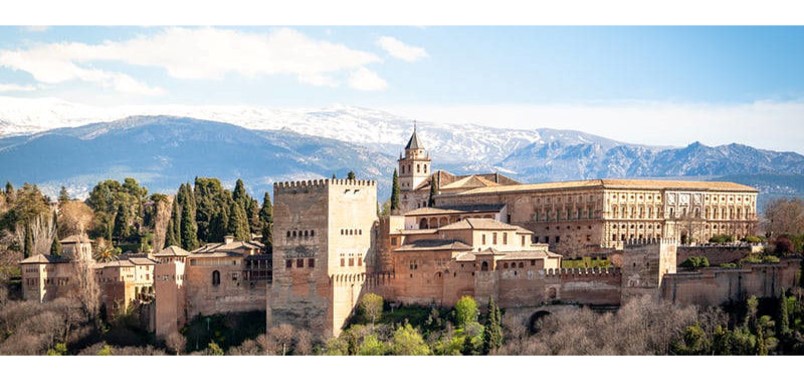
This course explores the evolving and interconnected cultural dialogues of European societies as they relate to one other and the world at large. The particular experiences and cultural innovations of each European society contributes a piece to a puzzle, which considered together paints a narrative of at times contrasting and at times complementary identities.
We will consider, for instance, how Ancient Greek ideas of democracy were enriched by Roman notions of cosmopolitanism, how Mediaeval European societies were enriched by interactions with Jewish, Muslim and Christian cultures on the Iberian Peninsula, and how European sciences arose in conjunction with artistic developments in Renaissance Italy. Throughout the course, issues such as religious intolerance, imperialism and colonialism are critically examined, as well as the collaborative endeavours that are at the root of the relative prosperity of Europe today.
EUS 270 - Fall 2026, Tue-Thu 02:30 PM - 03:50 PM
Culture, Economics and Politics of Europe
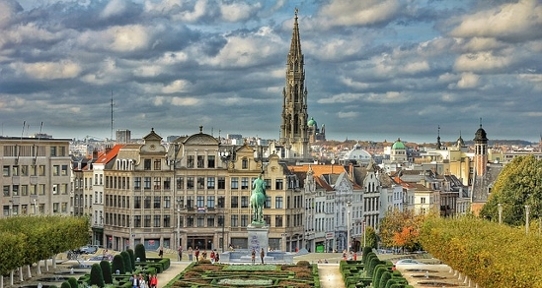
Examines the cultural, social, economic and political history of post-WWII Europe from an interdisciplinary perspective. Introduces key issues associated with the study of decolonization, European integration, migration and other important aspects that shaped the societies and cultures of modern Europe.
The course is also offered as ECON 270 and SLLC 270. It is team-taught and the instructors are Drs Émile Fromet de Rosnay (SLLC), Elena Pnevmonidou (SLLC), and Paul Schure (ECON). This is an excellent course to explore European Studies. There are no prerequisites, but this course serves as a prerequisite for EUS/POLI 311 - Governments and Politics in Europe and one of the paths towards participating in the EU Study Tour. The course is team-taught. There will be two midterms, a final exam and a group project in which students create a short documentary/ video podcast. The course does not require a mandatory textbook.
EUS 311 - Spring 2027, Mon-Thu 01:00 PM - 02:20 PM
Governments and Politics in Europe
EUS 311 is crosslisted with POLI 311. A prerequisite for EUS 311/POLI 311 is that you complete one of POLI 211 or EUS 270. Both POLI 211 and EUS 270 are offered in Fall 2026.
Students that wish to go on the EU Study Tour in May 2027 are normally required to have completed EUS 311/POLI 311 before they leave to Europe (see here for further information).
Why are right-wing populist parties gaining support across Europe? How are migration, identity politics, and economic insecurity reshaping democratic politics? What explains the tensions between national sovereignty and European integration in an era marked by war, climate change, and geopolitical uncertainty? EUS 311 explores these questions through a comparative study of contemporary European politics. Drawing on real-world cases from across the continent, the course examines elections, political parties, social movements, migration, democracy, and the European Union. Europe has long been a laboratory of political change and understanding its successes and crises offers valuable insights into some of the most pressing political challenges facing Canada and the world today.
EUS 340 - Fall 2026, Mon-Thu 10:00 AM - 11:20 AM
The Second World War and the Recovery of Western Europe

This course is also offered as HSTR 344C. There are no prerequisites for this course, but the History department recommends to take HSTR 112A and HSTR 112B; or HSTR 240A and HSTR 240B prior to taking EUS 340/ HSTR 344C
EUS 340 is an exercise in what Germans call Zeitgeschichte, that is, contemporary history, or history within the memory of people still living today. Because of this immediacy, it is relevant to—and helps to contextualize—many current day issues. For instance, what is the nature of genocide and what gave rise to the concept of eliminationist mass murder? How did definitions of gender influence the roles of men and women during World War Two, and how have wartime roles helped to shape our current understanding of gender issues? How do modern states recover from war and how are broken societies repaired? Should political purge processes focus on retribution or on reconciliation and truth telling? What factors boosted the drive for European unification (and are those factors still operative today)? Why did the United States get involved in European affairs during the 1940s, and why was their postwar economic intervention more successful than U.S. economic and financial involvement with Europe during the 1920s? How did the USSR engage with Europe during the 1940s and 1950s, and what does this tell us about Russia’s position relative to the centre and west of the continent?
There are many stories that started during Europe’s wartime or postwar recovery periods that are still not ended. Looking at these issues can help frame Europe’s current political and social culture and put the continent’s condition into perspective.
1.5 Units
EUS 400 - Not offered this year
The European Legacy
Course Description
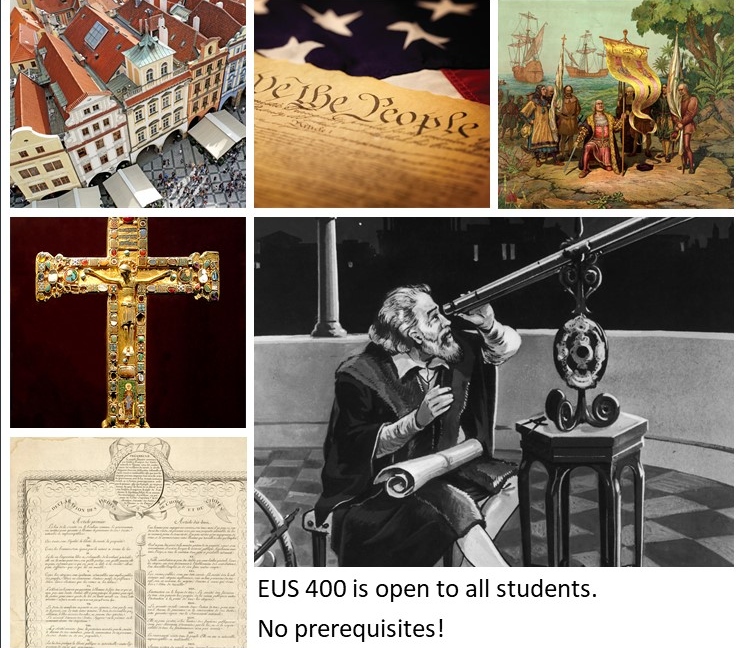
You use the term “Western culture,” but do you know what that really means? What are its defining values and where did they come from? In this interdisciplinary seminar course, you will explore the roots of western culture in the narratives of shared values that accompanied the historical emergence of something called “Europe”, and identify the legacy of these narratives in some of the most pressing issues of our times.
Our inquiry will revolve around four mutually implicit, double-edged themes:
1) faith/tolerance; 2) the value of the individual; 3) cosmopolitanism; 4) knowledge as universal truth. For each of these, we will examine historical sources and seek out its ongoing operation in current events. Weekly synchronous seminars and asynchronous online forums will provide an opportunity for you to share ideas, review readings and integrate course material toward a final term paper on a topic of your choice.
Intended Learning Outcomes
In this course you will gain a more complex, critical and historical understanding of the roots of western culture, the nature and source of its defining values and how they continue to operate in our present. You will be challenged to become more attentive readers, better writers, and more critical thinkers and cultural observers. You will have the opportunity to devote the semester to developing a research paper on a topic of your own choice, including developing an abstract and bibliography, and presenting your work to colleagues.
Taught by Dr. Nina Belmonte
EUS 470 – May 2027 (EU Study Tour. Application deadline: Dec 15, 2026)
EUS470 - Field School in European Studies
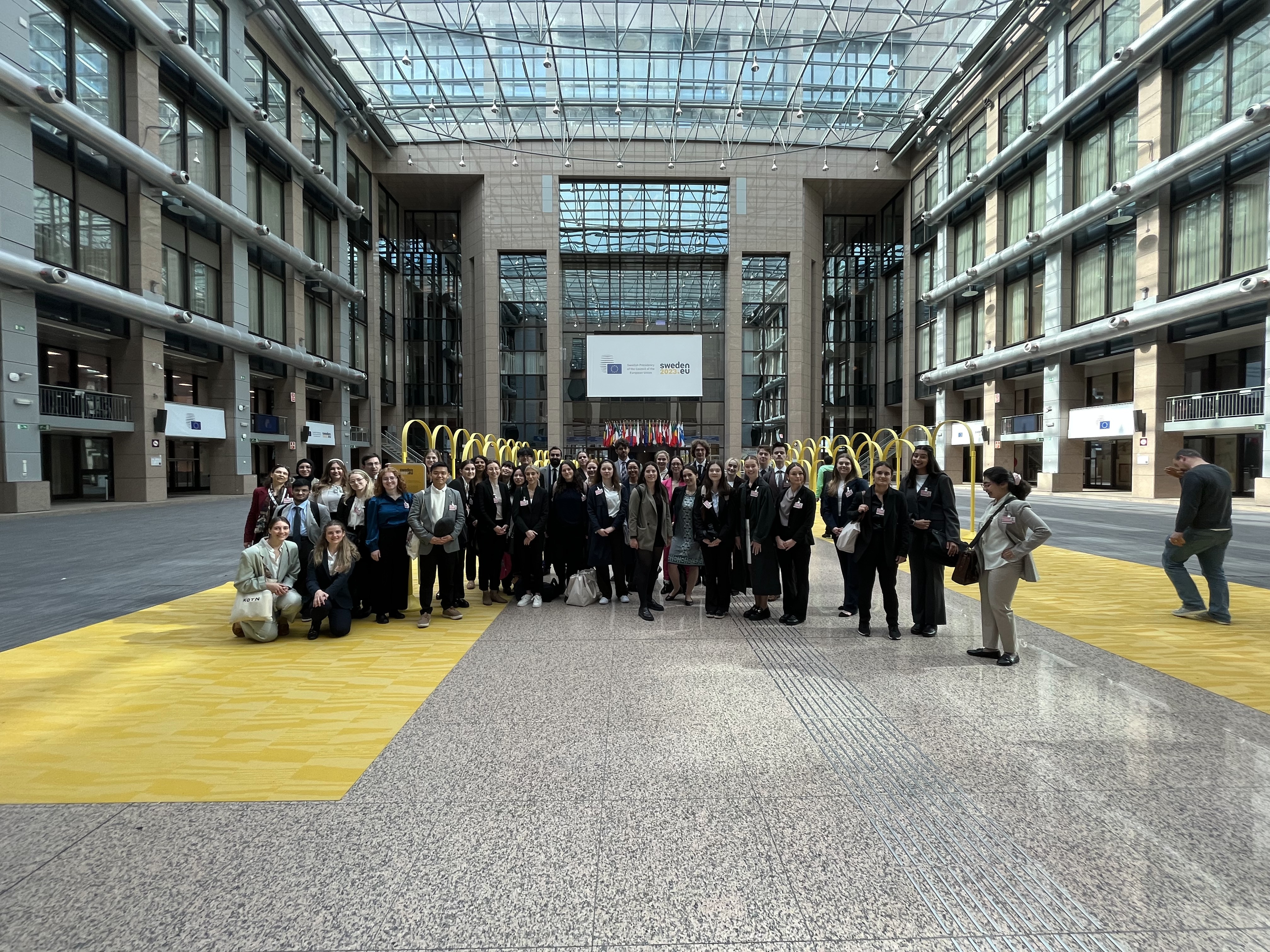
EUS 470 is the 1.5 unit, for-credit course that UVic students must take when accepted to the EU Study Tour (EUST). The EUST takes place in May of each year and often starts and ends in Brussels, but also takes students to Luxembourg (and sometimes Frankfurt or Strasbourg) as they visit key institutions of the European Union, as well as civil society and other organizations, such as, possibly, NATO, the European Court of Human Rights, and the Canadian Mission to the EU and/or other diplomatic services. The administrative home of the EUST is UVic’s European Studies Program, but most EUST students study at other Canadian universities. Typically, over half the EUST students stay in Europe to complete an internship through the EU Internship Program (at the European Commission, the European Parliament, or a civil society organisation). For more information and past programs, please visit the EUST homepage.
Please take a look at the most recent EUS 470 course outline here.