
Carmen Wiigwaas Craig
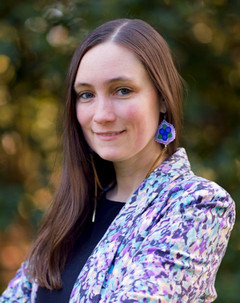
Assistant Teaching Professor
Department of Indigenous Education
- Contact:
- Office: MAC A257 cescraig@uvic.ca 250-721-7433
- Area(s) of expertise:
- Indigenous language revitalization, Urban Indigenous language learning, Community-driven language planning, Language and data sovereignty, Dialect variation and standardization, Adult Indigenous language learning, Task-based language teaching, Indigenous curriculum design, Universal Design for Learning, Accessible language learning, Language teacher education, Community-engaged research
Biography
Carmen Wiigwaas Craig (Michi Saagii Nishnaabe, Irish, Welsh, German) is a Crane Clan person from Hiawatha First Nation and an educator and researcher working in Indigenous language revitalization, reclamation, and maintenance. Her research addresses access to language and culture for urban Indigenous learners, particularly adults and learners with disabilities who may face barriers to participation in language programming.
Her work integrates applied linguistics, Indigenous pedagogies, and community-engaged methodologies to support relational, accessible language learning grounded in community priorities. Current areas of focus include learner motivation in heritage language contexts, acquisition order in Nishnaabemwin, resource and tool development, dialect variation and standardization, needs assessment/gaps identification, and the ethical creation and sharing of Indigenous language learning resources.
Publications
Bliss, H. A., & Craig, C. W. (Forthcoming). Creating space: A resource for reflection and dialogue on honouring dialect and language variation. First Peoples’ Cultural Foundation.
Craig, C. W. (2023). Ozaaweshiinh Ləkʷəŋən/W̱SÁNEĆ-aking: An Ojibwe language and culture needs assessment in Victoria, B.C. (Master’s thesis, University of Victoria). https://hdl.handle.net/1828/15215
First Nations Technical Institute. (2025). Indigenous language revitalization methodologies I–III: Course curriculum. Language Teacher Instructor Training Program.
Métis Nation British Columbia. (2024). The words of our ancestors: An introduction to Michif and Indigenous language revitalization. https://www.mnbc.ca/The-Words-of-Our-Ancestors-%28digital%29.pdf
Bell, T., Craig, C. W., Charnley, K., Dorgelo, C., & Mason, R. (2023). Working in partnership with First Nations, Métis and Inuit communities: Module 6, Theme 1 – Getting prepared. British Columbia Ministry of Mental Health and Addictions. https://www2.gov.bc.ca/assets/gov/health/mental-health/icy-teams-modules/module-6-theme-1-getting-prepared.pdf
Victoria Native Friendship Centre. (2022). Community learning program curriculum.
First Peoples’ Cultural Council. (2021). Language revitalization planning toolkit. https://language-toolkit.fpcc.ca/
Craig, C. W. (2019). We’re pretty easy to get along with: An Elders viewbook. Eyēʔ Sqâ’lewen, Camosun College.