
Pursuing the Truth
May 28, 2026
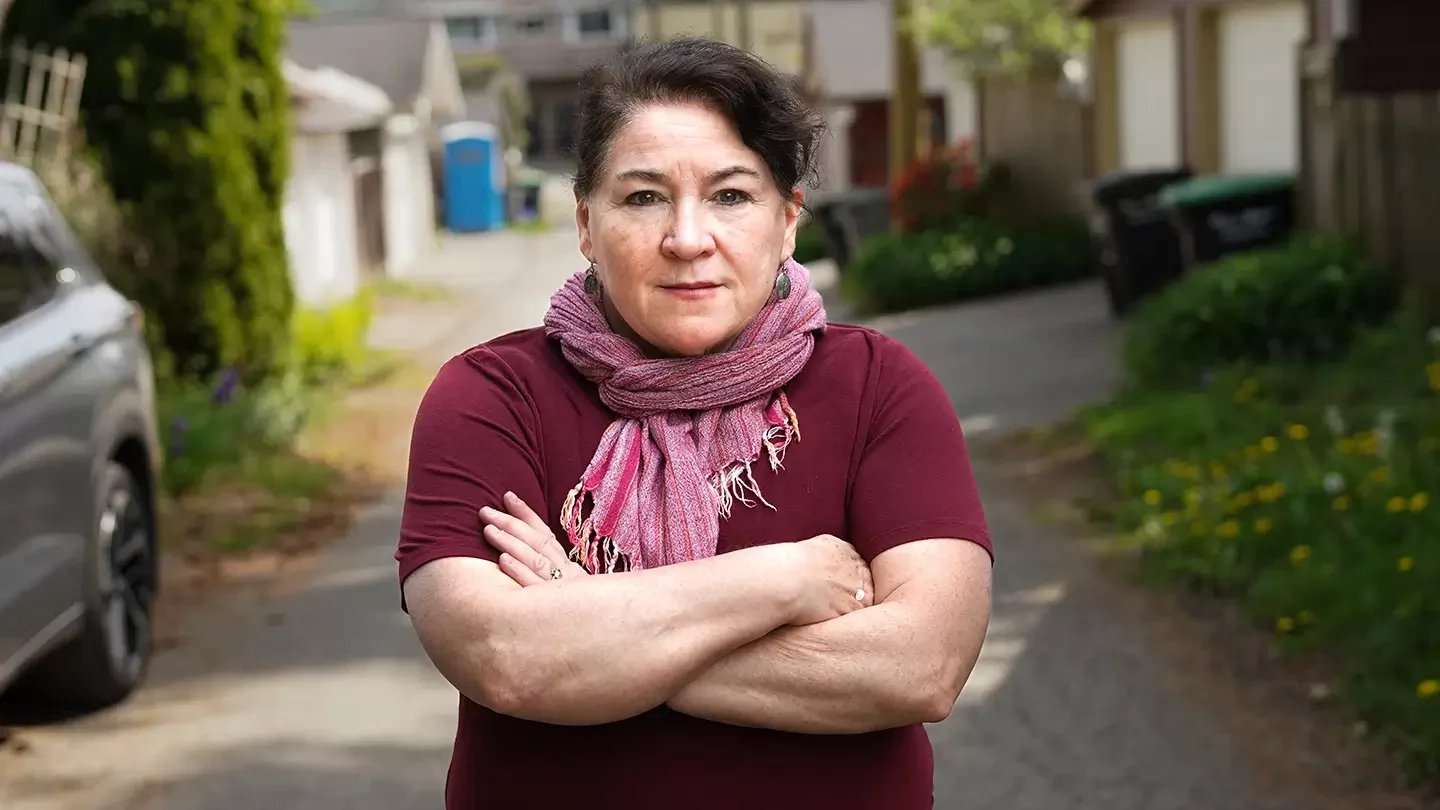
Kim Bolan is a fearless veteran news reporter, spending years digging into Canada’s most thorny stories, including the aftermath of the Air India bombing and the roots of organized crime.
Not long after joining the Vancouver Sun as a reporter, Kim Bolan took on a controversial story. A single mother had been stripped of her welfare benefits after going public about her decision take on sex work to buy winter clothes for her kids. Her family could not survive on social assistance alone.
After interviewing the woman, Bolan wrote a story that ran on the Sun’s front page. “The exposure and resulting political pressure led to a direct change for her and her life,” says Bolan.
The mother’s benefits were reinstated. Since joining the Vancouver Sun in 1984, Bolan, BA ’81, has taken on tough stories. She’s tackled in-depth, long-form investigations with serious political and social implications, including the bombing of Air India Flight 182. She followed the work by exploring the dangerous world of BC’s gangs and criminal organizations.
The Air India bombing in 1985 was the worst terrorist attack in Canadian history, resulting in the death of all 329 people on board. Bolan’s extensive reporting on the investigation in the 1990s led sources to come forward to the police and charges being laid—even though the accused were acquitted.

“The Air India bombing was a real milestone in my career, because I had done so much in-depth reporting that actually had some kind of impact on events that followed.”
But that impact brought risks. Bolan received death threats, and Indo-Canadian Times editor and publisher Tara Singh Hayer, whose work helped inform her own, was shot dead in his garage—a case that remains unsolved.
Since that landmark work, which culminated in Bolan’s 2005 book, Loss of Faith: How the Air India Bombers Got Away with Murder, she’s spent 15 years focusing on gang violence, “another community issue,” as she describes it. “I wanted to find out what the genesis of this issue was, and find the problems with the way police investigate these cases.”
That work led her to become the 2023 Lieutenant Governor’s British Columbia Journalism Fellow. She spent months travelling and researching to complete a five-part series examining the effectiveness of Canada’s efforts to tackle organized crime.
Bolan’s goal with such complex subjects is for the public to understand them with more nuance and sympathy. For instance, she’s interested in how young people get involved in organized crime, sometimes recruited by higher-ups to do violent work. Bolan’s reporting examines how police and courts fail to investigate conspirators, instead focusing on the direct perpetrators of violence.

The road to journalism
Bolan always wanted to help make change. As a teenager growing up in Courtenay on Vancouver Island, she tuned in to the Watergate hearings every day on television. “It was kind of amazing as a kid to see journalists having so much impact that they basically forced a United States president to resign,” she recalls.
Around that time, she started writing for Courtenay’s local paper, sending stories to The Colonist—a predecessor to The Times Colonist. The drafts, which she would type out after school, travelled on the bus from Courtenay to Victoria. Bolan continued her journalism journey at UVic, taking creative writing and English. “There was never another path that I was on,” she says. “It was this one. And many decades later, it continues to be this one.”
Bolan kept writing, working as a sports editor for The Oak Bay Star while attending UVic full time. She would spend Sundays going to sporting events, writing and taking photos, and learning all the terminology of whatever sport she was covering. She recalls developing film at 3 a.m., rushing home to sleep, and waking up a few hours later to make it to her classes. “That’s what you do when you’re young, right?” she jokes.
Her sense that journalism was an important, meaningful career was bolstered by influential instructors in the writing department, including award-winning authors David Godfrey, who co-founded Canadian publisher House of Anansi, and Matt Cohen.
“At UVic, it was drilled into me that journalism was a rewarding, fulfilling career. It was treated as an honourable profession, which I believed at the time that it was, and which I still believe it is, despite all the pressures that journalism has been under for the last 20 years, if not longer.”
Bolan has won multiple accolades for her fearless reporting, including a lifetime achievement award from both World Press Freedom Canada and the Canadian Journalism Foundation, as well as the Charles Bury President’s Award from the Canadian Association of Journalists, and a Webster Award for excellence in legal reporting. She is the first Canadian to earn the International Women’s Media Foundation Courage in Journalism Award.

Journalism today
Today, Bolan still believes that learning journalism is arguably more important than ever, even with all the obstacles deterring the kind of investigative work that she has built her career on. Understaffed newsrooms, decreased earning power and pressure to constantly produce daily stories can prevent journalists from reporting on long-term, in-depth investigations.
She also sees journalistic work as coming with a great deal of responsibility: “I’ve always felt that if I write someone’s story, which in itself can be traumatic, I have an obligation to follow up with them and stay in touch with them.” It’s a relationship. Bolan is still in contact with sources that she spoke to for her initial reporting on the Air India Bombing 40 years ago.

“You need to be curious, too. I always want to know more, I assume there is more to know,” she says. “Always ask some hard questions. We always say, there are no stupid questions in journalism.” She’s still drawn to shining light on dark places and trying and ignite real change in public issues.
As an instructor at Langara College, Bolan has thought a lot about what new journalists need to succeed.
—Katy DeCoste, MA ’22
This article appears in the UVic Torch alumni magazine.
For more Torch stories, go to the UVic Torch alumni magazine page.