
Palliative care resource supports frontline workers
October 06, 2026

A new national palliative and end-of-life care resource is providing frontline workers with tools and strategies to better support people who are aging with serious illness alongside poverty and homelessness.
The University of Victoria-led collective of researchers, frontline workers, and palliative care practitioners today launched the Palliative Care Is… curriculum at the Montreal International Congress on Palliative Care.
Kelli Stajduhar, a professor in UVic's School of Nursing and the Institute on Aging & Lifelong Health, says their research over the last decade has shown that frontline workers are often the main point of contact and trusted source of support for people experiencing homelessness.
"They walk alongside people experiencing cancers, lung disease, and heart conditions in the homeless service settings, but often aren’t recognized or supported in the care work they do," Stajduhar says. “We often recognize doctors and nurses as part of the care team, but these frontline workers can be left out, and their knowledge and experience excluded.”
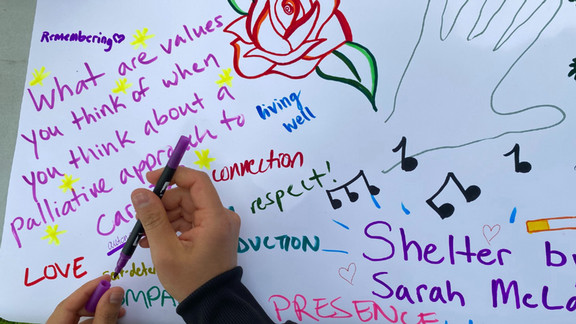
The curriculum development team included people representing over 15 agencies across Canada and was tested with 350 learners. It includes a facilitator guide, a slide deck, and series of five discussion guides with topics such as “Recognizing when someone is seriously ill” and “Talking about hard things”. The curriculum is designed to be flexible and adaptable to homeless and harm reduction service settings like shelters, housing facilities, and outreach services.
Char Futcher, a former community outreach worker in Victoria who helped develop the national curriculum, says frontline workers often notice when people’s health is declining.
“These trusted relationships mean that workers are often already having conversations about people’s needs and wishes for their care," Futcher says. "In developing this curriculum, we wanted to honour the knowledge that already exists in community settings and build on it.”
Ashley Mollison, a recent UVic Social Dimensions of Health PhD graduate who led the curriculum project within Stajduhar's research program, says this work is about helping people live as well as possible for as long as possible, while also supporting the workers, friends, families, and communities who walk alongside them.