
Dr. Erin Ellerbeck
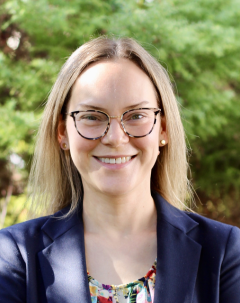
Associate professor & graduate adviser
English
- Contact:
- Office: CLE D335 ele@uvic.ca / englgradad@uvic.ca
- Credentials:
- BA (Victoria), MA and PhD (Toronto)
- Area(s) of expertise:
- Renaissance literature, Shakespeare
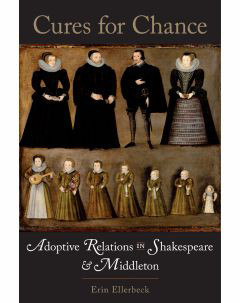
Cures for Chance: Adoptive Relations in Shakespeare and Middleton. U of Toronto P. 2022.
“Adoptive Names in Middleton’s Women Beware Women.” Studies in English Literature 1500-1900. 57.2 (Spring 2017): 407-26.
“Adoptés par des animaux: Les parents temporaires d’enfants abandonnés dans le Daphnis and Chloe d’Angel Day.” Enfants perdus, enfants trouvé: Dire l’abandon en Europe du XVIᵉ au XVIIIᵉ siècle. Trans. Béatrice Vierne. Ed. Janice Vals-Russell and Florence Magnot-Ogilvy. Paris: Classiques Garnier, 2015. 267-83.
“‘A bett’ring of nature’: Grafting and Embryonic Development in The Duchess of Malfi.” The Indistinct Human: Species Boundaries in Renaissance Literature. Ed. Jean Feerick and Vin Nardizzi. New York: Palgrave, 2012. 85-102.
“Adoption and the Language of Horticulture in All’s Well That Ends Well.” Studies in English Literature 1500-1900 51.2 (Spring 2011): 305-26.
“The Female Tongue as Translator in Thomas Tomkis’s Lingua, or The Combat of the Tongue and the Five Senses for Superiority.” Renaissance and Reformation 32.1 (2009): 27-45.