
Microbiology program
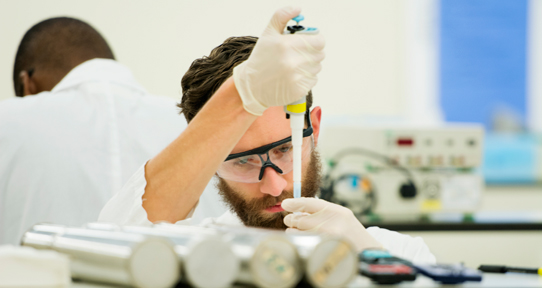
Microbiology is the study of life that is too small to see without a microscope. Bacteria, archaea, viruses, and unicellular eukaryotes occupy every conceivable habitat; from arctic ice to hydrothermal vents, from gastrointestinal tracts to deep rock formations, from pristine lakes to polluted bogs.
Microbiology spans all of biology and provides the foundation for molecular biology and biotechnology. Microorganisms are the cause of many human diseases. A Microbiology program is a popular choice for students with interests in molecular biology, drug discovery, medicine, or biotechnology.
Microbiology programs in the UVic Calendar
Below, we have put together suggested options that will give you an excellent foundation for a career in microbiology.
The goal of molecular pathogenesis research is to identify the molecular mechanisms by which bacteria, viruses and other microorganisms cause infectious diseases, and to understand the mechanisms by which hosts respond to these infections.
Suggested electives
There are a variety of courses that you might wish to consider as electives. Keep in mind that the core courses for your program are the ones that you will definitely need to graduate, and electives need to fit in your schedule of core courses. The following example of elective choices would give an excellent foundation in this area (MICR - Bacterial Pathogenesis):
- EPHE 141 Human Anatomy
- BIOL 184 Evolution and Biodiversity
- MATH 100 Calculus I
- MATH 101 Calculus II
- BIOL 248 Topics in Organismal Biology
- BIOL 215 Principals of Ecology
- BIOL 365 Animal Physiology
- BIOL 438 Nutrient Cycling and Prokaryotes
- BIOL 439 Molecular Epidemiology
- BIOC 401 Gene Expression in Eukaryotes
- BIOC 403 Biochemistry of Signal Transduction
- BIOC 408 Epigenetic Regulation of Chromatin
- MICR 400 Level
Links of interest
- Public Health Agency of Canada - Canadian Field Epidemiology Program
- Jobs in Epidemiology
Bioinformatics is the use of math and statistical tools in molecular biology; because of the size of data sets, it also involves computer science.
Suggested electives
There are a variety of courses that you might wish to consider as electives. Keep in mind that the core courses for your program are the ones that you will definitely need to graduate, and electives need to fit in your schedule of core courses. Some courses that you may find useful as potential electives in your MICR - Bioinformatics degree include:
- CSC 110 Fundamentals of Programming
- BIOL 184 Evolution and Biodiversity
- MATH 100 Calculus I
- MATH 101 Calculus II
- STAT 123 Data Science
- CSC 115 Fundamentals of Programming II
- BIOL 215 Principals of Ecology
- BIOL 329 Biology of the Vertebrates of BC
- BIOL 330 Study Design and Data Analysis
- MATH 200 Calculus III
- STAT 256 Statistics for Life Sciences II
- BIOL 355 Evolution
- BIOL 435 Molecular Evolution
- BIOL 436 Human Molecular Genetics
Links of interest
The physiology and ecology of microorganisms is such that they affect every aspect of our lives. Environmental microbiology is a term often used to refer to how we use the microbes to help us deal with problems we have created, but they are also the original recyclers and genetic engineers.
Microorganisms play a key role in biogeochemical recycling:
- bioremediation
- industrial processes
- waste water and sewage treatment
- methane fermentation
Suggested courses
There are a variety of courses that you might wish to consider as electives. Keep in mind that the core courses for your program are the ones that you will definitely need to graduate, and electives need to fit in your schedule of core courses. The following example of elective choices would give an excellent foundation in this area (MICR - Environmental Microbiology):
- EOS 110 Oceans and Atmosphere
- BIOL 184 Evolution and Biodiversity
- MATH 100 Calculus I
- MATH 101 Calculus II
- ES 200 Introduction to Environmental Studies
- BIOL 215 Principals of Ecology
- ES 341 Past, Present and Future Ecologies
- EOS 311 Biological Oceanography
- BIOC 403 Signal Transduction
- BIOL 438 Nutrient Cycling and Prokaryotes
- BIOL 446 Advanced Aquatic Ecology
- ES 382 Environmental Topics: Topics in Ecological Restoration
- ES 348 Biodiversity and Conservation Biology
- MICR 400 Level
Links of interest
Synthetic biology is a new field that blends molecular biology and engineering with the objective of creating biological functions not found in nature. Understanding of genetic control and the biology of microorganisms is being combined with improvements in synthesis of DNA to enable the design and construction of microorganisms with new features. Synthetic biology plays a major role in developing a new generation of biofuels and biological catalysts.
Suggested courses
There are a variety of courses that you might wish to consider as electives. Keep in mind that the core courses for your program are the ones that you will definitely need to graduate, and electives need to fit in your schedule of core courses. The following examples of elective choices would give an excellent foundation in synthetic biology:
- BIOC 102 Biochemistry and Human Health
- BIOL 184 Evolution and Biodiversity
- CSC 115 Fundamentals of Programming II
- STAT 256 Statistics for Life Science II
- BIOL 355 Evolution
- BIOL 311 Biological Oceanography
- BIOC 401 Gene Expression in Eukaryotes
- BIOC 404 Proteins
- BIOC 409 Proteomics
- BIOL 435 Molecular Evolution
- CHEM 337 Bio-organic Chemistry