Convocation: Honorary degree recipients
- Mike McNeney
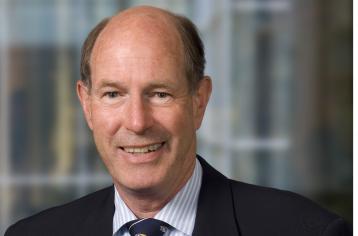
David Dodge, who guided the Bank of Canada fiscal policy through most of the last decade, will be among four recipients of honorary degrees during Spring Convocation ceremonies.
The university’s highest honour will also be presented to Marie Cooper, a leading advocate of Aboriginal education, trail-blazing journalist Linda Hughes, and one of Canada’s leading authorities on heritage conservation, Harold Kalman.
Podcasts of the Convocation addresses of this year’s honorary degree recipients will be posted on the web as soon as possible after the ceremonies.
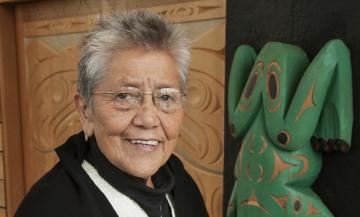
Marie Cooper
Honorary Doctor of Education (10 a.m., June 18)
Marie Cooper is a leading voice in Aboriginal education in BC, working to create opportunities in education for Aboriginal learners and more inclusive educational policies and practices for the benefit of Aboriginal and non-Aboriginal students alike.
Her interest in education came at a time when post-secondary learning was deemed illegal for “Status Indians.” Undaunted, she graduated from high school in 1952 (as one of the first Aboriginal students permitted to attend a BC provincial school) and set her sights on a teaching degree.
She refused to give up her Aboriginal status and identity in order to attend a Canadian university, and chose instead to leave her Tsartlip community and move to California to obtain her BA in education.
After returning home, she was instrumental in developing Native Indian Education in the Greater Victoria School District, became a critical link between the Saanich Indian School Board and the Saanich School District, and coordinated the first Native studies program at Camosun College.
She has also been a driving force behind strengthening relationships between UVic and the Coast Salish people of southern Vancouver Island.
David Dodge
Honorary Doctor of Laws (2:30 p.m., June 16)
In more than 35 years of public service, including a seven-year term as Governor of the Bank of Canada, David Dodge was centrally involved in forming and implementing Canadian public policy and is responsible for far-reaching contributions to the governments and people of Canada.
After completing his PhD in economics at Princeton University, Dodge joined the federal Department of Finance, accepting some of the most difficult and challenging files facing the Government of Canada. He dealt with major housing financing programs at the Central (now Canada) Mortgage and Housing Corporation in the 1970s. In his work with the Anti-Inflation Board he undertook much of the economic analysis essential for a complicated set of wage and price controls.
His public service career culminated with his 2001 appointment to the Bank of Canada, during which time he steered monetary policy through the financial turmoil arising from the burst of the high-tech bubble and the 9/11 attacks that rattled financial markets.
He responded with a series of dramatic interest rate cuts that maintained economic stability and public confidence. Along the way, he made open communication between the Bank of Canada and the public one of his top priorities.
Linda Hughes
Honorary Doctor of Laws (2:30 p.m., June 17)
After graduation from the University of Victoria in 1972 with her undergraduate degree in history and economics, Linda Hughes embarked on a pioneering career in print journalism.
In 1987, Hughes became the first female editor-in-chief of the former Southam newspaper chain.
Five years later, she was named the first female president and publisher of the Edmonton Journal, cementing a reputation for superb journalism, a compassionate management style and strong ties and partnerships between the Journal and the Edmonton community.
A true community leader, she received the Larry Shaben Award for Outstanding Leadership in the Housing Sector for her work as chair of the Edmonton Committee to End Homelessness.
Since retiring in 2006 she has been appointed chancellor of the University of Alberta, in response to which her former colleagues at the Journal wrote: “Linda—no one calls her by her last name—is hard-working, accessible, savvy, famously non-partisan and nothing short of brilliant in bringing people together for a righteous cause.”
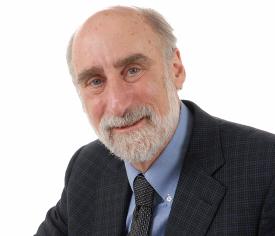
Harold Kalman
Honorary Doctor of Laws (10 a.m., June 17)
Harold Kalman is considered the definitive heritage conservation practitioner, theorist, writer and scholar, and has been instrumental in more than 1,000 preservation projects in Canada and internationally. St. George’s Church in Halifax, the Woodward’s redevelopment in Vancouver and the City of Victoria’s approach to conservation planning have all benefited from his expertise.
Throughout his career, Kalman has maintained a close involvement with teaching, in particular UVic’s cultural resource management program.
He has also written or contributed to 17 books on conservation, including A History of Canadian Architecture, considered the standard source and reference text for the field of architectural history in Canada.
One of his earliest books, The Railway Hotels and the Development of the Chateau Style in Canada, was produced in conjunction with the Maltwood Museum and is a key resource explaining a central part of Canadian culture and Victoria’s built heritage.
The methods of research and assessment of historic architecture that Kalman introduced have influenced an entire generation of architects, planners and historians as well as owners and custodians of historic properties.
Photos