
UVic Historian Researches the Rescue of Scholars from Nazi-Controlled Europe
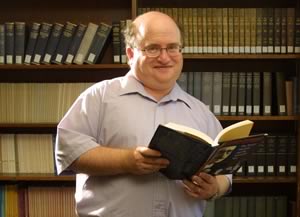
While
researching the development of radar in Britain, UVic military historian
Dr. David Zimmerman noticed that many of the scientists involved were also
part of another British organization, the Society for the Protection of
Science and Learning (SPSL), dedicated to helping scholars flee the intellectual
repression and religious persecution of Nazi Germany and finding them permanent
research positions abroad.
What united this seemingly disparate group of physiologists, chemists, physicists and engineers is most fascinating to Zimmerman. “Science and their respect for freedom of thought and research was what rallied them. Some of England’s most prominent academics were inspired to help rescue those ousted from their positions,” he says.
Funded by a grant from the Social Sciences and Humanities Research Council, Zimmerman is researching the history of the SPSL and its remarkable success.
The SPSL was founded in 1933, and the timing could not have been worse. “It was the height of the Depression. Lack of support from British colleges and universities forced the SPSL to look for public support — not an easy task in the western world prior to WWII as anti-Semitism was rampant,” Zimmerman explains.
They met the challenge, however, and from 1933-45, the SPSL raised a total of £100,000 — equivalent to millions of dollars today. Over a twelve-year period, they rescued upwards of 10,000 people — academics representing a broad cross-section of disciplines and their families, primarily from Germany, but also from Italy, Spain, Portugal, Austria and Czechoslovkia. The SPSL found them permanent or temporary research positions and provided a portion of their funding.
“The SPSL kept very full and comprehensive records of who donated money, who was helped and where these academics ended up. One woman, Dame Esther Simpson, who retired from the organisation in the 1960s, was primarily responsible for their meticulous record-keeping.” Most of Zimmerman’s research is done at the Bodleian Library at the University of Oxford where the SPSL’s records are kept.
“The largest number of placements was in the U.S. and Britain. At the time, the entire British academic community consisted of 6,000 scholars. The SPSL helped to place over 2,500 — a huge feat for such a small community,” says Zimmerman. A number of researchers also found positions at Hebrew University in present-day Israel and in Turkey at the University of Istanbul. “The Turkish government had just opened the new university and saw this as an opportunity to attract world-class academics.”
Over the same period, Canada accepted just six academics, five permanently. Anti-Semitic immigration policies and little support from Canadian universities ensured those who did come received no support from Canadian sources, says Zimmerman.
The most famous of these was Gerhard Herzberg, winner of the 1971 Nobel Prize in chemistry, whose work was initially supported by the SPSL and the Carnegie Corporation of New York. Forced to flee Germany because his wife was Jewish, Herzberg joined the faculty at the University of Saskatchewan in August, 1935. Six other refugees helped by the SPSL also became Nobel laureates.
“Even though an equivalent Canadian organization was formed in 1939, Canada was unsuccessful in helping more academic refugees find freedom,” says Zimmerman. “How the immigration policies and social stigma at that time hindered further efforts to support scholars is not only intriguing, but is still relevant to how we treat academic refugees today.”
The successor organization to the SPSL still exists today; it is known as the Council for Assisting Refugee Academics and maintains a Web site at www.academic-refugees.org/.
What united this seemingly disparate group of physiologists, chemists, physicists and engineers is most fascinating to Zimmerman. “Science and their respect for freedom of thought and research was what rallied them. Some of England’s most prominent academics were inspired to help rescue those ousted from their positions,” he says.
Funded by a grant from the Social Sciences and Humanities Research Council, Zimmerman is researching the history of the SPSL and its remarkable success.
The SPSL was founded in 1933, and the timing could not have been worse. “It was the height of the Depression. Lack of support from British colleges and universities forced the SPSL to look for public support — not an easy task in the western world prior to WWII as anti-Semitism was rampant,” Zimmerman explains.
They met the challenge, however, and from 1933-45, the SPSL raised a total of £100,000 — equivalent to millions of dollars today. Over a twelve-year period, they rescued upwards of 10,000 people — academics representing a broad cross-section of disciplines and their families, primarily from Germany, but also from Italy, Spain, Portugal, Austria and Czechoslovkia. The SPSL found them permanent or temporary research positions and provided a portion of their funding.
“The SPSL kept very full and comprehensive records of who donated money, who was helped and where these academics ended up. One woman, Dame Esther Simpson, who retired from the organisation in the 1960s, was primarily responsible for their meticulous record-keeping.” Most of Zimmerman’s research is done at the Bodleian Library at the University of Oxford where the SPSL’s records are kept.
“The largest number of placements was in the U.S. and Britain. At the time, the entire British academic community consisted of 6,000 scholars. The SPSL helped to place over 2,500 — a huge feat for such a small community,” says Zimmerman. A number of researchers also found positions at Hebrew University in present-day Israel and in Turkey at the University of Istanbul. “The Turkish government had just opened the new university and saw this as an opportunity to attract world-class academics.”
Over the same period, Canada accepted just six academics, five permanently. Anti-Semitic immigration policies and little support from Canadian universities ensured those who did come received no support from Canadian sources, says Zimmerman.
The most famous of these was Gerhard Herzberg, winner of the 1971 Nobel Prize in chemistry, whose work was initially supported by the SPSL and the Carnegie Corporation of New York. Forced to flee Germany because his wife was Jewish, Herzberg joined the faculty at the University of Saskatchewan in August, 1935. Six other refugees helped by the SPSL also became Nobel laureates.
“Even though an equivalent Canadian organization was formed in 1939, Canada was unsuccessful in helping more academic refugees find freedom,” says Zimmerman. “How the immigration policies and social stigma at that time hindered further efforts to support scholars is not only intriguing, but is still relevant to how we treat academic refugees today.”
The successor organization to the SPSL still exists today; it is known as the Council for Assisting Refugee Academics and maintains a Web site at www.academic-refugees.org/.
-- 30 --