

Sessions
Training & Development Conference
Wednesday, September 23, 2026
Victoria Marriott Inner Harbour
728 Humboldt Street, Victoria, BC
Conference schedule
8:30 - 9 a.m.
Registration & welcome
9 a.m. - 12:30 p.m.
Morning sessions
- Session 1. Keeping Your Shining Stars (and Making More of Them), Rick Cotton
- Session 2. Friction of Culture and Leadership, Andrea McCoy
- Session 3. Work with Rights Holders, Matt Murphy
12:30 - 1:40 p.m.
Lunch (included for in-person participants)
1:40 - 4:30 p.m.
Afternoon sessions
- Session 4. Evidence-Based Management in the Age of AI - How to Stop Chasing Fads, Stacey Fitzsimmons
- Session 5. Show, Don't Tell: Experiential Learning & Collaborative Design for Employee Learning & Leadership, Karissa Sovdi & Alison Ambroso
4:30 - 5:30 p.m.
Networking (included for in-person participants)
Keeping Your Shining Stars (and Making More of Them)
Join us for an interactive session entitled Keeping Your Shining Stars (and Making More of Them), designed for HR, talent management, and learning and development professionals seeking practical strategies to retain and cultivate top talent within their organizations. Moving beyond traditional retention tactics, this session explores how organizations can identify and leverage employee strengths, use approaches such as job crafting to increase engagement, and create development experiences that accelerate growth for both current high performers and emerging talent. Participants will explore how mentoring, coaching, developmental networks, and organizational network analysis can be used to identify flight risks, uncover future stars, and strengthen talent pipelines. Leave with actionable frameworks and ideas to help your organization retain key talent while building a sustainable bench of future leaders.
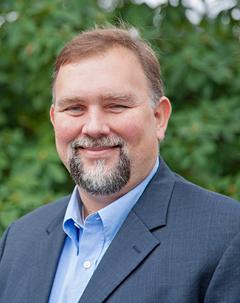
Dr. Rick Cotton began teaching at the Gustavson School of Business in 2015, bringing a passion for understanding how individuals thrive in their careers and how talent management practices can foster sustainable organizational, team and individual success in a variety of country, industry and occupational contexts.
Rick’s research focuses on better understanding how human capital, social capital and positive psychological capital foster success and resilience at multiple levels of analysis from individual to country levels. He seeks to understand how individuals can better thrive in their careers and better handle challenging work contexts around the world. In particular, Rick studies high achievers including hall-of-famers, leaders and managers as well as those in challenging work contexts including Australian women miners, correctional officers, serial entrepreneurs, HR professionals who have laid off thousands of employees and organizations recovering from scandal. He is also very interested in researching how countries and societies can move forward to achieve a variety of meaningful objectives.
Rick is a principal co-investigator for the 140+ country Global Leadership and Organizational Behavior Effectiveness (GLOBE) research program (learn more about the project), a core research team member of the 40 country Cross-Cultural Collaboration on Contemporary Careers (5C), the 2022-23 division chair for the Academy of Management’s nearly 1,000 member Careers Division, a Gustavson Centre for Social and Sustainable Innovation fellow and a member of the Society for Human Resource Management (SHRM), the University of Michigan Center for Positive Organizations Community of Scholars and the Society for American Baseball Research (SABR).
Rick has written several book chapters and his research has appeared in the Academy of Management Journal, Journal of International Business Studies, Journal of Organizational Behavior, Harvard Business Review, MIT Sloan Management Review, Human Resource Management, Human Resource Management Journal, International Journal of Human Resource Management, Entrepreneurship Theory & Practice, Career Development International, Business Horizons and the Journal of Management Inquiry as well as in media outlets including BC Business, CFAX 1070 radio, CHEK News, Douglas Magazine, EFMD Global Focus, iHeartRadio, Globe & Mail, Inc., Toronto Star, UPI, Victoria News and Your Workplace. His research has been awarded several grants and he has won 5 Academy of Management Best Paper awards and has 16 submissions that have earned Academy of Management Proceedings honours in addition to being awarded three Gustavson Leader of Excellence in Research Awards and being recognized 6 times as a ‘Most Memorable Professor’ for his teaching prior to coming to UVic.
Before pursuing his PhD, Rick worked in financial futures for Citibank in London, as a change management consultant and manager with Accenture and as a SVP of Learning and Development supporting U.S. and Japanese employees at Putnam Investments (part of Great-West Lifeco). Rick earned his PhD from Boston College before working as an assistant professor at Appalachian State University prior to coming to UVic. Rick also enjoys facilitating executive education sessions and consulting. His clients have included Aetna, BC Ferries, General Electric, the Hay Group, Harbour Air, the Intercultural Association of Greater Victoria, Pepsi, Sapient, Tourism Victoria, United Technologies, Cridge Centre for the Family and several other primarily services-based firms, governmental entities and multinationals.
Friction of Culture and Leadership
Your team is quiet in meetings and you don't know why. Decisions stall because people wait for permission you thought you'd already given. Someone raises a concern through three layers of management instead of just telling you directly. These aren't performance problems. They’re are power distance at work. You want to be an inclusive, relational leader, but these collisions keep happening.
In this session, we'll unpack the cultural dimension that shapes how authority is understood and navigated on your team, and why the gap between your leadership style and your team's expectations can create friction neither side can name. You'll leave with a practical tool for identifying how power is perceived on your team (one you can use Monday morning), your own personal assessment of how you perceive power and authority and a case study to explore how to navigate cultural friction when it shows up. If inclusive and relational leadership is the destination, then understanding ourselves, the cultures we carry, is the beginning of our journey there.

Andrea McCoy is a project strategist and facilitator known for helping stiff systems soften. Her work bridges global traditions, project logic, and human behaviour. She brings over 15 years of experience working across sectors to transform how teams collaborate — not by making people nicer, but by redesigning the conditions where culture and delivery meet.
As founder of Janklin Consulting, Andrea helps organizations lead with integrity by embedding practices of inclusion, story, and relational accountability directly into project structures. Whether she’s guiding leaders through conflict or helping teams rebuild trust, her approach is unapologetically human — and built for results.
Work with Rights Holders
As organizations increasingly engage with First Nations and Indigenous communities — through partnerships, project development, employment, or reconciliation efforts — HR and business leaders need to be equipped with more than good intentions. This session introduces the legal and ethical foundations for engaging with Indigenous rights holders, distinguishing this relationship from conventional stakeholder engagement. Drawing on frameworks including the UN Declaration on the Rights of Indigenous Peoples (UNDRIP) and Dr. Murphy's own Organizational Justice—Business and Human Rights framework, participants will explore what it means to work with Indigenous Peoples as rights holders rather than stakeholders, and what this shift requires in practice. Leave with a working understanding of key frameworks and practical considerations for building respectful, rights-based relationships with Indigenous partners and communities.
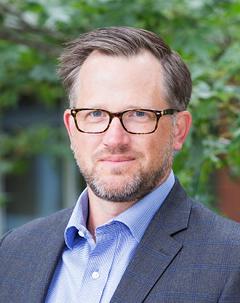
Matthew Murphy, professor of sustainability and strategy, joined the Gustavson team at UVic in 2012 and teaches and carries out research in the areas of sustainability and social entrepreneurship.
His primary research focus is on stakeholder relationships related to both conflict and collaboration, and community-based sustainable development efforts in the context of First Nations. Through this research, Matt hopes to improve the human rights performance of business as well as to support Indigenous communities’ efforts to protect their rights and fulfill their own visions of sustainable development.
Recent and ongoing research projects include, among others: developing processes and tools. in collaboration with First Nations to evaluate and monitor the socio-cultural fit and impact of economic development projects; creating a documentary film about the efforts of 4 communities on 4 different continents that are working towards food sovereignty; analyzing the various pathways to and degrees of conflict and violence in relationships between extractive industry firms and local communities; studying opportunities and challenges for increasing the impact of fair trade efforts through processes of value addition.
His work has been published in Organization Studies, Journal of Business Ethics, Journal of Business Research, Journal of Management Development, as well as in several practitioner-oriented journals and books.
Matt is also a co-founder of the social enterprise Proudly Made in Africa and, prior to entering academia, worked for 12 years in the financial services industry in roles related to international market development, strategic alliances and project management. He teaches both graduate and undergraduate students and speaks Spanish and English.
Evidence-Based Management in the Age of AI - How to Stop Chasing Fads
Managers are constantly exposed to new leadership trends, best practices, and expert advice, but it can be difficult to distinguish evidence from opinion. As AI makes research more accessible than ever, leaders have new opportunities to make decisions based on the best available evidence rather than intuition or management fads. This practical workshop introduces a process for finding, evaluating, and applying evidence to workplace challenges. Participants will leave with tools they can immediately use to assess management advice and make more informed decisions.
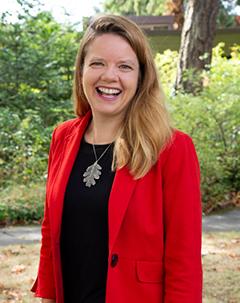
Stacey Fitzsimmons brings a passion for helping individuals and organizations realize the strengths of a diverse workforce. Her research goal is to improve the way people work with others across differences. She is currently an associate editor at the Academy of Management Perspectives, a journal that uses research foundations to build evidence-based, practical solutions for managers. She serves on the editorial review boards of the Journal of International Business Studies, Journal of International Business Policy, Academy of Management Review, and Journal of Business Research, and is serving a second term on the board of WAIB.
Show, Don't Tell: Experiential Learning & Collaborative Design for Employee Learning & Leadership
Many learning and development professionals know that active, experiential learning creates deeper engagement and better outcomes than traditional approaches. Yet moving from theory to practice can be challenging. How do we create learning experiences that build connection, foster experimentation, and respond to the real needs of participants?
In this highly interactive session, University of Victoria’s Learning & Leadership Practitioners Alison Ambroso and Karissa Sovdi will share how a series of small experiments evolved into a portfolio of leadership and learning initiatives grounded in experiential learning, collaborative design, and participant co-creation. Through stories, activities, and facilitated reflection, participants will explore practical examples from initiatives including Bring Your Own Team (BYOT), Conflict Theatre, Amazing Race- Accessibility Edition, and development of The UVic Leader program. Rather than simply talking about experiential learning, participants will experience several approaches firsthand.
Participants will leave with practical ideas, design principles, and actionable strategies they can apply immediately within their own organizations.

Alison Ambroso, Learning and Leadership Consultant, Organization Development and Learning Services, Human Resources, University of Victoria
Alison’s life and career have taken her from Ontario to South Korea, Vietnam, Seattle, and Phoenix, before joining the UVic community in 2020. Working across countries, cultures, and languages has shaped her deeply human-centred, strengths-based approach and her belief that how we connect matters as much as what we accomplish.
Alison is at her best when creating learning experiences that spark connection, broaden perspectives, challenge assumptions, and build the confidence to navigate complexity and change. A true learning junkie, she continues to collect certifications and new ideas across facilitation, leadership, change, systems thinking, and team development. At her core, Alison is an explorer; endlessly curious about people, places, and different ways of seeing the world.
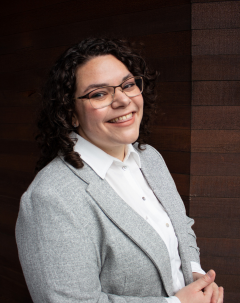
Karissa Sovdi M.C., R.C.C. Director of Organization Development and Learning Services, Human Resources, University of Victoria
Karissa has been part of the UVic community since 2012 and brings a background in counselling, education, facilitation, and improvisation to her work. She leads a small but mighty team that collaborates to strengthen leadership, teamwork, learning, engagement, recognition, and conflict fluency across the university. Karissa holds a Master's in Counselling and multiple certifications in leadership, facilitation, psychometrics, and conflict resolution. Outside of work, she enjoys writing, performing, and creating in spoken, musical, and comedic arts.